



Welcome to the latest edition of Defense Tech and Acquisition.
We are sorry for the delayed delivery this week as we helped host the Creative Disruptor’s by the Lakes event with honorary co-hosts Rep. Ken Calvert, Rep. Betty McCollum, HON Emil Michael USW(R&E), and HON Michael Duffey USW(A&S).
There were insightful discussions on the future of national security investments and plug-and-play composable warfighting with Department, Congressional, and Industry leaders, many of whom are valued subscribers.

There are many stories across the Department and the defense industry this week.

DEPSECWAR Directs Actions to Foster One Strong Industrial Base
BLUF: Deputy Secretary Steve Feinberg issued a memo, Fostering One Strong Industrial Base, directing the DoW to remove the accounting, audit, and compliance barriers that have separated the companies serving the warfighter from the rest of the American economy.
Three objectives drive the change:
Compete continuously for speed and volume.
Attach rules to contracts, not companies.
Audit only what matters, only when risk exists, and never twice.
Key elements from the memo include:
DoW will move from government unique Cost Accounting Standards to GAAP.
EO 14402 makes fixed-price contract default and reserves cost-based contracts for basic research and development of major systems.
The Supplier Cost and Pricing Transparency memo reinforces the option for contracting officers to see through the prime to suppliers when needed to ensure companies at every tier are treated fairly.
We will accept GAAP-based accounting across all contracts to the maximum extent the law permits.
Implementation actions:
VCJCS will review requirements reform.
USW(A&S) will accelerate acquisition transformation; contain CAS within existing authority; make rapid commerciality determinations (within 15 business days); extend use of OTs; modernize profit policy; require a basis for requirements and suspend any uncited (not tied to safety, security, classification) unless the CAE reaffirms it within 30 days; modernize forward-pricing support; and implement supplier cost and pricing transparency.
Comptroller will advance CAS coverage reform; ensure risk based audits.
A&S and Comptroller will consolidate contractor business systems; simplify business systems review; publish efficiency assurance; and measure results.
Military Departments/Acquisition executives will implement Portfolio Acquisition Executive authorities.
DIU Director will scale advanced market commitments.
All above plus DCAA and DCMA will align the contract oversight enterprise.
"Selling to the DoW should be a line of business, not a corporate identity. Our nation's greatest strength is its private sector, and our defense industry must harness and mimic it – unleashing industry first, and protecting taxpayers by confining our most burdensome oversight tools to the narrow set of work that genuinely demands them. Transparency and partnership runs both ways: the DoW opens its buying to market forces, pays fair prices with honest margins, and in exchange industry shares, when asked, the cost and pricing information it already keeps." Steve Feinberg, Deputy Secretary of War
Our Take: This memo does not repeal the previous cost/price transparency direction but seeks to reconcile the push for greater visibility with reducing the compliance burdens of doing business with the Department. Moving from CAS to GAAP could be one of the most consequential changes as CAS has long been a major barrier to commercial and nontraditional participation and should have been retired years ago. Rapid commercial determinations are also welcome, provided the workforce takes a more forward-leaning approach rather than simply stamping NO on the paperwork faster.
The harder challenge is reconciling three potentially competing ideas: full cost/price transparency, broader CAS exemptions, and fixed-price contracting as the default. The memo’s assurance that “no new accounting systems or special data formats will be required“ offers some relief, but much less if existing commercial data is still routinely demanded and used to negotiate every available penny out of fixed-price deals. We worry the DoW will continue seeking substantial cost visibility from NDCs and commercial companies on larger defense contracts. So where it draws the line is key.
A relatively narrow set of programs genuinely warrants intensive cost visibility and oversight, while a much larger universe should operate using commercial practices, competitive pressure, and market pricing. The policy provides a clearer framework for making that distinction, but considerable gray area remains. Success will ultimately depend less on the Pentagon implementation memos than on how these principles are translated into regulations, training, incentives, and day-to-day decisions across contracting commands, PAE portfolios, contracting officers, and programs.
U.S. Forces Must Prepare to Be Hunted by Autonomous Systems
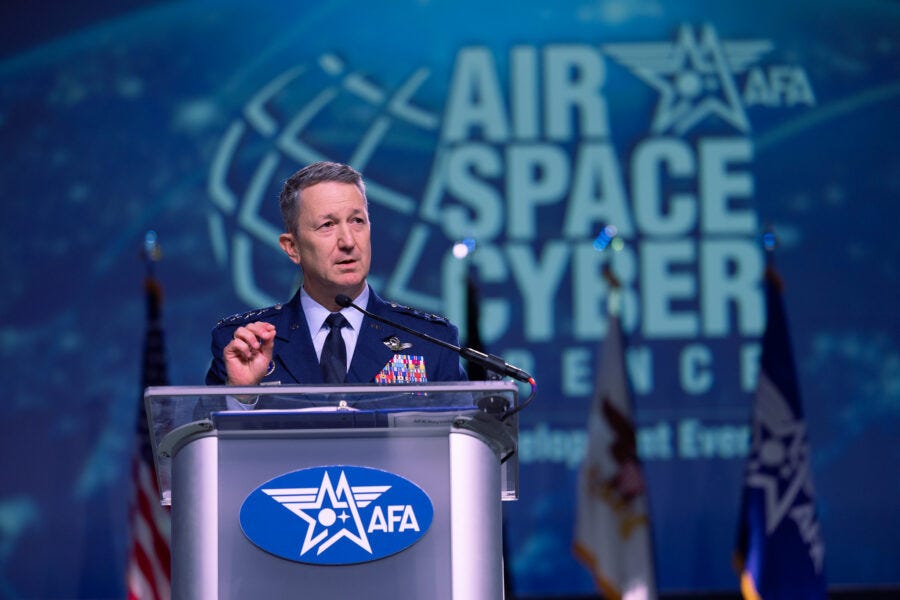
“We have to assume from now on that our formations will be hunted by autonomous systems, jammed across the spectrum, and tracked in real time.” - Gen. Dan Caine, Chairman Joint Chiefs of Staff
American forces need to be ready to operate in that type of conflict environment.
Advancements in AI and cyber capabilities are the top factor in accelerating changes in warfare.
In the future fight, advantage will go to the side who can see first, who can understand first, decide first, and act first, and along the way be a learning organization
“In Ukraine, FPV drones operating in heavily contested environments using AI-enabled computer vision to continue to drive towards targets even without GPS. That gives small units affordable precision and shows how quickly software and autonomy are changing what is possible at the tactical edge. In certain locations on the front line of troops right now, the life expectancy of a new Russian recruit arriving on the front lines is as little as 20-30 minutes.”
Related: Caine: US Must Prepare for Forces to Be Tracked in Real Time

Pentagon Unveils Top Performers in Latest Gauntlet for Drone Dominance Program
BLUF: DoW announced the winners of the second Gauntlet competition under its Drone Dominance Program, the Pentagon’s signature effort to ramp up the U.S. military’s arsenal of small UAS.
Gauntlet 2, led by DIU, was the Drone Dominance Program’s most demanding test to date and included two “mission areas”: deep strike and close quarters battle.
Operators pushed participants to their limits, flying 1,858 sorties across 23 platforms from 19 companies. V
Each of the 11 platforms evaluated at long distance made it to 15 km. (In Gauntlet 1, only 24% of drones managed to reach 10 km).
Deep Strike: Perennial Autonomy | Hyperscale | Neros | Skycutter | Swarm Defense Technologies
Close Quarters: Neros | ORQA US | XTEND Reality | Vector | ModalAI
The DoW plans to acquire 60,000 drones from that pool of vendors.
Compared to Gauntlet 1, these drones are cheaper, more capable, and sourced from a supply chain more closely tied to the American industrial base.
Pratt Licenses Hermeus to Build F100 Fighter Jet Engine

BLUF: Pratt & Whitney is licensing aircraft startup Hermeus to produce Pratt’s F100 fighter jet engine, the first such license for a fellow American firm.
The agreement seeks to boost the industrial base in the face of growing powerplant demand for existing aircraft and for in-development programs like the Air Force’s CCA program.
The agreement covers the production of the F100-PW-229 turbofan, which entered service in 1992 and is used to power some versions of the F-15 and F-16.
Hermeus has a particular interest in the F100: it powers the company’s high-speed Quarterhorse drone.
“The deal means the company would additionally be the first vertically integrated aircraft manufacturer under the Quarterhorse program.” Zach Shore, Hermeus CEO
Everything We Just Learned About The Vectis CCA From Skunk Works

BLUF: Lockheed Martin’s Skunk Works shared new information about its stealthy CCA type drone named Vectis.
One of the most intriguing details is the true nature of its air inlet configuration, pointing to the premium on survivability the Skunk Works has placed on its CCA.
Vectis has a far more exotic, deeply recessed “submerged” top-mounted air intake than was originally disclosed when Vectis first came out of the shadows.
It is designed to be both survivable and affordable and flexible across the range of missions that our customers need.
The design is expected to be capable of both air-to-air and air-to-ground missions.
Vectis has a traditional electro-optical/infrared sensor turret behind a stealthy faceted enclosure under the nose.
Vectis is designed with an eye toward modularity and open-architecture systems.
Their advanced yet simple design and manufacturing processes offer advantages to accelerate development and prototype, and for reducing costs and positioning Vectis to enter full-scale production.
First flight is planned by the end of 2027.
Related: Lockheed Plans to Fly Vectis CCA by End of 2027, Already Working on More Aircraft and Lockheed to Build 4 More Vectis Drones, 2027 First Flight Remains on Target and Lockheed boosts bet on Skunk Works’ Vectis stealth drone
Drone Maker Unveils Low-cost Alternative to MQ-9 Reaper

BLUF: Swarm Aero on Monday unveiled a new low-cost UAS Gamera capable of carrying a payload of more than 2,800 pounds.
This comes as the Air Force searches for risk-tolerant aircraft that can be produced cheaply and in large numbers as part of its new Massed Modular Aircraft (MMA) program.
Gamera is the first UAS designed to carry bomber-class strike munitions such as the Long-Range Anti-Ship Missile (LRASM) and Joint Air-to-Surface Standoff Missile-Extended Range (JASSM-ER) as well as other cruise and hypersonic missiles.
Although Swarm did not give a specific price point, the company said comparable strike effects would cost 10 times less than existing platforms.
“Low cost isn’t something that you kind of sprinkle on an existing design, an existing engineering system, even an existing organization. You have to design the aircraft, design the company around that.” - Peter Kalogiannis, Swarm Aero, CEO
Related: Cheaper Reaper? Swarm Aero Unveils Gamera
Textron, Merlin Unmanned Cessna Skycourier for Pacific island Resupply

BLUF: Textron and Merlin Labs unveiled a new unmanned aircraft concept to kickstart conversation about Pacific logistics.
The companies’ proposal would take Textron’s Cessna Skycourier and remove the cockpit altogether, replacing it with a flip-up nose for easier automated loading and a Merlin Pilot AI to fly the plane.
The Skycourier’s capabilities includes three tons of payload, a thousand miles of range and ability to operate from austere airstrips only half a mile long.
This makes it an ideal low-cost complement to the much larger cargo aircraft in the Air Force’s current fleet, especially for supplying scattered island outposts in the Pacific.
The unmanned aircraft would also allow the Air Force to preserve its human pilots for the long-haul missions.
Pentagon Taps USNDA To Head Its Top Drone Competitions
BLUF: OUSD(R&E) is partnering with the US National Drone Association to run its Top Drone program, teeing up events that will pit remote pilots against each other.
At a T-REX event run by OUSD(R&E) pilots flew drones under simulated battlefield conditions in the inaugural Top Drone competition.
USNDA’s competition structure which it says pushes small drone operators farther and faster under simulated battlefield conditions will serve as the primary venue for identifying troops with top remote pilot skills.
Founded by a group of Marine veterans, USNDA was also involved in the development of the Marine Corps’ Attack Drone Team, the first of the military’s formal UAS-focused organizations stood-up in January 2025 that eyed competition as a mechanism for drone proliferation.
“Achieving American drone dominance is about more than scaling lethal capabilities. It’s also about developing the world-class operators who will execute the mission.” - Emil Michael, Pentagon, CTO
“Through our focus on rapid technology experimentation, we’ve seen time and time again, operator fluency is essential. Top Drone is about pushing operators to move faster and adapt to the changing operational landscape.” COL Matthew Limeberry, T-REX Director
“Top Drone will be the yardstick that can actually and objectively measure operator performance, with closed performance reporting straight to the top to ensure the guys have the training, tech and tactics they need.” - Nathan Ecelbarger, USNDA President
SOF Taps Sea Machines for Autonomy Systems

BLUF: Sea Machines Robotics secured a five-year IDIQ contract to supply its commercial, non-developmental, TRL-9 autonomy kits to US Special Operations Forces.
The contract will allow US SOF to use Sea Machines’ autonomy systems on a range of vessels for expeditionary logistics, ISR, and maritime security missions.
The “drop-in” autonomy kits use Sea Machines’ Autonomous Command and Control system and are designed to be installed on different types of vessels.
The kits can be deployed within hours, allowing the systems to be adapted to different missions and operational requirements.
Forget Robot Workers, This Company Wants to Build Soldiers

BLUF: Foundation Future Industries wants combat-ready humanoid robots to be next on the frontlines of military conflicts.
Experts say humanoid robots are still many years away from large-scale use in wars as the technology and regulations around them need to evolve further.
Its flagship robot is the Phantom MK-1, a man-sized humanoid which can carry 40 kilograms. A second-gen robot equipped with chips from AMD is in development.
The company can currently produce between 300-500 robots a year, and it is building another site to boost capacity.
“When a robot’s perception, reasoning and adaptive behavior get precise enough, instead of dropping a bomb in a building, you can send humanoids to actually walk inside that building and go directly to the target.” Sankaet Pathak, Foundation Founder
Lockheed’s New Modular JASSM Offers Swappable Noses and Launch Options
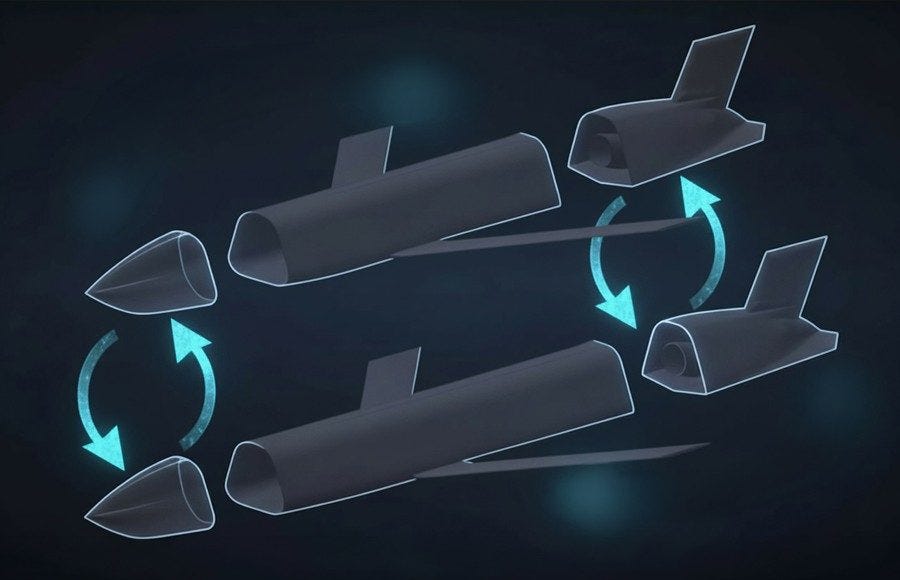
BLUF: Lockheed Martin unveiled its concept for a modular version of one of the Air Force’s main air-to-ground cruise missiles, opening up a range of possible upgrades and uses for the weapon.
The AGM-158 FLEX airframe is based on the Joint Air-to-Surface Standoff Missile.
The airframe has a removable nose cone to let users swap in different sensors and a reconfigurable tail for different launch options.
Lockheed invested $35M of its own money on the idea, based customer demand to have increased options.
“The AGM-158 FLEX airframe concept was driven by a strategic need to keep pace with rapidly evolving threats, insert emerging technologies quickly, manage obsolescence, and provide, at scale, a cost-effective missile family that can be repurposed for a wide range of missions while delivering timely, relevant capability to the warfighter.” - Lockheed Martin, Spokesperson
Related: Fighter Jet-Maker’s Modular Airframe to Broaden Launch, Payload Options for Cruise Missile Family
$92M Deal Turns High-Altitude Drones Into Airborne Sensors for Hypersonic Flight Tests
BLUF: AEVEX Corp. landed a potential $92.2M contract to support the DoW’s SkyRange hypersonic test program.
The three-year award brings AEVEX into flight operations across Western U.S. and Pacific test corridors.
Its engineers will handle airborne telemetry, communications, payload integration, and distributed range systems. SkyRange is designed around a simple change in how the military instruments difficult flight tests.
Instead of keeping critical tracking equipment at fixed sites, the program puts much of it aboard aircraft. That gives test teams mobile platforms that can follow demanding flight profiles and provide data from positions closer to the action.
The program uses converted RQ-4 Global Hawks with specialized sensors to track hypersonic vehicles during flight.
DARPA-Funded Project Could Make Computer Chips 100x More Efficient
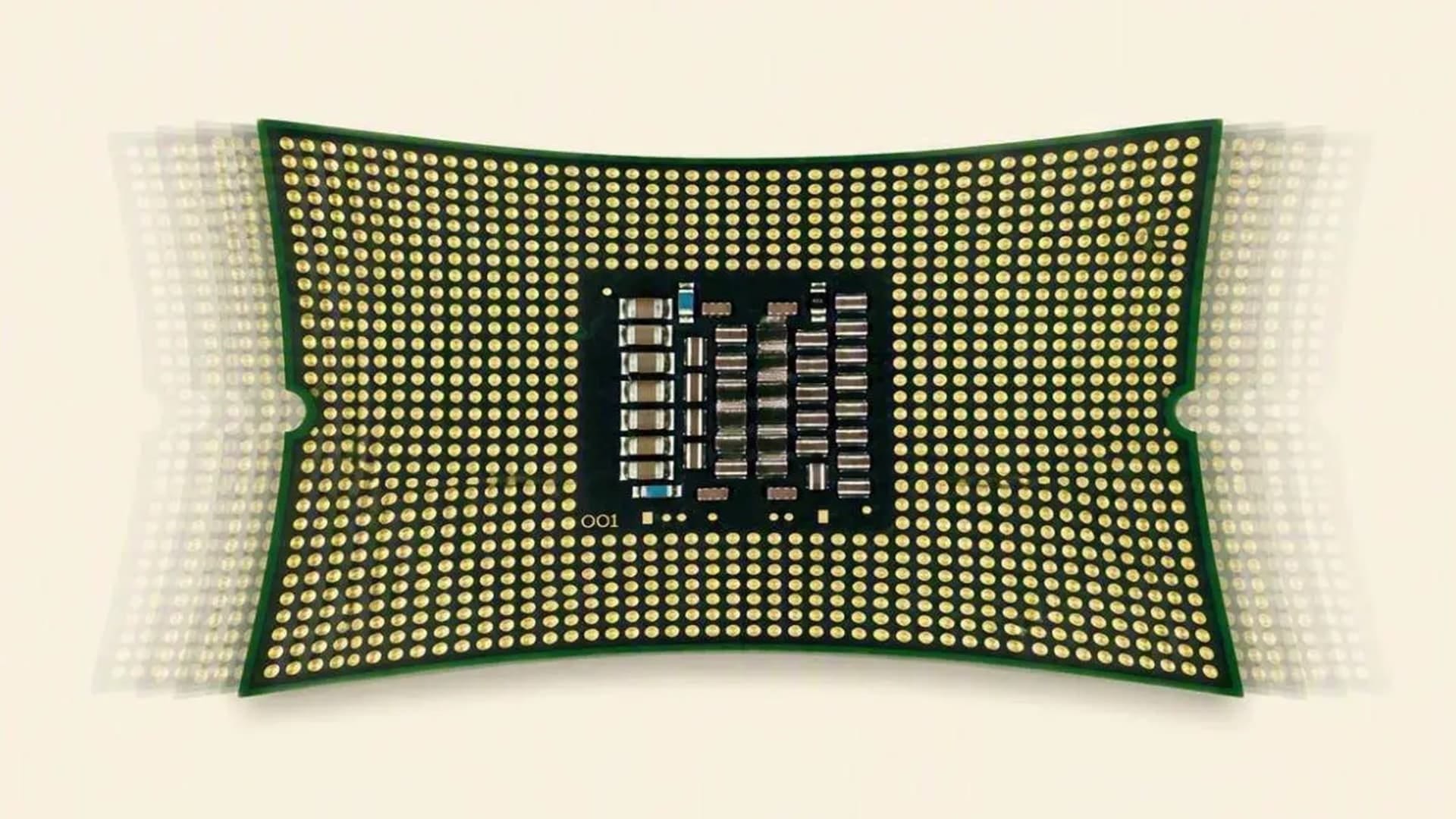
BLUF: US researchers have been developing a novel computer logic that uses nanoscale mechanical strain to process information and could eventually be 100 times more energy efficient than current technologies.
Backed by $10.6M from DARPA, the method uses nanoscale mechanical strain alongside electrical signals to perform logic operations.
The funding comes through the Fast and Curious program. It aims to create logic circuits that are at least 100 times more energy efficient than today’s state-of-the-art technologies.
Their technology is called Mechanically Amplified Ferroic-Actuated (MEFA) Logic. It uses ferroic materials that slightly expand or contract when voltage is applied.
This movement is amplified and sent to a nearby semiconductor channel, where it controls current flow and switches between logic states.
“Whether it’s charge, light, magnetism, or strain, computing doesn’t care how information is transported as long as it reliably represents a one and a zero.” - Asif Khan, Georgia Tech, Associate Professor

Combat Power Is Industrial Power
Greg Little and Ian Crone

BLUF: America’s defense industrial base is a system that is fragmented, expensive, and slow to learn during a period of rapid change. America cannot solve the problems with this system merely by routing more money through the same fragmented processes.
Just as Detroit could not defeat Toyota by adding another shift to an inferior production system, the DoW cannot create a twenty-first-century arsenal by applying more funding, oversight, and reporting requirements to a twentieth-century operating model.
What it needs is a cutting-edge industrial operating system that gets better and smarter over time.
Ukraine is holding its own against Russia with a highly adaptive industrial system capable of developing and scaling production of drones to counter the latest threats encountered on the front line.
More important than simply counting missiles is whether the system producing them can learn, adapt, scale, repair, and replenish faster than its competitor.
The DoW’s first National Defense Industrial Strategy recognized the importance of resilient supply chains, workforce readiness, flexible acquisition, and economic deterrence, and its subsequent implementation plan assigned responsibilities, resources, and metrics to those priorities.
Program leaders, suppliers, manufacturers, depots, combatant commands, and policymakers could operate from a continuously updated picture connecting operational demand with inventory, production capacity, supplier risk, workforce, and delivery timelines.
AI could identify constraints before schedules slip, expose shared dependencies across programs, and establish faster learning loops between operators, engineers, factories, and suppliers.
The U.S. must connect operational demand to industrial capacity, manage constraints across portfolios rather than within individual programs, and establish a shared operating picture across government and industry.
Lockheed reaches deal to boost production of secretive JATM missile
BLUF: The DoW and Lockheed Martin have reached an initial agreement to ramp up production of the AIM-260 Joint Advanced Tactical Missile (JATM), the secretive weapon set to succeed the AMRAAM.
The framework agreement sets the stage for future multi-year procurement (MYP) of JATM and boosting foreign military sales.
Lockheed will support necessary investments to drive the production increase under this agreement.
The JATM deal is the latest in a series of framework agreements inked this year between the Pentagon and industry aimed at rapidly scaling up weapons production, with industry pledging to invest its own funds to modernize and build new facilities and the department promising stable, multiyear production deals.
The new missile has increased range and effectiveness over existing air-to-air weapons and will be integrated on Air Force and Navy fighters including the F-22 and F-35.
Defense Industrial Base Requires Energy Security

BLUF: The U.S. is consuming munitions and critical materiel faster than it can replace them. Catching up will require energy infrastructure that underpins the defense industrial base.
The U.S. military now relies on domestic installations for missions such as drone operations, cybersecurity and AI-enabled intelligence processing that turns raw sensor data into actionable targeting packages, which all require a lot of energy.
Adversary capabilities, from drone swarms to anti-ship missiles, threaten the supply lines that move materiel from factory floor to forward position. When the logistics chain is contested, the margin for production shortfalls at home shrinks to zero.
Congress took a meaningful step and appropriated money to invest in the defense industrial base, focusing on workforce and supply chain constraints.
Congress needs to ensure adequate attention to the poles, wires, and power generation that are vital to defense manufacturing.
Congress should consider expanding the DoW’s authorities to invest directly in fortifying the commercial power grid by providing loans to build transmission lines that would serve communities with a large defense industrial footprint.
Congress and the DoW should ensure the DoW has all the resources it needs to use the DPA Title III designation for the power grid, which could help stockpile expensive and scarce components that are critical for grid reliability.
USA Rare Earth’s New $1.2B Plant to Produce Magnet Metals
BLUF: USA Rare Earth has broken ground on a $1.2B rare earth metal and magnet manufacturing facility in Blacksburg, SC.
the company is targeting an annual production capacity of 6,400 metric tons (7,055 tons) of sintered neodymium-iron-boron (NdFeB) permanent magnets and 5,000 metric tons (5,512 tons) of strip-cast metal and alloy.
The company expects commissioning to begin in 2028.
“A secure rare earth supply chain isn’t built with a single mine or a single factory. It requires rebuilding every link.” - Gregory Bowman, USA Rare Earth, Chief Global Policy Officer
Pentagon $450M Investment in Tungsten Will Create 1,200 Jobs
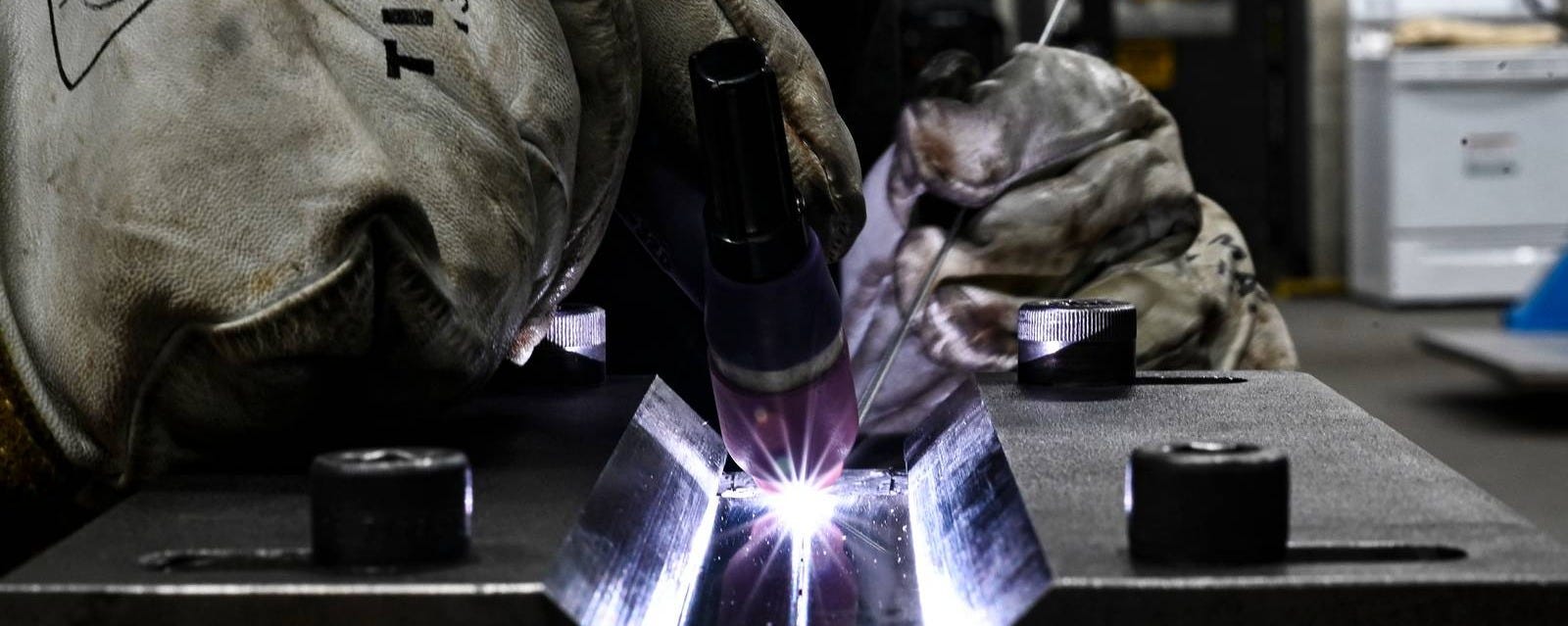
BLUF: The DoW invested $450M into The Elmet Group that develops tungsten, as part of a move anticipated to create 1,200 jobs.
Tungsten is a dense, ultra-hard metal with the highest melting point of any element. It is used in critical components for missiles, munitions, aerospace, propulsion, naval, undersea, electronics, and industrial manufacturing applications.
The investment is to strengthen domestic tungsten capacity, bolster U.S. industrial resilience and military readiness, and help secure an essential material for the defense industrial base.
"This investment reflects the DoW's commitment to rebuilding critical industrial capacity in the U.S. Expanding domestic tungsten processing will strengthen supply chain resilience, support high-quality manufacturing jobs, and reinforce the production base behind essential defense systems." Mike Cadenazzi, ASW(IBP)
Related: DOW $450M Investment in The Elmet Group for Tungsten Supply Chain

AFNWC Welcomes New Portfolio Acquisition Executive
The Air Force Nuclear Weapons Center officially welcomed Col. T. Justin Bronder as its new PAE for Nuclear Air Delivered.
See all the PAEs at Digital Pentagon.
Job Opening - GS-15, Joint Staff/J8 Management and Program Analyst
Joint Staff seeks a high speed reformer in the Joint Capabilities Division to help shape new Department requirements system, mission analyses, and the future of the JROC.

Army Speeds Up Testing For New Command System

BLUF: The Army is testing two competing NGC2 command-network prototypes, led by Anduril and Lockheed Martin, in the 4th and 25th Infantry Divisions.
The Army’s testing command now delivers assessment results within one to two weeks of an exercise, down from a previous timeline of months.
Rather than picking one vendor to build NGC2 top to bottom, the Army is running two different approaches side by side.
The 4th Infantry Division, based at Fort Carson, CO, has been testing a system led by Anduril Industries, working with partners including Palantir and Microsoft under a $99.6M contract the Army awarded in July 2025.
The 25th Infantry Division has separately been testing a competing approach led by Lockheed Martin.
Rather than treating the two divisions as rivals, the Army has had them share soldier feedback and technical data from their respective field exercises, called Ivy Sting and Ivy Mass for the 4th ID and Lightning Surge for the 25th ID.
The Army plans to spend nearly $3B in FY27 alone, with a goal of fielding some version of NGC2 across every Army division within five years.
Army Futures Command’s leader, Gen. James Rainey, has described the effort in broader terms, saying it’s a blueprint for how we’ll deliver future Army systems.
“We are already moving out with the converged data layer architecture.” Joseph Welch, PAE C2/CC2
Anchoring Army Modernization To Operational Problems
Matt Russell and Michael Carvelli
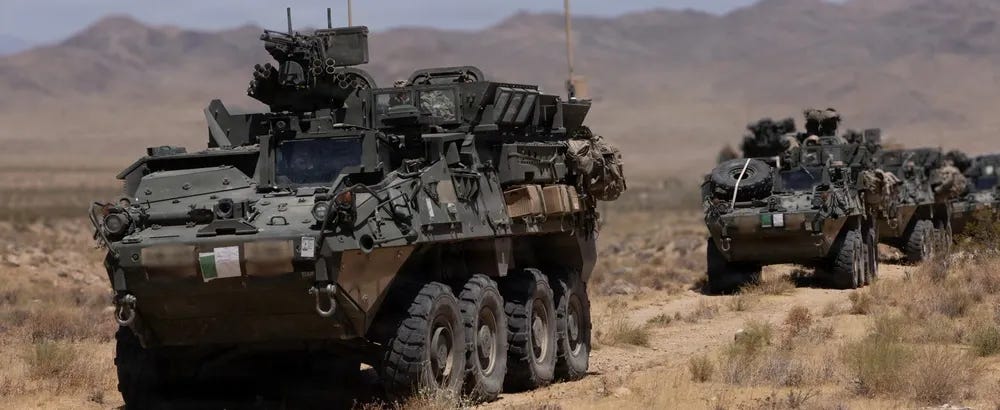
BLUF: Project Convergence-Capstone 6 demonstrated the value of testing emerging technology under realistic battlefield conditions. Soldiers at Fort Irwin tested emerging technologies alongside joint and allied forces.
Uncrewed systems operated in scenarios that forced soldiers and leaders to make decisions under pressure. Army leaders observed how new equipment performed against threats and conditions designed to resemble combat.
Army leaders should keep asking which battlefield problem a program solves as requirements, acquisition, fielding, and assessment move forward.
Technology, threats, organizations, funding, and requirements change over time.
Successful modernization requires leaders to revalidate that operational problem as evidence accumulates and ensure the developing capability continues to address the problem under current battlefield conditions.
Speed serves a battlefield purpose when Army leaders keep modernization efforts connected to a validated operational problem. Rapid development needs a stable reference as technology, threats, requirements, and organizations change.
A clear operational problem gives leaders that reference while allowing solutions to evolve.
A clear operational problem gives modernization a common reference from early testing through fielding.
Modernization becomes harder to manage as a capability moves from experimentation into requirements, acquisition, resourcing, fielding, and assessment.
Repeated problem revalidation helps modernization stay aligned as battlefield conditions change.
Our Take: Fully agree. Last year the Department cancelled the horrific Joint Capabilities Integration and Development System (JCIDS) and pivoting to a Joint Force Requirements System. However within the Services, they have not modernized their requirements system to operate in a modern, dynamic environment. DoW at the strategic to portfolio levels must continue to define and communicate clear operational problems for industry and defense stakeholders to design, develop, and deliver capability to solve them.
Army Awards Lockheed $1.2B Contract for PrSM Inc 2 System
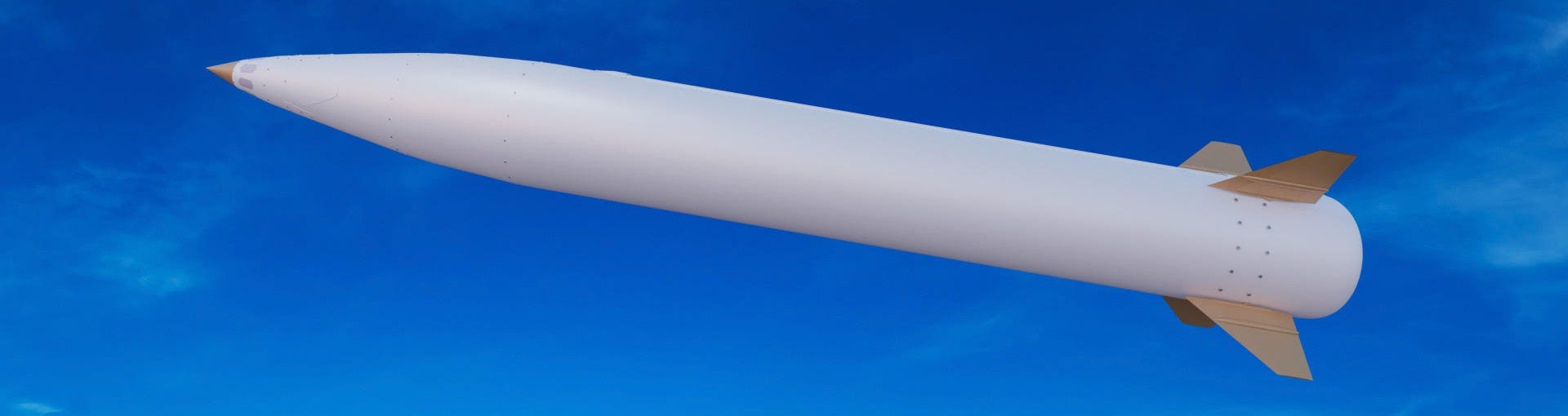
BLUF: The Army awarded Lockheed Martin a $1.2B contract for an early operational capability of Precision Strike Missile (PrSM) Increment 2.
PrSM Increment 2 is the Army’s initiative to develop a missile with a multimode seeker capable of hitting maritime targets on the move.
It’s also referred to as the Land-Based Anti-Ship Missile seeker, and is designed to travel up to 500 km (310.7 miles) in combat.
The Army used its PrSM Increment 1 capabilities for the first time in combat in March during the on and off again conflict in Iran.
Increment 3 will seek to add in enhanced lethality payloads while Increment 4, for which the Army has tapped a Lockheed team and a Raytheon-Northrop Grumman team, will fly over 1,000 km (621.4 miles).
The Army is also looking for an Increment 5 solution that can fly more than 1,000 km and fire from an autonomous launcher.
Army Gets Next-Gen Artillery Guidance Kit Built for GPS Jamming

BLUF: Northrop Grumman will produce a new version of its Precision Guidance Kit (PGK) designed to keep 155 mm artillery accurate when GPS signals are degraded or jammed.
The new E5 variant adds anti-jamming capabilities intended to maintain that precision when adversaries interfere with GPS signals.
The PGK E5 adds anti-jamming technology to the existing guidance kit while retaining the same form factor and compatibility with fielded artillery systems.
The upgrade is intended to let Army and allied forces continue using GPS-guided artillery in environments where electronic warfare can disrupt satellite navigation.
Recent testing in GPS-degraded conditions showed the PGK E5 exceeding both threshold and objective accuracy requirements.
Production is already underway at the company’s facility in Plymouth, MN, with first deliveries expected in early 2028.
Other Army News:
As experimental drone battalion ends, Army aims to push drones to every squad
Army can outfit small drones to each unit, but needs the training to do so

Navy, Boeing Ink First MQ-25A Stingray Production Contract
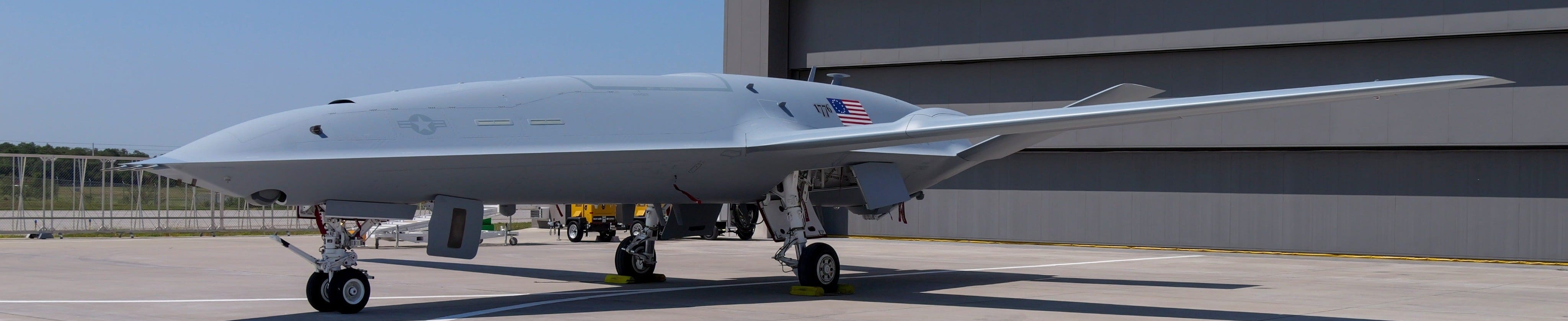
BLUF: The Navy awarded a $562M fixed-price incentive contract to Boeing to kick off Lot 1 Low Rate Initial Production of the MQ-25A Stingray unmanned tanker.
Boeing’s MQ-25A will become the DoW’s first unmanned tanker and the Navy’s first operational carrier-based unmanned aircraft.
The UAV is designed to extend the life of the Navy’s F/A-18 Super Hornets and relieve the fighter jets of their aerial refueling role so the aircraft can focus on strike missions.
The Stingray is supposed to deliver at least 14,000 pounds of fuel over 500 nautical miles, around the same capacity as the Super Hornets.
The contract covers three LRIP Lot 1 MQ-25As and includes additional funding for components to support three Lot 2 MQ-25As.
Initial Lot 1 deliveries are slated for 2029. The MQ-25 program of record includes 67 operational aircraft and nine test aircraft.
The Navy completed its first successful Stingray test flight on April 25, though that demonstration lagged a year behind the service’s initial plans. The Navy estimates it will continue flight tests through the end of this year.
“Awarding this first LRIP contract marks a pivotal transition from development to operational reality and is a testament to the focused effort of our joint government and industry teams. MQ-25A will deliver the advanced reach, lethality and survivability our warfighters need to outpace evolving threats and dominate the future battle space.” - CAPT Daniel Fucito, Navy, PM for Unmanned Carrier Aviation
Related: Navy Awards First Production Contract For MQ-25A Stingray
Navy Wants Containerized, Low-cost Interceptors to Defeat Cruise Missiles, Drones
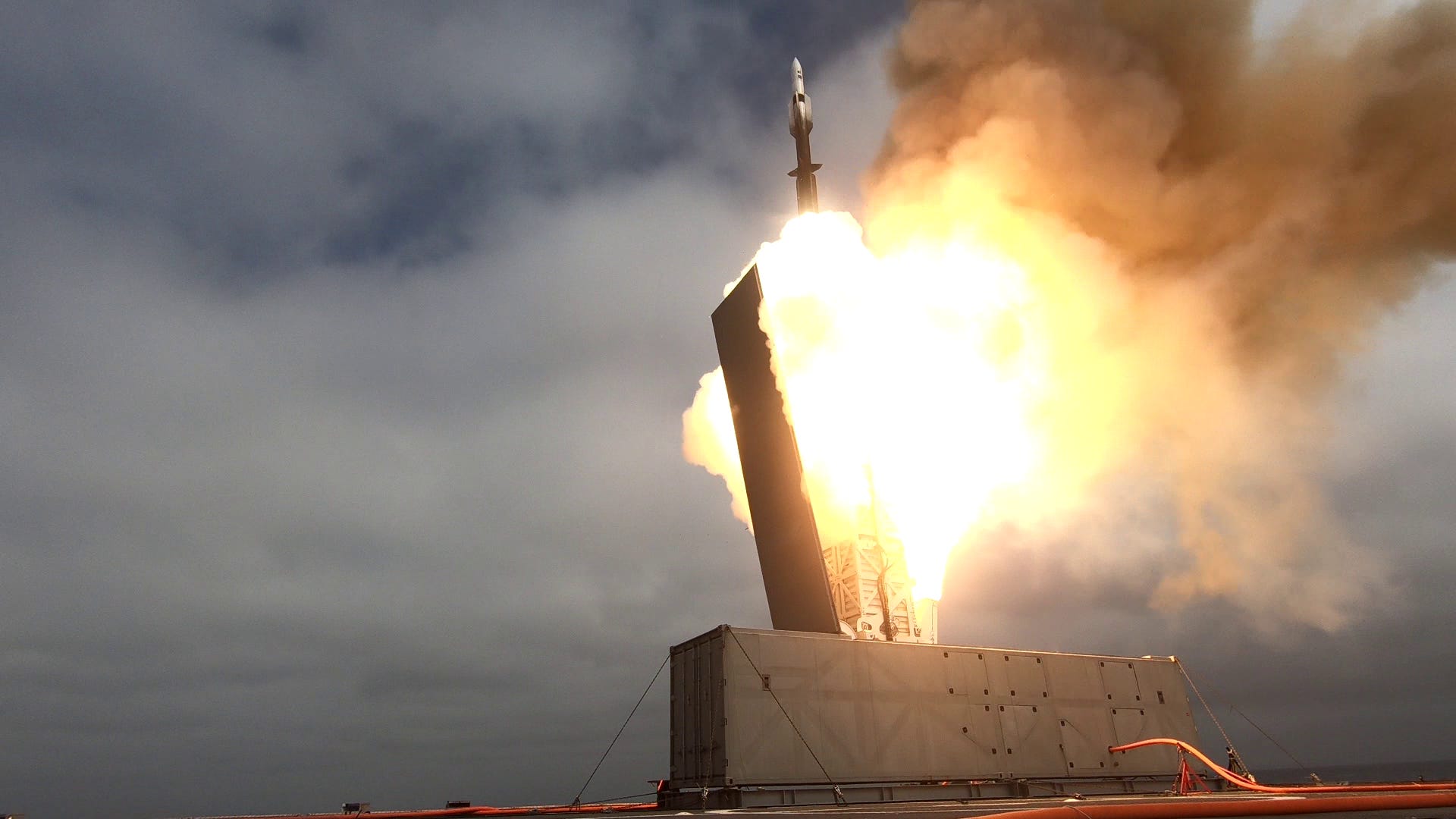
BLUF: The Navy wants to deploy containerized low-cost interceptors to defeat cruise missiles and attack drones, according to a request for white papers.
Dubbed the Naval Affordable Interceptor, the concept seeks to field a container launcher that can carry at least 60 missiles. The system’s installation should not require permanent modification aboard its host warship.
Interested firms should be able to produce 500 interceptors annually and operationally deploy the system within 12 months of award.
The white paper’s request and requirements for the low-cost interceptors are for the first system planned to be procured by the Navy’s PAE Munitions Rapid Capability Cell.
The massed low-cost missile and one-way attack drone threat has resulted in an unfavorable cost and magazine-depth problem for traditional air and missile defense.
The affordable interceptor’s deployment method also reflects the Navy’s increasing focus on bringing offensive, defensive, sensor and EW capabilities to the fleet through containers.
MARTAC Adds Capacity for 100 Devil Ray USVs a Year as Navy Pushes for Unmanned Maritime Mass.
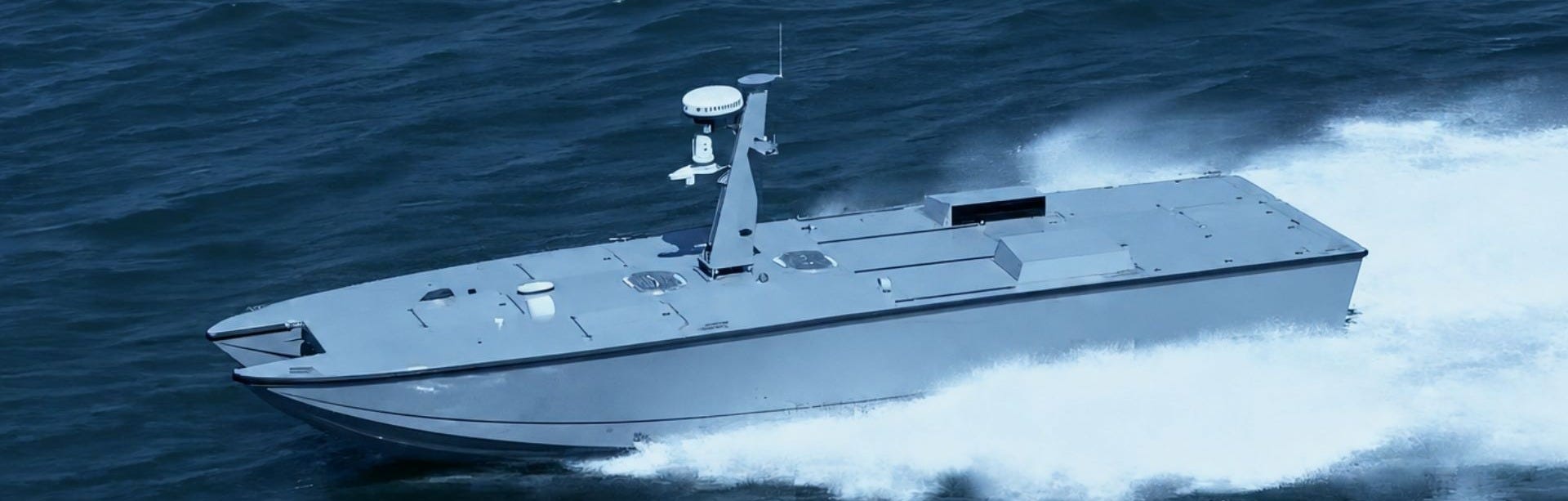
BLUF: MARTAC partnered with SŌLACE Boats to add production capacity for 100 Devil Ray USVs per year. The expansion supports higher output as U.S. and allied demand for unmanned maritime platforms grows.
The agreement will use SŌLACE’s 18,600-square-meter facility in Edgewater, FL, which brings experience in vacuum infusion and catamaran hull construction to Devil Ray production.
The additional capacity is intended to support a broader shift by U.S. naval forces from limited unmanned demonstrations toward larger operational fleets, while giving MARTAC more industrial depth to respond to demand from both domestic and allied customers.
Three Prototype Agreements On LCU 1700 Production
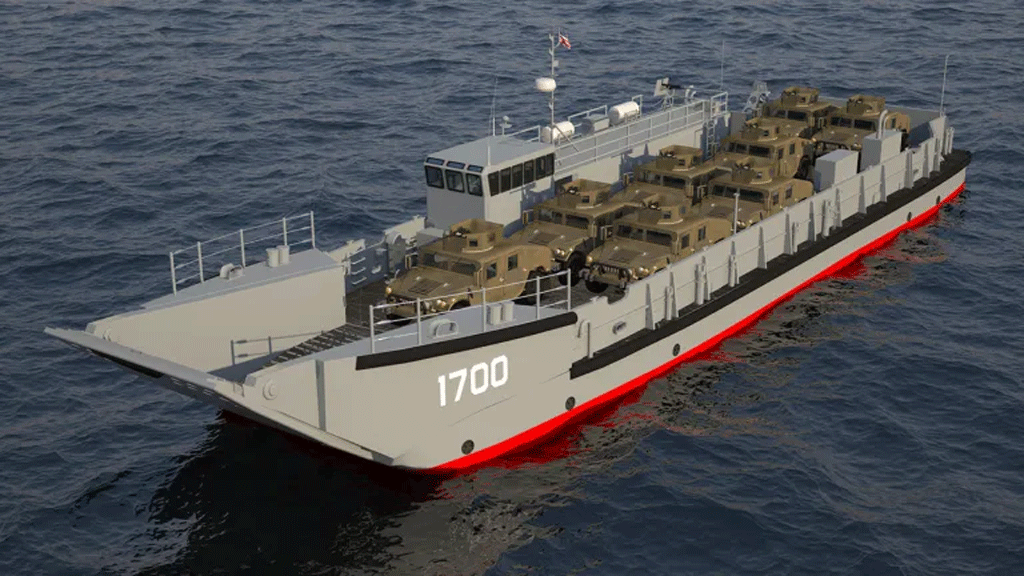
BLUF: The Navy has awarded three competitive Prototype OT agreements to Conrad Shipyard, Master Boat Builders, and Saronic Technologies to build Landing Craft, Utility (LCU) 1700 class craft.
Under the agreements, each shipyard will construct two or three prototype craft and refine manufacturing plans to support high-rate production.
The total initial construction obligation is $280M.
The newly constructed craft will feature improved reliability, increased payload capacity, extended operational reach and compatibility with the Navy’s amphibious warfare ships.
Deliveries are scheduled to begin in late 2028 and continue through 2029.
“By selecting three distinct shipyards, the Navy is expanding its shipbuilding industrial base capacity and building a resilient second source of supply for landing craft. OT prototype authority allows the Navy to move at the speed of relevance.” - William Mahan, PTDO ASN/RDA
Related: Navy Awards Three Prototype Agreements To Accelerate LCU 1700 Production
Navy Moves Blackbeard Hypersonic Weapon Into Production
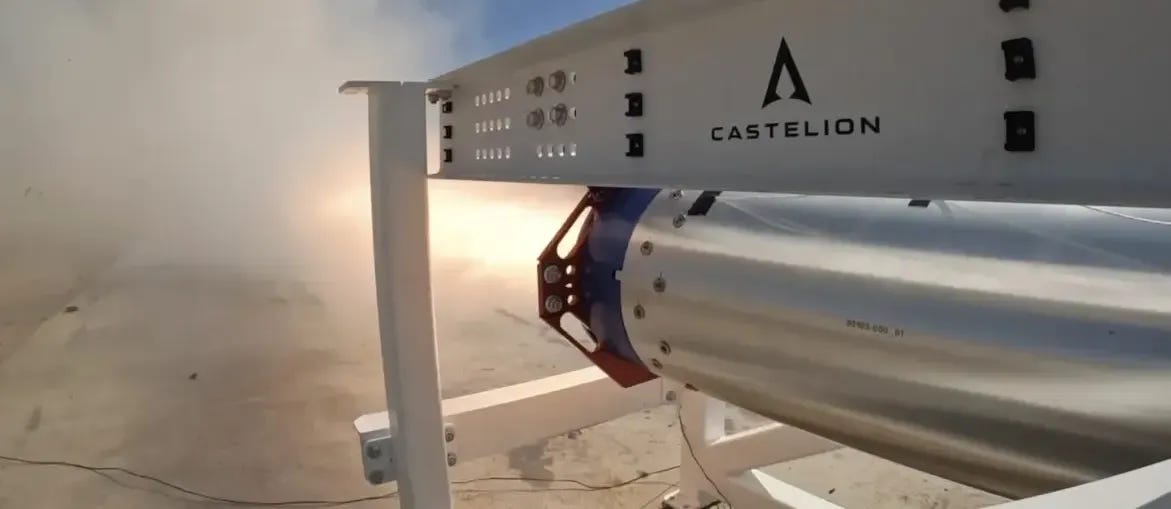
BLUF: Castelion has received a production delivery order from the Navy to manufacture, assemble, test, and deliver an initial lot of Blackbeard hypersonic weapons to the fleet.
PAE Aviation awarded the order, valued at up to $200M through its Future Capability Development and Integration Aviation Rapid Capabilities Cell.
The order follows the Navy’s purchase of 50 Blackbeard Early Operational Capability (EOC) weapons in June 2026.
Blackbeard is an air-launched hypersonic weapon designed for use against maritime and land targets. Castelion said the system is intended to provide naval aviation with a long-range strike capability and increase the number of weapons available to the fleet.
Castelion developed the weapon with private investment and in cooperation with the Navy, Army, and Air Force. The company is using a vertically integrated manufacturing approach for production.
“The Navy’s decision to move into production reflects its confidence in the Blackbeard program, and the progress we’ve made together. We are grateful to PAE(A) for the trust and the urgency. Blackbeard was engineered from day one for the production line, and we look forward to delivering this capability to the fleet.” - Bryon Hargis, Castelion, Co-founder and CEO
Related: Navy Awards Production Delivery Order for Blackbeard Hypersonic Missile
Congress Must Save the Navy from Catastrophic Failure: Barreling toward a Hollow Navy
BLUF: Congress failed to fix the broken Navy, but it now risks allowing the Navy to become something worse: a hollow force that exists on paper but cannot generate the ships, aircraft, submarines, and sailors necessary to fight and win a war.
The U.S. Constitution clearly states that Congress is responsible “To provide and maintain a Navy.” Never has this clause been more important.
Whether or not Congress turns things around hinges on three decisions.
Whether the U.S. changes a carrier design already in production.
Whether the Navy will be forced to absorb an indefinite war that consumes the fleet and causes deferred maintenance costs to explode.
Whether we adopt a modernization plan that could crowd out the unmanned and AI-enabled systems needed for the next war.
Congress has the next four months before NDAA passage to take three critical steps: Stop the carrier redesign, fund the war’s consequences, and pass the $350B.
The authorizers need to prohibit the Navy from expending any funds to alter the aircraft carriers under construction.
The appropriators must pass an emergency supplemental to regenerate the Navy.
Pass the $350B reconciliation request. While many have given up on these funds, it is clear that without them, the entire modernization of the Navy comes to an end.
Building Durable Demand for American Ships
BLUF: Can Washington Build a Maritime Industrial Base Without a Market for American Ships?
Washington is reconsidering not merely how much it spends on ships, but how the industrial system that produces them should operate.
The Navy’s May 2026 Shipbuilding Plan calls for a “buildable and sustainable” high-low mix of platforms and a dramatic expansion of construction distributed among multiple sites.
Navy awarded its first ever Vessel Construction Manager contract to the TOTE services company in a $2.2B deal to oversee the construction of the new Medium Landing Ships.
President Trump directed the government to apply the ‘Finland Model’ to as many as three ship classes as part of a broader effort to revitalize American shipbuilding. In addition to restricting the Navy from imposing the kinds of iterative design changes and instability that caused serious disruptions in the Constellation program.
Washington is fundamentally reconceptualizing America’s maritime industrial base. Considering commercial shipbuilding, naval construction, suppliers, repair facilities, ports, and workforce inside a single conceptual framework reframes the shipbuilding crisis as a larger maritime economy issue rather than a defense-production issue or a contracting system issue.
Without a robust commercial sector to anchor the workforce and supplier networks, infrastructure will decay the moment Navy and Coast Guard procurement cycles dip.
The proposed Strategic Commercial Fleet would involve growing the current U.S. flag fleet from 188 vessels to 250 according to the proposed SHIPS for America Act of 2025, but a one-time initiative to build 62 new commercial ships is not going to save American shipbuilding in the long term.
What distinguishes Fincantieri's naval business is not only the manufacturing techniques it can borrow from commercial shipbuilding, but the existence of a large commercial business that helps sustain the broader industrial ecosystem in which naval construction operates.
Navy Expands Hammerhead Anti-Submarine Mine Production with General Dynamics
BLUF: General Dynamics Mission Systems has been awarded a $230M contract modification by the Navy to continue development and delivery of the Hammerhead anti-submarine mine system.
The Hammerhead mine system provides the Navy with a next-generation, anti-submarine weapon designed for deployment at intermediate and deep-water depths.
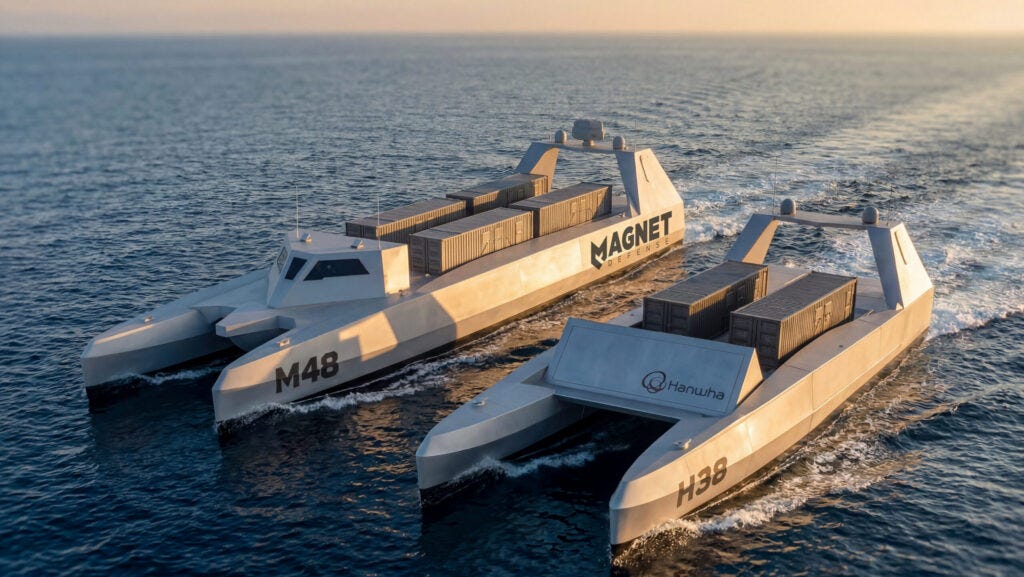
Hanwha, Magnet Defense to Start Construction on New MUSV This Fall, Testing Next Year
BLUF: Hanwha Defense USA and Magnet Defense are planning to start construction on a new, medium unmanned surface vessel (MUSV) this fall, and begin testing that vessel early next year.
Other Navy News:

Marines Secure $7.3M Contract for Ground Robots
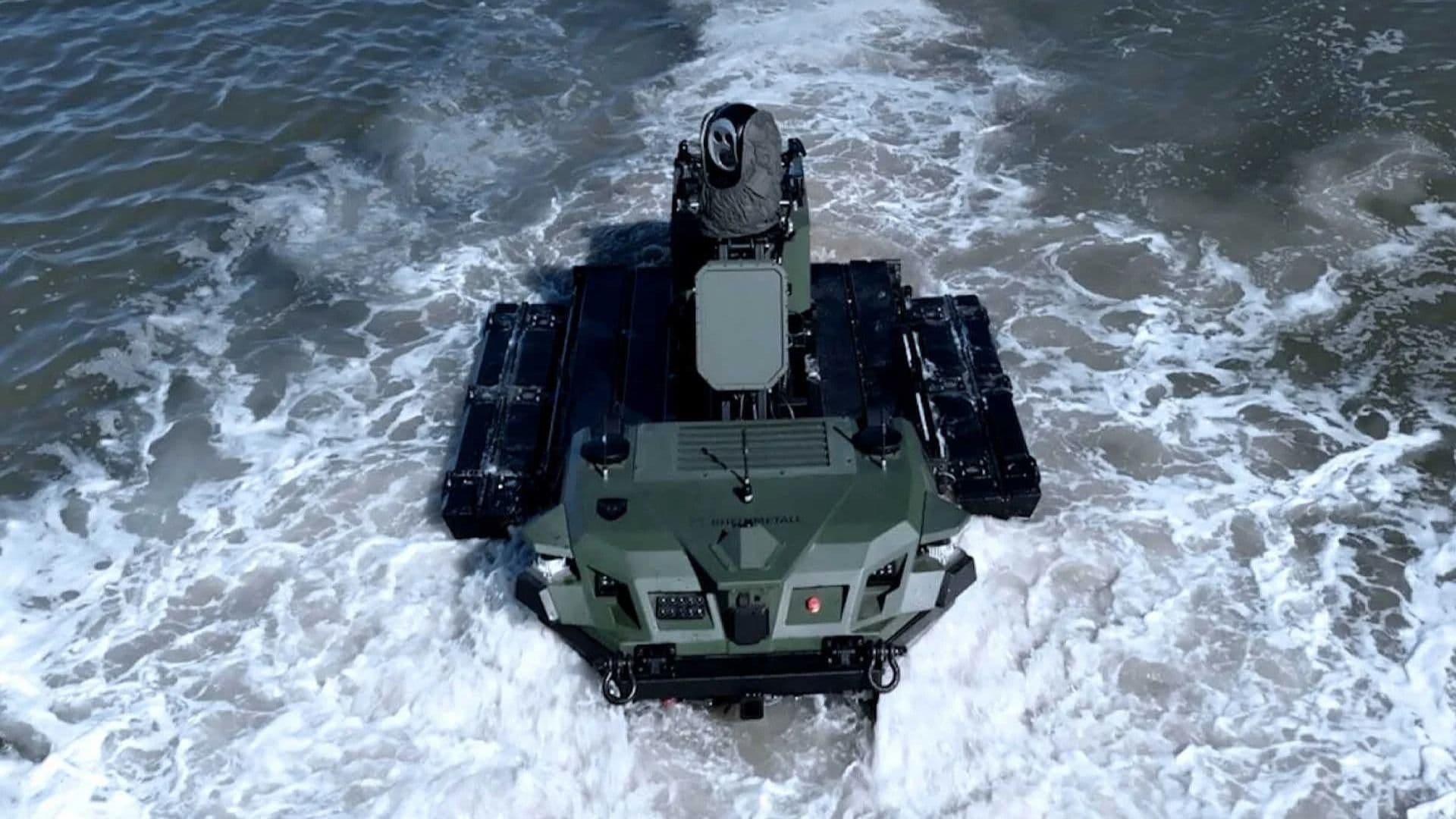
BLUF: American Rheinmetall, the US arm of German defense company Rheinmetall, has secured a $7.28M contract to supply autonomous ground vehicles to the Marine Corps.
The company will manufacture and deliver 12 Mission Master SP Autonomous Unmanned Ground Vehicles (A-UGVs), five amphibious kits, associated Marine Kits, and other supporting equipment.
The vehicles will help the service test autonomous logistics and expeditionary mobility technologies.
Each Mission Master SP is built around Rheinmetall’s PATH autonomy system, which allows military vehicles to perform tasks with reduced human involvement.
Marines Demonstrate Rapid HIMARS Rocket Artillery Insertion Capability in Japan
BLUF: Marines demonstrated the ability to rapidly airlift and deploy a HIMARS launcher in Japan during Typhoon Crossbow.
The exercise validated a sequence in which Marines seize key terrain, insert HIMARS, engage a target and quickly withdraw the launcher to a secure location.
This shoot-and-move approach can reduce exposure to enemy detection and counterfire while allowing U.S. forces to project long-range fires from temporary positions across the Indo-Pacific.
The operation demonstrated how Marine aviation and long-range ground fires can be combined to rapidly position combat power across geographically dispersed locations.
In the strategically important Western Pacific, that ability reinforces the Marine Corps’ emphasis on mobility, dispersion and expeditionary readiness.

Acquisition Leaders Emphasize Mission Speed, Risk in Changing Acquisition Culture
BLUF: Senior acquisition and Department of the Air Force leaders took center stage to discuss the department’s ongoing acquisition transformation and the need to put operational outcomes at the center of decision-making.
The panelists (Gen. Dale White, Dr. Erich Hernandez-Baquero, and William Bailey) described a common goal: give acquisition teams the authority, expertise and resources needed to make informed decisions quickly and deliver capabilities that have a measurable impact on the fight.
Instead of measuring success primarily by whether a design review is completed or a test milestone is met, acquisition professionals should understand how those activities contribute to the operational effect a capability is intended to provide.
White challenged acquisition professionals to consider how they would approach a problem differently if the nation were at war and what risks they would accept to achieve the mission.
Bailey said acquisition professionals also should not wait for perfect requirements, additional staffing or new funding before addressing a problem and that the new paradigm means moving beyond a focus on individual program milestones.
Hernandez-Baquero announced that the Space Force will establish a Technology Portfolio Executive who will focus on identifying promising technologies and creating pathways for them to transition into portfolios.
Acquisition leaders need to identify which technologies provide the greatest mission value and ensure those capabilities can transition into production at the necessary rate and scale. That requires greater decision velocity.
Our Take: All fantastic points. We will await to see how this excellent philosophy translates into action.
Industrial Base Concerns Over Building F/A-XX and F-47 Remain: Top Pentagon Procurement Officer
BLUF: As both the Navy and the USAF were racing to field a new generation of advanced tactical jets, the Navy program hit a wall. The reason was concern that the U.S. industrial base could not handle simultaneous final development and production of two extremely complex new fighter aircraft.
The Navy’s program, dubbed F/A-XX, is supposedly back on and a down-select is coming soon, but that concern appears to linger among officials.
The concerns are “not unique” to the F-47 or the Navy’s program but the problem exists to various degrees across the industrial base too.
With Boeing as a finalist, it is also possible that F/A-XX could be a variant of the F-47. As we noted in a past story, the Boeing render for its F/A-XX concept is remarkably similar to artwork for its F-47.
Our Take: Given slips on practically all aircraft, specifically Boeing ones of late, this is a very legitimate concern - especially if the Navy chooses Boeing for its F/A-XX. The temptation will be to follow along with the Air Force with the appeal of commonality but our experience on F-35 shows that will be less likely to reap the desired benefits and they would be better off going with a different contractor to diversify the risk.
USAF’s Fighter Drones to Make Debut in a Large-Scale Exercise
BLUF: CCAs are set to take part in a large-force employment Emerald Flag test exercise later this year which marks another important new steppingstone toward fielding the drones operationally.
The exercise series has historically focused heavily on demonstrating new and improved aerial networking architectures and other command and control capabilities, which will be especially critical elements for future CCA operations.
A key component of the Air Force’s vision for CCA employment is being able to forward deploy the drones to far-flung locations, including airstrips with limited infrastructure and access to logistics chains.
Rapid, distributed deployments like this are central to still-evolving concepts of operations currently referred to collectively as Agile Combat Employment (ACE).
“That’ll be our first tip dip of the toe in an actual force integration.” Lt. Col. Lyndon “OTTO” Bartlett, Director of Operations for the Experimental Operations Unit (EOU)
Related Article: CCA Drones to Fly at Large-Scale Air Force Exercise in December
Our Take: This is a good step. The Air Force has taken small steps towards enabling real ACE ops and integrating CCA will reveal the viability and challenges.
Air Force Plans Hundreds of Autonomous Fighter and ISR Drones by 2032
1000 CCAs & MMAs by 2032
BLUF: The Air Force plans to field at least 500 CCAs by 2032, and another 500 cheap reconnaissance and strike drones known as Massed Modular Aircraft that same year.
Future “increments” of CCA could focus on other missions, such as air-to-ground strikes, reconnaissance, or electronic warfare operations.
The Air Force is also accelerating a program called Massed Modular Aircraft, which will field drones to take on some of the missions the MQ-9A Reaper performs today.
The Air Force plans to have multiple types of MMA drones from different contractors, similar to how its CCA program is working with multiple vendors.
The Air Force plans to have “tens of thousands” of the new low-cost Family of Affordable Mass Munition, or FAMM, weapons in its inventory by 2030.
“Because of the steps we are taking today, we will have a significantly different force by 2032. By then, our special operators will have the ability to employ thousands of autonomous one-way attack systems, and we will have autonomous fighters like Collaborative Combat Aircraft, or CCAs.” Secretary Meink
BLUF: There are a couple budget lines in the FY27 budget that could support MMA planning next year, but we have not observed any real funding that would allow significant moves next year unless it is coming from a black line or a reprogramming is planned.
Related Articles: Fleet Of At Least 500 Collaborative Combat Aircraft By 2032 Now in USAF’s Plans and Air Force Plans to Field 500 CCA Drones by 2032
MQ-9 Replacement Opens Door to Futuristic Air War Concept

BLUF: The Air Force has a vision of a future armed and autonomous Massed Modular Aircraft being tipped off by data relayed from a space-based communications network about the location of a moving target tracked by yet another constellation of distant satellites, then firing a stealthy anti-ship missile upon some unlucky enemy vessel still hundreds of miles away.
The MMA acquisition plan underscores a new willingness to take risks in the near term to realize the vision for connecting sensors and a new class of autonomous shooters over the Pacific Ocean’s vast distances in a hypothesized war with China.
Our Take: There are a lot of really good companies exploring options in this space. It will be exciting to add this capability to the inventory if the Air Force can manage requirements such that it doesn’t compete with CCA which increasingly seems to be able to support similar mission sets. Price point will determine the outcome and the Air Force will have to be even more disciplined then they were on CCA Inc 1.
Air Force Facing CCA Policy Challenges
BLUF: The most pressing challenge facing the Air Force unit dedicated to integrating the CCA is not a technological problem — it’s policy.
Deploying a jet that does not have a pilot and runs instead on mission autonomy software presents new implications for operating in compliance with longstanding service doctrine and air traffic control regulations.
The expectation that the software will mature throughout its usage is akin to the expectation for pilots to mature from their first day in the operational force.
“When you have a young wingman on your wing, there’s not a lot of trust,” Winkler said during the panel. “You pay attention to what they’re doing. And I think we’re going to find that same thing with it as we develop the autonomy.” Robert Winkler, vice president of corporate development and national security programs at Kratos
Our Take: We love this analogy. Initial mission autonomy should be treated like a young pilot that is continually learning and advancing. While we still think manned unmanned teaming is less viable than advertised, we hope this approach helps advance the progress towards certifying CCAs for autonomous flight in the NAS.
Anduril’s YFQ-44A Fury CCA Has Flown Alongside F-35s
BLUF: Anduril’s YFQ-44A Fury CCA has already flown in formation alongside F-35 fighters during Air Force testing, company executives have revealed, offering the clearest indication yet that live manned-unmanned teaming work with the fifth-generation fighter is underway.
Anduril Officials Say Company Can’t Start On CCA Production Contract Without FY27 Budget
BLUF: While Anduril has invested its own funds into building a new production facility and started buying items with long lead times, it will need Congress to pass FY27 appropriations before it can start work on the FQ-44 Fury.
“What we communicate to the Air Force is that we have invested and have gone as far as we can. Even a company like ours can only do so much without procurement dollars.” Erin Simpson, Anduril’s vice president for strategy execution
Our Take: This is a worthwhile note to all acquisition professionals that private capital is not an unlimited slush fund but should really only be seen as risk reduction.
YFQ-44A Fury Has Been Fit Checked with Air-To-Ground Munitions
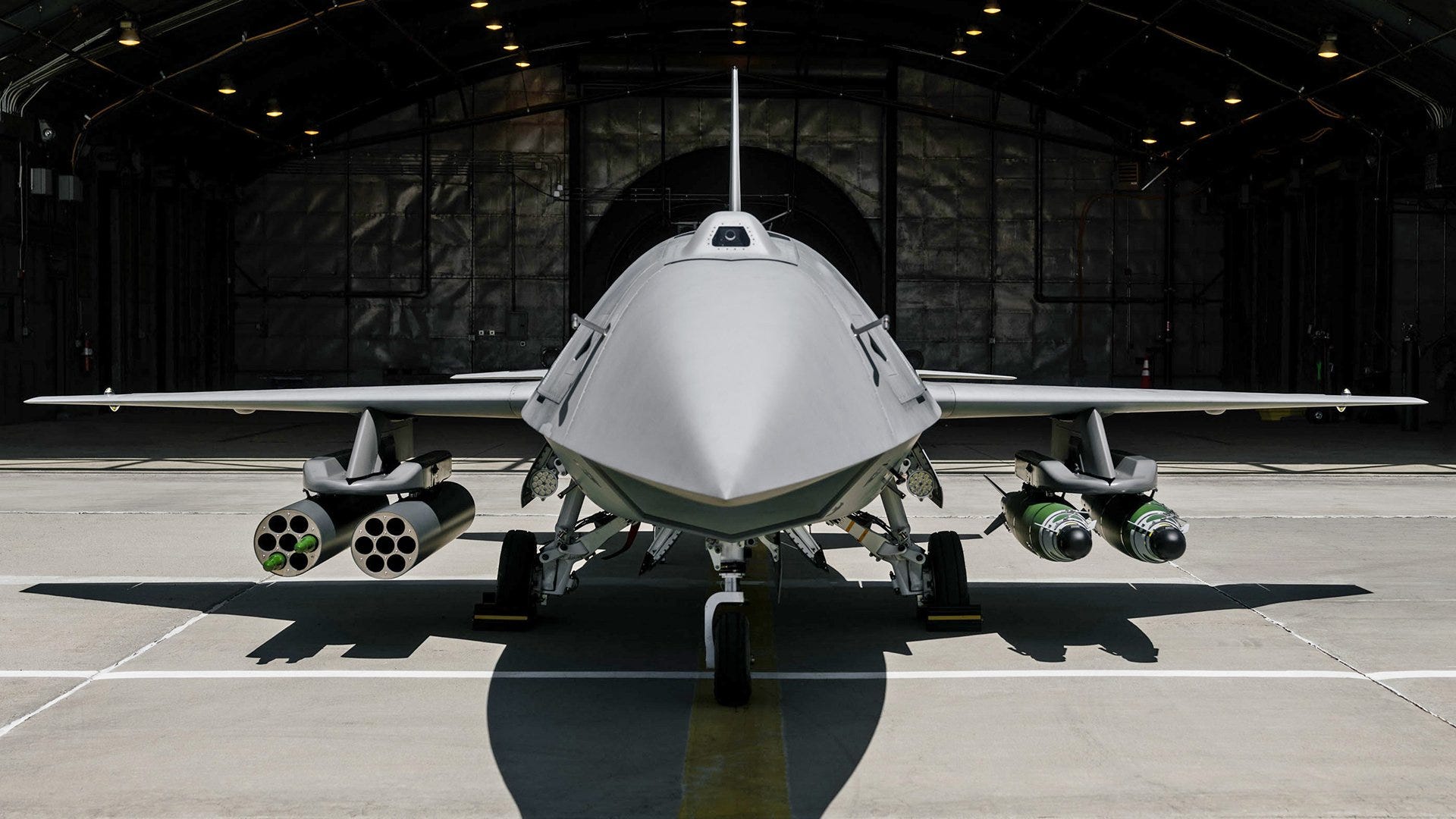
BLUF: New imagery shows the YFQ-44A Fury configured with air-to-ground weapons, underscoring the fact that the CCA could take on an air-to-ground role in the future in addition to its current air-to-air focus.
The company had already begun integration and fit checks of 500-pound Joint Direct Attack Munitions (JDAM), 250-pound Small Diameter Bombs (SDB), and low-cost cruise missiles.
Pods for 2.75-inch guided or unguided rockets are also seen fitted to the aircraft.
Our Take: This would open up a whole new range of potential uses for CCA including substituting for MQ-9 in a much more survivable platform.
GA-ASI Demonstrates Aircraft Passive Sensing for CCA Teaming
BLUF: General Atomics Aeronautical Systems Inc. (GA-ASI) and Tactical Air Support Inc. demonstrated how a manned fighter and CCA can share passive infrared sensor information and coordinate an airborne engagement during a large-force exercise earlier this summer.
The flight test paired a F-5 with a GA-ASI CCA test aircraft to demonstrate Infrared Search and Track (IRST) Multi-Ship Ranging (MSR), building on earlier demonstrations of passive infrared sensing and autonomous target ranging.
Both aircraft were equipped with GA-ASI’s TacACE (Tactical Autonomy Ecosystem) software.
Unlike active radar, an IRST sensor does not transmit energy to illuminate a target, making it difficult for an adversary to detect the sensing aircraft based on radar-like emissions.
However, a single passive sensor generally provides angular information rather than directly measuring target range.
Multiple sensors distributed across aircraft can provide additional measurements that can be combined to improve target localization and tracking.
Our Take: Very cool, this would provide some incredible capability especially as CCAs are fielded in greater numbers and can swarm - and provide that multi-ship targeting solution to the right platform to deliver an effector.
Air Force’s Autonomy Push Will Significantly Change Service
BLUF: The Air Force is going to look significantly different in the next half-decade as it begins to field new autonomous platforms to complement its manned aircraft fleet.
By 2032, the Air Force expects to have special operators deploying thousands of one-way attack systems and autonomous fighters.
There is still a debate about whether the 500 CCA fleet in 2032 will be composed primarily of the FQ-42 and FQ-44 or include systems from future increments.
Other considerations include:
whether Increment 2 will have more sensors
will be cheaper or more exquisite
whether it will have shorter or longer range than Increment 1
whether the aircraft will be carried by another platform or take off and land by itself
Our Take: There’s a lot of tradespace here even if we are very bearish on launched air platforms given the complexity of their takeoff and recovery.
Air Force Megatron IDIQ to Fast-Track DAF Battle Network Acquisitions
BLUF: C3BM is planning an IDIQ to provide a procurement pathway as a more agile mechanism for delivering C2 capabilities by adding both flexibility and industry expertise into the Air Force’s procurement processes.
“This contract is about integration to win. We want industry to understand the mission problem, bring their best ideas, and be prepared to deliver interoperable and adaptive capability.” Brig Gen Joshua Williams
Our Take: We won’t mince words. We love the integration vision but see this as a horrible use of an IDIQ. An IDIQ inherently does not provide flexibility because each TO has to go through the same award process as a normal contract (with some minor streamlining) and is still constrained by FAR processes. Maybe with the FAR re-write some things are easier but why they are not taking advantage of the inherently flexible OT structure (which allows for much more open and collaborative dialogue) is a mystery. This is also not a new idea as ABMS executed contracts on a BAA with a similar process for years but gained little flexibility from it.
DAF Battle Network Driving Multi-Domain Integration, Decision Advantage
BLUF: According to a panel at AFA, the DAF Battle Network has already enabled new capabilities including hybrid architecture, edge computing, air operations center upgrades, and deploying the Tactical Operations Center-Light prototype.
Bryan Tipton highlighted integration with the Joint Fires Network and the Navy to put JFN into test and operational use, bringing new capabilities such as artificial intelligence into AOCs, and enabling dynamic mission planning.
He also identified how ground and air capabilities are now connecting to the Space Force’s Space Data Network.
Tipton emphasized that maintaining a robust, multilayered transport network is what allows the joint force to move data under intense adversary EW threats.
This data-transport capability is what completes long-range kill chains at the speed of relevance.
Our Take: While TOC-L is an ongoing saga, the Space Data Network is going to be a game changer and it is good that C3BM is identifying how to best leverage that capability.
Air Force Moves Key B-52 Engine and Radar Upgrades Forward
BLUF: The Air Force has approved two critical milestones for the B-52 Stratofortress modernization effort designed to keep the heavy bomber flying through the 2050s.
The Commercial Engine Replacement Program (CERP) achieved Milestone B in June, officially putting the initiative into the EMD phase.
The Radar Modernization Program (RMP) was approved for low-rate initial production (LRIP) in August.
Our Take: It’s good to see these efforts finally happening but they have to be seen through a mixed lens since they are both 2 years late and both roughly 30% over budget. While that is normal for these types of programs, CERP started as an MTA effort that leveraged digital models to ease the integration. While RMP started in a more traditional way, it is crazy to us that the new radar (AN/APQ-188 AESA) was already available and that PDR completed in 2020 but only now 6 years later is it being produced. Nothing to feel good about here in our view, just lots of lessons learned.
Air Force to Extend Service of B-1, B-2 Bombers
BLUF: The Air Force launched an operation readiness campaign, dubbed the North Star Readiness Campaign, to increase the number of mission-capable B-52s and B-1s by accelerating the delivery of parts, engineering support and depot maintenance.
Our Take: There’s few details on the exact length of life extension that is being pursued and what it will cost but it seems clear that until there are enough B-21s on the ramp, the Air Force will pay any cost to keep theses platforms alive. Let’s hope the hype on B-21 plays out and that production is as seamless as its being billed.
F-35 Readiness Surged in Epic Fury; Now Pentagon and Lockheed Eye Broader Gains
BLUF: The Air Force’s experience flying F-35s heavily in operations against Iran have showed what the jet can be capable of, if maintainers get all the supplies and support they need.
The Air Force noted that keeping a steady flow of spare parts was critical.
The challenge now facing the Air Force, F-35 prime contractor Lockheed Martin, and other parts of the Joint Strike Fighter enterprise: how to keep that level of readiness up, even for aircraft not on the front lines of combat?
“When properly resourced, we showed without a doubt how well this airplane can perform in combat. When we send our aircraft into harm’s way and they go downrange, they enjoy a higher priority for spare parts and all the things that the logistics trail can get to them. What we saw is how remarkably well the F-35 airplane withstood and maintained really high mission capable rates over a long period of time in the toughest of combat situations.” Brig. Gen. Brian Laidlaw
Our Take: Well, this is kind of a “no s^*% Sherlock” moment to us. Of course, if you have a never-ending flow of parts, it’s a lot easier to sustain readiness. However, the aircraft was designed to have 8,000 flying hours on each part so it shouldn’t require that much maintenance for relatively limited operations in Iran. This is the element that has been infuriating in the readiness discussion, with some saying we just need to fund more spares (and we do) without any acknowledgement of the reliability those parts should have and whether that contract is being satisfied.
F-35 Engine Upgrade Clears Key Design Review
BLUF: The F-35 program has seen the Engine Core Upgrade (ECU) upgrade to the F135 powerplant, successfully pass what is known as the risk reduction design review.
When Pratt pushed the ECU plan several years ago, it was projected to enter service by 2028 but likely won’t begin until 2031 now.
The upgrade is also meant to restore expected engine life and support a suite of forthcoming upgrades known as Block 4.
Air Force Leaders Chart Path to Future Fight
BLUF: Air Force senior leaders (Gen. Kevin Schneider, Gen. Adrian L. Spain, Lt. Gen. Kenyon Bell, Lt. Gen. Christopher Niemi) discussed how the service can adapt to a contested environment, balance current readiness with future modernization and turn emerging capabilities into combat power.
Schneider emphasized the need for stronger command and control nodes, resilient data pathways and logistics capable of operating under pressure.
Spain reinforced the changing nature of the operating environment, such as the vulnerability of bases and the need to generate combat airpower while under attack.
For Niemi, recent operations also reinforced the need to accelerate investments in point defense and rethink the balance between a small number of highly capable platforms and a broader force able to generate mass.
The modernization challenge, however, is not simply determining what the Air Force needs next. Leaders must also decide how much risk the service can accept today to build that future force.
Our Take: They nailed the decision space. With investment budgets unlikely to dramatically expand, there is risk that will have to be taken in the near-term to achieve the longer-term goals of a more resilient Air Force. Nothing is easy here.
Related Article: Air Force Leaders Say Point Defense Is No Longer A Side Hustle, Eye Acquisition Changes
New AMC Boss Open to Unmanned Next-Gen Tanker
BLUF: The new head of Air Mobility Command said he wants to explore an unmanned option for the service’s next-generation aerial refueling system.
Lt. Gen. Daniel Tulley said he is open to looking at emerging technologies for a future unmanned or optionally manned large aerial refueling aircraft.
To field a next-generation tanker in the mid-2030s, the Air Force is pursuing an AoA, looking at everything from an innovative blended wing-body aircraft to more KC-46s to a stealthy and possibly uncrewed refueling platform.
Our Take: This is so frustrating to read because industry has already given the Air Force a dozen solid ideas on how to field an unmanned tanker like two years ago. The ideal scenario from our lens is not an equally big (KC-46) unmanned tanker but a smaller one that can be more distributed to support surging operations in different sectors and to keep the KC-46/KC-135s just far enough out of reach to complicate targeting. The Hudson Institute (props to Tim Walton) did a great study laying out all the details. The Air Force just needs to pick something and move out. Studying this for two more years will not result in greater insights.
Related Article: Air Force contemplates unmanned tankers
USAF Assessing Feasibility of Restarting C-17 Production as Part of Its Future Airlift Vision
BLUF: The Air Force has been taking a new look at the feasibility of restarting production of the C-17 as part of its still-evolving next-generation airlift plans.
The service also continues to explore a wide range of next-generation aerial refueling concepts, including new stealthy and/or uncrewed tankers, but a firm vision for the way forward there has yet to emerge.
On the airlift side, the Air Force’s stated plan to date is to replace both the C-17A and C-5M Galaxy with a single Next-Generation Airlift (NGAL) platform, starting in the mid-2040s.
Our Take: The C-17 is fairly expensive to maintain so while this is an option, given the number of aerospace new entrants who can support this work and develop novel concepts that are easier to produce and sustain. If we care about the industrial base, then take the risk Air Force and bring something new to the force, don’t fall back on retaining old platforms just because you have 10,000 hours flying it.
Related Article: Restarting C-17 Production? ‘Heck Yeah!’ Says Air Mobility Commander
Air Force Eyes New-Build F-16s to Boost Fighter Force
BLUF: Lockheed Martin is pitching the Air Force on a new version of the F-16 fighter, designated the F-16G, as a way to replace aging Fighting Falcons faster than the F-35 production line can keep up.
The F-16G builds on the current Block 70 F-16, Lockheed’s newest production version, and would add conformal fuel tanks, 600-gallon wing tanks, an infrared search and track pod, a Sniper targeting pod and a drag chute.
Those additions would extend the jet’s range and give it added sensor capability compared with earlier F-16 models still flying in Air Force squadrons.
Air Force Focusing on Mission Outcomes for Nuclear Systems Acquisition
BLUF: The Air Force is modernizing its nuclear deterrence capabilities to keep pace with the modern threat picture, and the service is focusing on mission outcomes to transform the acquisitions process.
To ensure the acquisitions process modernizes alongside modern threats, the Air Force is putting together teams of acquisition professionals, requirements owners, operators and industry partners to understand the operational problem together.
“Some of you may think the acquisition change is we’re changing how we do contracts or something like that. It’s not that. It’s about focusing our teams on mission outcomes — and in this case, mission outcomes are safe, secure, credible, effective capability that we present to the Joint Force and our nation.” Lt. Gen. Mark Pye, Deputy DRPM for Critical Major Weapon Systems
Our Take: This is goodness and an excellent
Air Force Seeking ‘Efficient’ Ways to Thwart Russian Drones
BLUF: Russian incursions into NATO nations have spiked amid the war in Ukraine, with a rising number of European members reporting drones and missiles violating their airspace.
The alliance is primarily using air power to counter the incursions right now, which has proven to be an effective option on many occasions — such as with the Italian fighter jets that eliminated the drone in Lithuanian skies — but it is not the most efficient option.
Procuring the same systems enables ease of connection when working together. But when commonality is not an option, interoperability with NATO standards by design is a major advantage.
“The good thing is we’re doing it effectively, but … I want to get to the point where we’re doing it efficiently using lower-cost interceptors, hopefully ground-based and in some cases air-based that are cheaper to use.” Lt. Gen. Jason Hinds, commander of U.S. Air Forces in Europe, Air Forces Africa and NATO’s Allied Air Command
Air Force Learning Stand-Off Munitions Lessons from ‘Modern Conflicts’
BLUF: The Air Force is learning lessons about stand-off munitions from current operations as the service looks to increase capacity to produce the weapons and lower their costs
In the past, the Air Force has used extremely capable aircraft — like an F-35 or a B-2 bomber — and put inexpensive weapons on them.
From a cost-effectiveness perspective, that worked well as long as those aircraft can be operated at relatively low risk.
One lesson from Iran is that it’s becoming harder to produce that kind of sustained, uncontested air superiority, especially against a pacing adversary.
The Air Force is not going to abandon stand-in capabilities, but it wants to add more tools to the quiver “so that commanders in the future have more options available to them.”
“Historically, we had very few stand-off weapons, and they were very expensive. And so, what we aim to do in the force design is to increase the capacity and lower the cost to increase the options available to the warfighter.” Lt. Gen. Christopher Niemi, Air Force chief modernization officer.
Other Air Force News:
GE’s Futuristic Fighter Engine Moves from Digital Models to Hardware
USAF, Experts Want to Up Cyber Defense for Critical Infrastructure
Air Force fighter pilots fall below sortie minimum to be deemed combat ready
Air Force Set Up a Depot in UK During Epic Fury for Faster Battle Repairs

Chief of Space Operations Schiess Outlines Priorities to Strengthen Space Force Combat Power
BLUF: Chief of Space Operations Gen. Douglas Schiess unveiled his priorities to strengthen Space Force combat power and highlighted Guardians’ contributions to the Joint Force.
Schiess described his first line of effort as the foundational priority, rooted in the Space Force’s values of Character, Connection, Commitment and Courage.
As his second line of effort, Schiess said he remains focused on arming and growing the Guardian Force.
In his final line of effort, Schiess described the need for embedding Guardians on the frontlines and bringing space expertise directly into the Joint battlespace.
Related Articles: Remarks by CSO Gen. Douglas Schiess at the Air and Space Forces Association’s 2026 Air, Space and Cyber Conference
U.S. Admits It Has Weapons in Orbit
BLUF: Secretary of the Air Force Troy Meink made a bombshell admission this morning, disclosing that there are on-orbit “space control” weapons deployed right now to protect America’s interests in space.
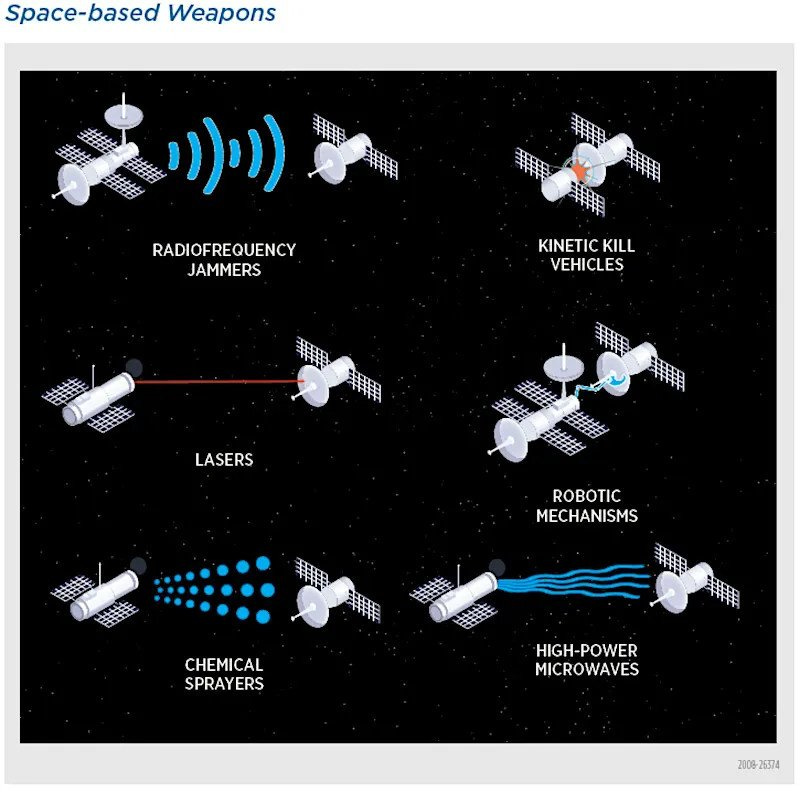
There are a wide range of means by which a platform on-orbit can attack another or otherwise defend against incoming threats. Not all of those options involve effects that are destructive or even irreversible, either.
For instance, a laser could be used to blind optics on a target temporarily without damaging them. Electronic warfare suites could similarly disrupt a threat without causing any kind of permanent harm. Doing so could help provide extra time for a friendly asset to maneuver out of danger.
There are, of course, also capabilities that do seek to damage and/or destroy a target, such as physical interceptors, grappling arms, aerosols that can be sprayed on optics and solar panels, or even just using one satellite as a kinetic weapon to smash into something else.
“Space control encapsulates the mission areas required to contest and control the space domain – employing kinetic and non-kinetic means to affect adversary capabilities through disruption, degradation and even destruction, if necessary. These capabilities can be employed for offensive and defensive purposes at the direction of combatant commands. U.S. military operations are conducted in compliance with international law, including the Outer Space Treaty and LOAC [the Law of Armed Conflict].” - Space Force Spokesperson
Related Articles: Space Force has deployed space control weapons to orbit and Space Force Ready to Operate Space-Based Weapons
Our Take: From our own experience, we had some awareness here, but the reality is that the capabilities in space that can create these effects are likely to be limited (and focused on specific orbital regimes and capabilities). As our adversaries also adopt more proliferated constellations for key capabilities, it will become harder to reliably generate those effects. There is also a real escalation concern here because neither Russia nor China are responsible stewards in space as has been demonstrated in recent years. The most public example is Russia’s 2021 ASAT launch that destroyed one of its own satellites in LEO and sent 1,500 new pieces of debris across that crowded orbit. Given we have many of the same vulnerabilities as our adversaries, a tit-for-tat will be highly undesirable so our belief is that we should not rely on in-space weapons for deterrence but rather continue to distribute our capabilities and build resilience/redundancy for the key ones - including by using commercial capabilities.
SPACECOM Needs More Capabilities to Target Space Adversaries
BLUF: Space Command (SPACECOM) does not have all the capabilities it needs to target adversary space systems in a conflict.
“To be able to negate threats in space, we must be able to find, fix, track and target those threats. Targeting in the space domain is maturing, but it still has a long way to go. We don’t have robust target folders like the Joint Force does in other domains. Once a target is engaged, SPACECOM needs real-time battlespace awareness in order to execute battle management.” SPACECOM Commander Gen. Stephen Whiting
Space Force Contemplating Pros, Cons of Commercial Tech
BLUF: The Space Force earlier this year released strategic documents envisioning the future fight, and commercial technology plays a key role. However, it has also had to consider the technology’s vulnerabilities and how it could be used against it.
As integral as commercial technology is to the Space Force mission, it comes with some risk. Recent global operations have shown that adversaries can exploit commercially available space capabilities.
A common example is imagery which has led to hyper-transparent warfare.
One point made was that as the Space Force thinks about operationalizing commercial technology, it needs to provide venues where such capabilities can be tested in a relevant environment to understand how they play.
“Resilience within any architecture needs to be the bottom line. When thinking about what missions commercial technology would be used in, the answer is, we would use commercial in every mission that has capability. Would you rely on it solely? In some, maybe. Especially if there’s diversity of access to that commercial data, and I can meet my needs with some level of surety.” Lt. Gen. Dennis Bythewood, commander of U.S. Space Forces - Space
Our Take: We certainly agree that we need more venues to allow vendors to test and validate their emerging capabilities to know if they are on the right path or wasting time and effort.
Space Systems Command Must Leverage Commercial Data Wisely
BLUF: The space domain continues to evolve and its role in warfare is expanding, and Space Systems Command is looking to purchase commercial data and leverage it wisely,
There are a lot of different ways to integrate commercial capabilities into space architectures, and buying data or other capabilities as a service.
The Commercial Space Office is uniquely positioned to bridge the gap between the military and industry, and as it builds acquisition strategies, it will help the command understand how commercial capabilities are bought and how industry is structured differently.
How the Space Force Is Preparing for Its New Moving Target Missions
BLUF: As the Space Force prepares to field new fleets of satellites that can track moving targets in the air and on the ground, it’s working to ensure it has the organizational structures in place to onboard and operate those systems.
The NRO has launched some ground moving target indicator, or GMTI, satellites as part of its multimission proliferated low-Earth orbit constellation.
The Space Force expects to launch a new GMTI capability called Resilient Radar System-Ground in the next year or two.
The Space Force is also on the verge of launching its first space-based air moving target indicator, or AMTI, satellites.
As the acquisition community develops and demonstrates new systems to perform the mission, the Space Force is standing up the operational units that will manage them.
On July 31, CFC activated the 77th Surveillance Squadron within Space Delta 7.
The role of the 77th is to take the intelligence collected by those AMTI and GMTI satellites and deliver it to decision-makers who will determine whether to attack a particular target.
Gen. Stephen Whiting said his team is working with the Space Force and the NRO to solidify a plan to transition those satellites to the command once they’re deemed ready for operations.
The first space-based AMTI deliveries will provide a baseline for the rest of the architecture, allowing the Space Force to fine-tune and calibrate its satellites and processing algorithms.
“There’s a broader architecture that we need to build out for the joint force to be able to close on its long-range kill chain missions. There’s how you battle manage with that data, how you apply the processing algorithms, get that data to the weapons and the shooters that you need, and the time latencies that requires.” Brig Gen(s) Ryan Frazier, PAE for Space-Based Sensing and Targeting
Related Articles: Space Force’s GMTI Program Gets a Name with Northrop as Prime and Space Force advancing on-orbit tracking for airborne and ground-based targets
Space Force Gives SpaceX Latitude on Design of $2.3B Satellite Network
BLUF: Space Force is giving SpaceX latitude to design the Space Data Network Backbone, or SDN-B, setting performance requirements rather than prescribing the number and configuration of spacecraft needed to meet them.
The Space Force set constellation-level requirements for coverage, capacity, number of users and data throughput to support a high-capacity communications network for moving military data through space.
SpaceX received a $2.29B contract in May to deliver the initial backbone, an optically interconnected mesh of satellites.
The approach puts into practice a procurement philosophy Pentagon officials have increasingly advocated: tell industry what capability the military needs rather than prescribe how companies should build it.
The model is particularly suited to SDN because the Space Force can draw on commercial satellite communications technology and production capacity.
The strategy is also seen as an example of requirements reform and a different way of partnering with industry.
Although SpaceX is building the initial backbone, the Space Force says the broader network will accommodate spacecraft and communications systems supplied by other companies.
Amazon LEO for Government, Lockheed Martin, Northrop Grumman, Rocket Lab and York Space Systems received awards totaling $60M to demonstrate connections between different commercial systems and the SDN Backbone.
The Space Force is also working to integrate SDN with the Space Development Agency’s existing Transport Layer.
Future sensors will depend on the high-volume, low-latency communications that SDN is intended to provide.
“In other words, we put this set of requirements out there, and they propose back the specifics of the constellation. The acquisition model gives the government and contractor room to update the architecture as technology changes. We’re not going to just buy a satellite in 2026 and lock that baseline down and start delivering and continue to deliver those same satellites in 2028 or 2029. The focus of the portfolio is really space-enabled, long-range kill chains for the terrestrial fight.” Brig Gen(s) Ryan Frazier, PAE for Space-Based Sensing and Targeting
Space Force Creates Office to Accelerate Innovative Tech Acquisition
BLUF: The Space Force has created a new office dedicated to bridging the gap between the service’s operational needs and emerging industry capabilities.
The so-called Technology Portfolio Executive will report to Erich Hernandez-Baquero, assistant secretary of the Air Force for space acquisition and integration.
This is in response to concerns that the PAEs alone will not have the bandwidth needed to identify and prototype novel capabilities.
The office will look at a broad array of research-and-development efforts and work with industry — including commercial companies — to get them on the path to prototyping.
“It will be empowered just as the PAEs, it will be a peer to the PAEs and it will be 100% focused on that valley of death — working with industry to ensure that there’s a pathway into product lines that the companies are developing, and ensuring that the PAEs have what they need to inform these on-ramp opportunities.” Erich Hernandez-Baquero
Budget Impasse Will Stall 10% Of Space Force Programs
BLUF: The Space Force estimates about 10 percent of its programs will be impacted under a continuing resolution for the coming fiscal year.
The CR also comes as the Space Force is working to speed up its acquisition processes, making plans to start fielding large fleets of targeting, tracking, and communication satellites in the coming years.
Further complicating the Defense Department’s fiscal ‘27 budget outlook is its reliance on a $350B reconciliation package to supplement a $1.15T base request.
The reconciliation proposal includes a number of Pentagon priorities, including $17B for Golden Dome, and about $12B in funding for Space Force programs, like Space-Based Air Moving Target Indication and the Space Data Network.
Is Space Force Pivoting Too Soon?
BLUF: The Space Force architecture for its missile warning enterprise question is correct, but the question is whether its enthusiasm for the future architecture is diminishing the importance of completing the GEO layer first.
The six SBIRS GEO satellites and their associated HEO payloads remain operational and are expected to serve well into the 2030s.
Too often the public discussion treats Next-Generation OPIR as merely the successor to SBIRS. It is considerably more than that.
NGG incorporates dramatically more sensitive infrared sensors, improved resiliency, enhanced cybersecurity, and modern spacecraft capable of operating in a far more contested environment than SBIRS was ever designed to endure.
Rather than viewing NGG as a temporary bridge until MEO matures, policymakers should recognize it as the strategic backbone of the future architecture.
LEO and MEO provide persistence, stereo tracking, and resilience. GEO provides continuous global stare, strategic warning, and the first detection that enables every other layer to function effectively.
Thankfully, industry performance is no longer the principal challenge. The bottleneck has become launch availability.
Competition for Vulcan, Falcon Heavy, and future New Glenn missions has slowed deployment just as the Space Force accelerates procurement of the new MEO constellation. That sequencing deserves scrutiny.
First Tranche of Space Development Agency’s Missile Tracking Constellation Nearly Complete

BLUF: SDA remains busy as ever as it prepares for possible dissolution and realignment under the Space Force, and it has nearly completed the first tranche of its proliferated constellation of optically linked low-Earth orbit satellites.
The constellation, known as the Proliferated Warfighter Space Architecture, is designed to provide global, low-latency communication and missile tracking.
Tranche 1 is providing initial warfighting capability, delivering satellites for communication, missile tracking and targeting data.
Once on-orbit delivery is completed, the Tranche 1 constellation will consist of a total of 154 operational satellites, including 126 Transport Layer vehicles and 28 Tracking Layer vehicles, plus four missile defense demonstration vehicles.
Six launches remain in Tranche 1 before the agency begins the Tranche 2 campaign, which will focus on global persistence. Two launches are expected by the end of the year.
The Space Development Agency in its current form may be going away soon but the work continues for now.
Contracts are “out on the street now” for 36 Accelerated Missile Defense Tranche 3 Tracking Layer satellites that will support the Golden Dome for America missile defense architecture.
Related Articles: SDA Misses Self-Imposed Deadline on Orbital Mesh Network and Space Development Agency Aims for Two More Launches This Year
SDA Hopes to Keep Certain Authorities as Congress Weighs Its Future
BLUF: As policymakers and Pentagon leaders determine the Space Development Agency’s future, its personnel are focused on meeting near-term deadlines.
The agency’s lead would like to retain existing special hiring, original classification and head of contracting-related authorities.
“I personally have some concerns, but not too many because of some of the unique authorities that we have at SDA. If we keep those, then that doesn’t change anything. Then, it’s just a name change. But if you lose some of those, then there’ll be some challenges we’ll have to navigate.”
Space Force to Prototype New Software to Fuse Commercial, Military Space Tracking Data
BLUF: The Space Force is planning to develop new prototype software designed to automate the integration of commercial and military space tracking data to provide more timely and more accurate information.
Col. Barry Croker, who heads up the service’s Mission Delta 2, said the plan is to launch the prototype “software environment” later this fall and to build a “minimum viable product.”
Mission Delta 2 is responsible for organizing, training and equipping Guardians to undertake space domain awareness operations.
Improving support to space control operations, there needs to be “a bias towards timeliness” rather than seeking the highest accuracy levels as current software and processes for analyzing data from military software does.
For instance, the prototype could include lower fidelity, but faster observations and analysis now provided by commercial firms monitoring the heavens.
The Space Force acquires commercial space tracking information via the Joint Commercial Operations cell, and houses that information in the cloud-based Unified Data Library.
However, that data is not fused directly into operational space domain awareness computer systems, instead running on a “parallel” system.
Air Force Awards Antares $161M to Advance Nuclear Reactor for Space

BLUF: The nuclear microreactor startup Antares won a $161M Air Force contract to develop and demonstrate a nuclear reactor for spacecraft.
Under the program, Antares said it will conduct a nuclear ground demonstration of its R1-S space reactor and integrate the system with a spacecraft for flight certification ahead of a future launch.
Testing is scheduled for 2027, when Antares expects Mark-1 to operate for more than six months with a closed-Brayton-cycle system that converts reactor heat into electricity.
Spacecraft today are constrained by the amount of propellant they carry and the electrical power available from systems such as solar arrays.
A sufficiently powerful reactor coupled with electric propulsion could, in theory, operate high-efficiency thrusters for extended periods while also supplying electricity for sensors, onboard processing and other demanding payloads.
Our Take: Yes! We talked about the potential for this for years, its exciting to see it finally get to the finish line.
Pentagon Picks 2 Companies for Reconnaissance Satellite Demo
BLUF: The Space Force and DIU have chosen two firms to demonstrate the ability of small satellites built with low-cost, commercial technology to track both friendly and adversary satellites in geosynchronous orbit.
Northrop Grumman and True Anomaly will build prototype satellites for DIU’s GEO High-Resolution Optical Space-Based Tactical Reconnaissance, or GHOST-R.
The work will feed into a broader, multibillion dollar Space Force initiative called RG-XX, with the goal to begin fielding a fleet of reconnaissance satellites by the end of the decade.
It aims to address two critical SPACECOM needs: more maneuverable satellites and better space domain awareness to close gaps in its ability to characterize and track objects of concern in space.
“This approach burns down technical risk, drives down lifecycle costs, and gets vital capability to the warfighter faster to ensure a more resilient architecture. Successful prototypes will have a direct transition into the program of record.” Col Byron McClain, acting PAE for Space Combat Power
Space Force Announces CSO Strategy for SATCOMs
BLUF: PAE for BMC3I, with support from the Satellite Communications Augmentation Resource program office, is implementing a commercial acquisition strategy that leverages multiple commercial solutions openings to evaluate and procure commercially available capabilities that support mission requirements.
The SCAR program is a phased, risk-informed approach designed to increase competition, broaden industry participation, and accelerate the evaluation of commercial solutions that can augment existing satellite C2 capabilities.
The strategy is organized across two primary lines of effort:
Line of Effort 1: Evaluation and procurement of commercially available satellite communications solutions capable of supporting Satellite Control Network augmentation requirements.
Line of Effort 2: Leasing commercially operated satellite communications services and infrastructure that can provide operational capability and capacity to augment existing architectures.
Through upcoming CSOs, the SCAR program will seek information and proposals from industry in several technical areas, including:
Antenna and Radio Systems: Commercially available antenna and radio solutions that meet SCAR mission requirements.
Commercial Service Delivery and Operations: Commercially operated capabilities, infrastructure, and support services necessary to provide an operationally available satellite communications capability under leasing arrangements.
Sustainment and Life Cycle Support: Operations, maintenance, and support activities required to ensure continued service availability and mission performance.
The current solicitation can be found here.
DIU Challenge: Space Threat Intelligence Synthesis Engine
BLUF: The desired solution will ingest and fuse massive streams of multi-source data, including live video, satellite imagery, radar and sensor feeds, geospatial data, and classified intelligence reports.
Other Space Force News:

Golden Dome On Track for Summer 2028 Delivery
BLUF: The Department’s initiative to build a layered missile defense architecture to protect the U.S. from a variety of aerial threats is on track to deliver operational capability by the summer of 2028.
The program office first stood up an industry consortium to deliver the system’s command-and-control architecture, which the director described as Golden Dome’s “secret sauce.”
The C2 system has been tested twice, most recently this summer, which validated that the program is on the right path for command and control.
Along with the command-and-control capability, the program office has invested in space-based interceptors, radars and some munitions.
“Instead of having 13 or 14 independent command-and-control systems for different parts of the layered defense architecture, there needs to be one unified C2 platform where our operators can look at a cruise missile threat, a UAS threat, all the way up to an ICBM threat, on the same system.” Gen. Gregory Guillot, Commander of U.S. Northern Command

China’s New Giant Submarine Drone Mothership
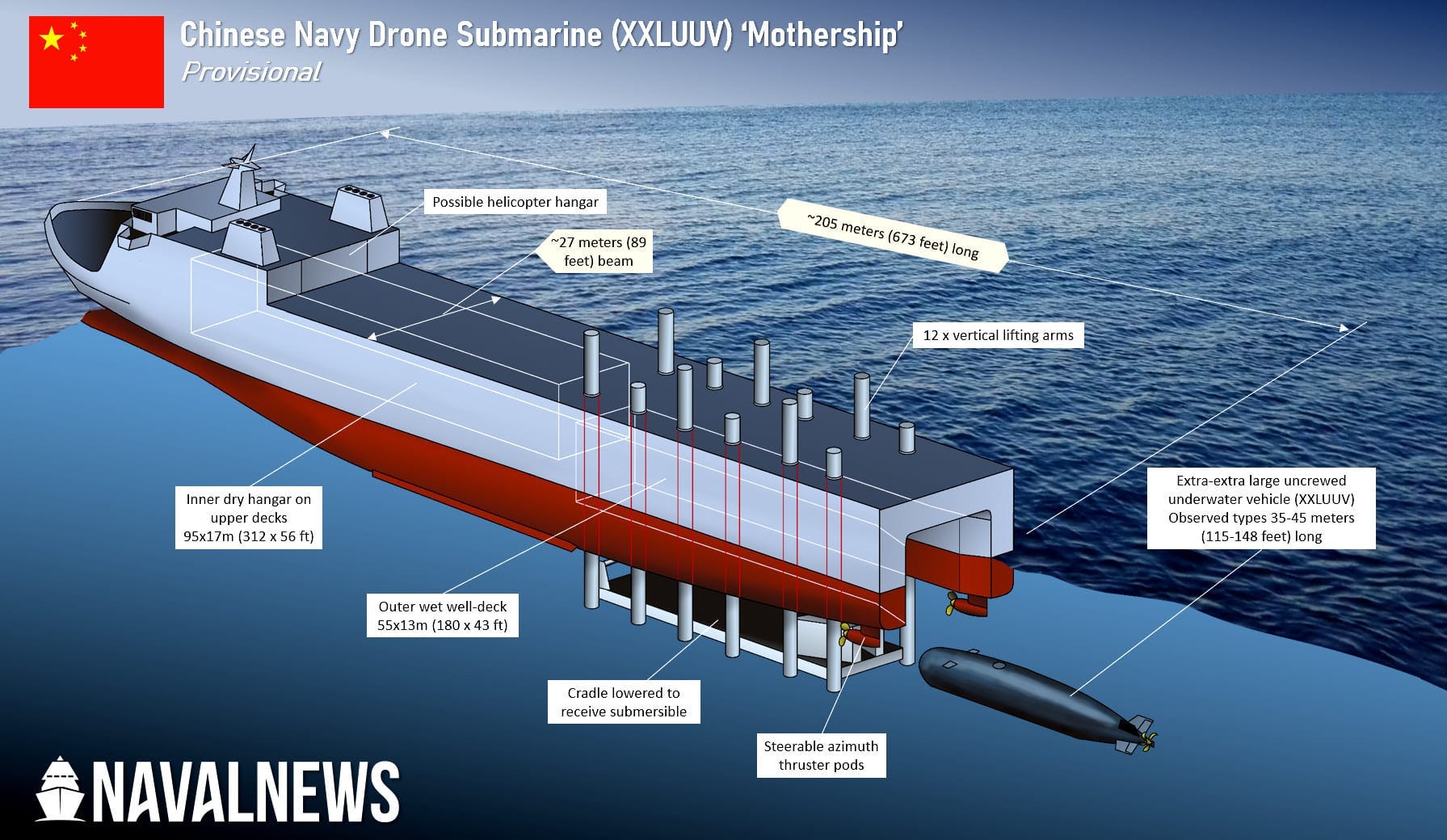
BLUF: A new vessel spotted at a Chinese shipyard is likely the world’s first mothership designed to deploy submarine drones. It represents the latest piece in the puzzle of China’s undeclared effort to develop and deploy full-sized uncrewed submarines.
China has already become the first and only country to build full-size submarines which are uncrewed.
Referred to as XXLUUVs (extra-extra large uncrewed underwater vehicles), two types have been observed under testing in Hainan.
At 35 and 45 meters (115-148 feet) long they are around 6-8 times the overall size of the U.S. Navy’s Boeing Orca XLUUV.
It is likely that the two models are in direct competition.
The new vessel resembles an amphibious landing ship (LPD) with a well-deck in the stern. However this well-deck is open below the submarine and a large cradle can be inserted. This is lowered below the vessel on 12 vertical ‘jack up’ arms.
It seems the mothership will act as a mobile submarine tender for the XXLUUV, performing maintenance and keeping them out of the water when not in use.
But it can also act as a launch and recovery platform for combat missions.
Our Take: Really wish we had one of these in the works.
USAFE Boss Shares Vignettes for CCA Drone Employment in Europe
BLUF: Manned fighter jets from NATO nations have recently been called upon to shoot down suspected Russian drones flying over allied territory, but the commander of U.S. Air Forces in Europe envisions a future in which that type of work could be offloaded to AI-enabled unmanned platforms.
“One is on a deterrence perspective to be able to augment and increase our capacity to do integrated air and missile defense, because you don’t always have to have a human in a cockpit to be able to defend against a one-way attack drone or defend against a cruise missile. You could use a CCA to be able to conduct that mission set.”
“One of the other operational vignettes that we’re providing for the allies is a mission set of in the event of some type of a hostile incursion into the NATO territory, and if we have to respond to be able to push a force out, we would have to be able to reduce integrated air defense systems and potentially even attack fielded forces from an opposing nation inside the European theater.”
Lt. Gen. Jason Hinds, USAFE Commander

See our NDAA and budget posts for the latest insights and analysis.

The Next Phase of Competition with China | Sen Pete Ricketts
Hudson Institute
Lockheed’s Vectis Is More Fighter Jet Than Drone
Sandboxx
Pentagon Reveals U.S. Has Weapons in Orbit: Experts Respond
Air & Space Forces Association
Inside A Growing Lockheed Martin Site Key To Its Munitions Production Ramp
TWZ
General Atomics reveals the Reaper's replacement: WILDFIRE
Sandboxx
The Air Force Wants A Cannon to Shoot Down Drones
Task & Purpose

Undersea Warfare Conference
NDIA • Sep 21-23 • Groton, CT
UAV Technology
SAE Media • Sep 22 • London UK
Resilience Conference
Oct 5-6 • London
Land Forces
Oct 6-8 • Perth • Western Australia
DEFCON
Stanford • Oct 7 • Silicon Valley, CA
Apex Europe
Oct 7-8 • London
AUSA Army Annual Meeting and Expo
Oct 12-14 • Washington DC
Scaling Our Industrial Foundation
Wharton Aerospace Ventures • Oct 12-14 • Washington DC
Mission Engineering and Integration Activity TEM
USW(R&E) • Oct 15 • TBD
Counter UAS Indo-Pacific
SAE Media • Oct 19-20 • Honolulu, HI
Silicon Valley Space Week
Oct 27-29 • Mountain View, CA
TechNet Indo-pacific
AFCEA • Oct 27-29 • Honolulu, HI
Defense Conference
PSC • Oct 30 • Crystal City, VA or Virtual
See our Events Page for all the other events over the next year.