


Welcome to the latest edition of Defense Tech and Acquisition.

The biggest stories across the Department and industry this week:
Continued debates on AUTOWARCOM and autonomous warfare.
PAEs pursuing high quantities of kits to deliver in short timelines.
Department and Lockheed Martin secure a long-term F-35 deal
Army demonstrates long range fires, spy jets, and acquiring USVs
Navy remotely pilots a UAS from 2,000 miles away.
Air Force lays out their vision for a future force structure
Space Force published infrastructure needs and Cislunar warfare pursuits
Allies scale investments in naval capabilities and exercise coalition forces

Project Agincourt Accelerates AUTOWARCOM to Drive Battlefield Adaptation at Scale
BLUF: Project Agincourt leaders Owen West and Senior Chief Max Strasiser announced the operational roadmap to establish AUTOWARCOM.
Emphasizing that urgency does not excuse imprecision, they outlined a combat-first model that pushes procurement decisions and dollars directly to frontline warfighters, measuring success not by paperwork milestones, but by how fast an operational problem receives a fielded, scalable solution on the battlefield.
Agincourt has two missions.
Stand up a four-star Autonomous Warfare Command (AUTOWARCOM) by October 1, 2027, with the authority its commander needs to drive the largest institutional change since the interwar years.
Continue the mission of the Direct Reporting Portfolio Manager for Unmanned Systems (DRPM-UxS) while pioneering a new acquisition model that pairs autonomous and robotics companies directly with operational forces at the edge. The goal is a system built to adapt at scale.
The U.S. can build a new generational advantage by adapting at the edge faster than adversaries by leveraging two strengths: our lead in superintelligence, and an unmatched NCO corps.
We will work analytically with the Joint Staff, the Services and, above all, the operational units that will serve as our incubators.
These new systems will be declared ready when Combatant commanders are able to wield them in combat.
One measure of success will be the time it takes for an operational problem to receive a fielded solution evaluated for scale.
Project Agincourt Can Deliver Innovation if the Pentagon Will Let It
BLUF: The main problem confronting the new proposed four-star combatant command will not be the amount of money it receives, but whether it can use those funds quickly and effectively.
The decision to stand up AUTOWARCOM is the right one. The war in Ukraine has made it clear that autonomy is no longer a niche capability; it is changing how every service fights.
A functional command, built on the model of SOCOM or SPACECOM, can set joint priorities and integrate forces at a scale no single service will on its own.
Speed comes from how quickly an organization learns which problem to solve next.
The command will define joint needs. If they come from headquarters staff, the military risks buying the wrong drones faster. If, on the other hand, they come from operators watching the enemy adapt week to week, the command will work.
Two numbers will tell us whether AUTOWARCOM is working:
The days from when a problem is spotted in the field to when a fix is in a unit’s hands
The days it takes for a lesson learned by one unit to reach every other unit facing the same threat.
Establishing AUTOWARCOM by Oct 2027 will depend on lawmakers. The real debate is how much freedom the command gets to spend money and buy things.
A faster learning cycle requires a funding model that can keep up with it.
Consolidate the money. Make it flexible. Fund the platform, not just the gadgets.
AUTOWARCOM Is Heading for a Command-and-Control Collision
BLUF: AUTOWARCOM will either speed the adoption of autonomous systems or it will add another layer between service members and the capabilities they need. Recent conflicts show why faster adaptation is critical to maintaining a relative advantage. The histories of other defense organizations show why a new command needs clear responsibilities from the start.
The Project Agincourt memo gives the effort its purpose: define the joint force’s needs, integrate forces provided by the services, and test materiel. Key design choices, including authorities, funding, personnel, and headquarters structure, require further decisions.
Russia’s war against Ukraine displays how quickly low-cost drones and countermeasures can change battlefield tactics. Both sides keep adapting their equipment and methods to gain an advantage.
Recent conflicts show that battlefield innovation moves quickly. Acquisition, training, and force-generation systems must keep pace. AUTOWARCOM may help close that gap, but the command’s design will determine whether it can.
SOCOM has authority to train assigned forces, while the services retain responsibilities for personnel and other service functions. AUTOWARCOM should learn from this: its authority should match the forces and missions assigned to it.
Congress and the Department should explain how funding, authority, and measurable outcomes will support AUTOWARCOM’s mission.
Congress should ask which authorities the Department plans to give AUTOWARCOM, and which will remain with the services. Lawmakers should also ask which budget lines will fund the command, who will prepare its program objective memorandum, and which civilian official will oversee its work.
These choices will show whether AUTOWARCOM can direct joint priorities while preserving service responsibility for building and sustaining forces.
The Department should define AUTOWARCOM’s mission, decision rights, funding, and relationship with the services before building its headquarters.
It should assign named officials to each major responsibility, limit the initial portfolio, and set measures for fielding speed, interoperability, operational testing, and adoption by the services.
The Services Do Not Need a Four-Star AUTOWARCOM

BLUF: A joint command responsible for developing and potentially employing unmanned weapons would centralize functions best left to the services. Joint command at the operational level of war, a creation in part of the Goldwater Nichols legislation, is regarded as a major enabling factor of U.S. military combat success in it since 1990. Yet advocates have concluded that some of its joint administrative structures have not worked nearly as well.
SOCOM arose from documented failures in the C2 of service special operations forces that contributed to the failure of Operation Eagle Claw in 1980.
No comparable operational failure involving unmanned systems has created a compelling need for an entirely new joint command.
Unmanned and autonomous forces are more closely integrated with conventional operations than special operations forces historically were.
The Navy, for example, expects unmanned aircraft eventually to comprise as much as 60% of a carrier air wing. The service that will organize, train, equip, and employ those forces in combat should retain primary responsibility for their development and procurement.
In the early 20th century, the service-led approach encouraged experimentation and allowed each service to determine how aviation best fit its force. This enabled the Navy to focus on carrier aviation, while the Army and later Air Force advanced strategic bombing and tactical air support.
Today’s debate over unmanned systems resembles the interwar debate over combat aviation more than it resembles the circumstances that produced SOCOM. The autonomous forces now contemplated are larger, more numerous, and more diverse in mission than the specialized forces under SOCOM.
The services should therefore retain responsibility for developing the unmanned forces they will command in combat, while the joint force concentrates on integrating service capabilities in the operational environment.
JIATF-401 Leads a New Era in Counter-sUAS Defense

BLUF: JIATF-401 is leading the Department’s efforts to stay ahead of the rapidly evolving threat posed by sUAS. As adversaries continue to expand their use of low-cost, highly adaptable drones for surveillance, disruption and attack, the DoW is transforming how it acquires technology, fields capabilities and integrates operations across the counter-UAS enterprise.
Established in August 2025, JIATF-401 serves as a centralized organization focused on rapidly delivering Counter-UAS capabilities while improving the policies, standards, partnerships and training needed to meet an increasingly evolving threat environment.
By bringing together stakeholders across government, industry and the joint force, the task force is helping create a more integrated approach to homeland defense and warfighter readiness.
Over the past year, JIATF-401 has focused on closing the gap between operational needs and fielded solutions.
By bringing together organizations across the DoW, the federal government and private industry, the task force has focused on one central objective—rapidly delivering C-UAS capabilities to warfighters at home and abroad.
Rather than approaching the drone threat through separate organizations operating independently, the task force was built to bring together expertise from across the military and federal government under a common mission.
drones.mil is a first-of-its-kind centralized marketplace that aggregates demand and streamlines pathways to procurement. This allows authorized users across the joint force, the interagency, as well as allies and partners, to rapidly acquire validated, tested technologies.
The task force has eliminated the reliance on stove-piped systems by establishing an enterprise-wide agreement for a common tactical user interface and advanced standardized data protocols.
Open architecture ensures plug-and-play interoperability, allowing sensors and effectors to rapidly integrate and share threat data.
These updates provide tailored, layered defenses to help warfighters and homeland security personnel adapt as sUAS threats continue to evolve.
JIATF-401 is aggregating demand to expand the industrial base, lower costs and ensure U.S. and allied forces can rapidly procure vetted, interoperable capabilities at the speed of the evolving threat.
“Over the past 12 months, JIATF-401 worked to translate operational requirements into fielded capabilities while improving the policies, standards, training and partnerships needed to build a more integrated counter-UAS enterprise. JIATF-401 utilizes unique procurement and acquisition authorities to bypass traditional timelines and deliver C-UAS capabilities at the speed of relevance.” COL Tony Lindh, JIATF-401 Rapid Acquisition Chief

Convening in the Capital: Autonomy at Scale
Hosted by the Vanderbilt Institute of National Security | November 18 | Washington, D.C.
Drones and autonomous systems are changing the character of warfare. Join leaders from government, the military, industry and academia to explore what the United States must do to decide faster, defeat cheaper and deliver at scale.
The day features a keynote conversation with former Google CEO Eric Schmidt, KBE; a fireside chat with General David H. Petraeus, U.S. Army (Ret.); remarks from Oleksandr Kamyshin, former Minister of Strategic Industries of Ukraine; expert-led panels; technology presentations; and the launch of a formal research challenge.

Is Mission Command Dead? How Transparent is the Modern Battlefield?

BLUF: Some military leaders and theorists argue that modern technologies such as AI, drones, advanced sensors and networks will reduce warfare to a mathematical calculus or a duel between highly-advanced computer systems, eliminating the need for mission command.
We believe emerging technologies will actually make mission command, decentralized execution and small unit initiative more important than ever.
The latest sensors, unmanned systems, digital networks and electronic warfare capabilities are impressive, but will they render the battlefield truly transparent?
The idea that a myriad of advanced sensors will populate a flawless common operating picture that leaders can use to make decisions rests precariously on a very flawed assumption that the system has consistent uptime.
The greatest danger in basing our situational awareness entirely on digital networks is that it will draw us into a habit of only looking at the digital displays when forming our picture of the battlefield.
The conception of a transparent battlefield also assumes that the enemy will not be able to jam our sensors and digital networks. They will.
The more sensors that are observing the battlefield and the more information they collect, the more difficult it becomes for human beings to process and analyze that information for rapid and effective decision making.
Our Take: While we definitely understand the points made here and agree that there will be constant attempted disruption of networks, AI data and different systems, we also think this underrates the tech maturity path. Yes networks will go down, cyber intrusions will be constant and there will be adversary attempts to poison data but the path we are striving for is not one of perfection - it is one of adaptation. The goal is to get faster at detecting and mitigating issues as well as building resilient systems that anticipate being taken offline for periods. The data overload problem is real but we are already making strides on building mission-aware networks that will choke lower priority transmissions when under attack.
This will only get smarter and with smart human on the loop monitoring will make this less of a burden and rather a profound asset. Our adversaries will certainly be doing this and we can’t fall back on human speed decisions when they are operating at machine speed. As for transparency, the Ukraine-Russian conflict has already shown how transparent a battlefield can be - with all sides barely able to pop their heads-up without catching a drone. The Pacific will be less transparent no doubt but sensor proliferation is the future, and we make ourselves weaker if we divert from that future.
Pentagon Starting with Resilient Energy for Sweeping FORTRESS America Project

BLUF: In looking to make a quick start on the FORTRESS America program to make every military base in the U.S. more self sufficient, the Pentagon is dialing up its efforts in energy resilience and independence.
Federal Operations for Resilience, Troop Resources, Energy, Supply, and Survivability (FORTRESS) includes five pillars: energy independence; supply chain and defense industrial base resilience; a strategic defense reserve; installation hardening and cyber resilience; and resilience in space and spectrum.
Energy independence solutions can include investments in microgrids, battery backup storage.
The priority is assessments of the installations to make sure they understand power generation and where to go with that, and then getting those deployed.
There are already plenty of ideas and projects in the works to address energy resilience. Many bases are reliant on the civilian grid for electricity and water, and adversaries have figured out ways to hack or attack those grids.
To move as quickly as possible, the Pentagon aims to used a variety of solutions tailored the the particular needs of each base including renewable options like geothermal and solar energy, as well as fossil fuels like natural gas.
They are incorporating a lot of the things that we ask them: microgrids, smart systems, their ability to to do preventative maintenance by a centralized hub, so they can see across all their facilities and know when things are going to go down.
Those are technologies and things that we want to invest into all of our installations, so that we can not only reduce costs, but more importantly, it increases the life of the facility, so that we’re making better investments in the time frame to keep those.
“The attack, as we know it, will not look like an attack. It will look like a systematic shutdown of community capabilities. Our adversaries are going to start with making it hard to get on base, and they’ll go for the softest targets they can, which won’t be military. It will be public works.” Ravi Chaudhary, former ASAF for Energy, Installations, and the Environment
Pentagon Competition Seeks to Revolutionize Military Bases

BLUF: The DoW recently launched the Next Great American Base initiative to build a future base that will take into account both rapidly evolving technology as well as the troops that will use it. It’s goal is to build a premier, world-class power projection platform from the ground up
The new installation will be engineered to operate completely off the commercial grid and will feature independent power generation, autonomous systems and advanced air defenses.
The goal is to harden the homeland and make it defensible, reiterating that the homeland is no longer a sanctuary.
We have not constructed a new military base in this nation in 40 years, and so the DoW is launching a nationwide merit-based competition.
This is not another soulless bureaucratic installation built with enduring classical architecture. It's going to be a world-class dynamic platform for power projection.
Underpinning the effort is Fortress America to ensure every major U.S. installation generates its own independent power.
The plan examines bases that may host six-generation jet fighters, rockets or ships. A future base will take into account the future force that is being built — whatever new capabilities and new military occupational specialties the services are investing in.
“We’ve looked at years and years of a lack of investment in our homeland infrastructure, and you see that. These are things that we are trying to fix. It's pretty impossible to try to run a 21st century military on a 20th century foundation.” Dale Marks, ASW for Energy, Installations, and Environment
Our Take: The Next Great American Base is an opportunity to rethink military installations as resilient, technology-enabled power projection platforms while creating the modern living, training, and working environments needed to attract, retain, and empower the next generation of warfighters. This is a vital effort to build the foundation for the future force.
Ground-Launched Rusty Dagger Low-Cost Cruise Missile Seen for the First Time
BLUF: Zone 5 Technologies released the first photos of a surface-launched Block 40 Rusty Dagger and is building toward more than 7,500 missiles a year across three US sites by the end of 2027.
The Block 40 carries a 100 to 250 lb warhead; a solid booster allows ground or sea launch.
Versions have been selected for Army and Navy programs, including the Army’s Low-Cost Containerized Missile effort, which aims to buy more than 10,000 missiles over three years starting in 2027. Kongsberg owns 90% of Zone 5.
“Our team went from design to demonstration in less than three months.” - Kyle Maxhimer, Zone 5 Technologies, President
DARPA Autonomous Vehicles Deliver Command-Controlled Robotic Lethality at Fort Knox Event
BLUF: Developed under DARPA’s RACER program, four autonomous UGVs demonstrated their ability to work as a team, negotiating and surveilling the rolling landscape in search of enemy forces, independently operating together.
Halfway up a hill, one vehicle spotted a potential target and stopped for a command issuance. The closed box housed a drone, which could be launched to either get a closer look at potential targets or packed with munitions for a strike.
As the first vehicle waited, two other vehicles slowly traveled along the road to provide cover and support.
Once in place, a simulated rocket hit the target and the final vehicle advanced as the first vehicle made its way to the top of the hill and crested over it.
“We got a request from them to figure out how we can deploy robotic assets beyond the forward line of troops to do early detection for the Soldier to determine how to respond. All the targets that are detected by our autonomous assets provide a chip of what they have seen downrange to a human, who then has to approve any type of engagement.” Dr. Jason Gregory, DARPA Technical Advisor
Ghost Shark Uncrewed Submarine Shown Launching Aerial Drones For the First Time
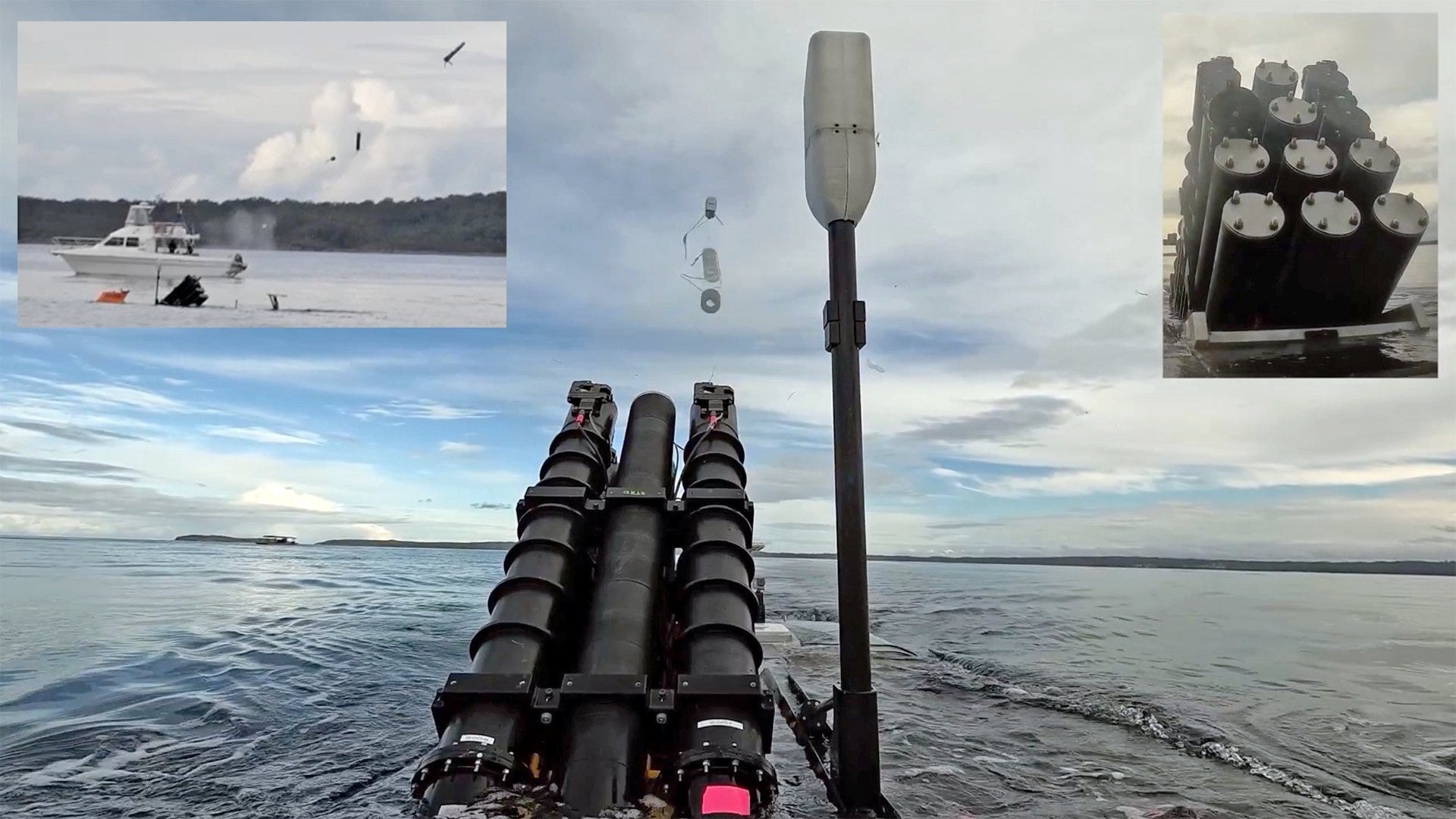
BLUF: Footage shows a Ghost Shark surfacing before doors on the top of its hull slide open. A launcher consisting of 12 angled tubes then emerges from a drone sub.
The Australian government has said the vehicle is being developed for missions including persistent intelligence, surveillance, reconnaissance (ISR) and strike.
Ghost Shark can clearly deploy a substantial number of aerial drones — two dozen in this case – in a single sortie, enabling swarms to be launched far from an adversary’s coastline.
Depending on the drones carried and how they are employed, such a swarm could provide broad-area surveillance, wreak havoc on enemy air defenses via electronic warfare, or attack targets.
Our Take: This is the way to bring lower cost effects at scale.
Related: Ghost Shark with teeth: Australia unveils underwater drone payloads
The Pentagon’s Quantum Race Needs a Warfighter’s Scorecard

BLUF: A $350M computing initiative and a military-wide cryptographic transition serve different purposes. Both must be measured against the mission, not the milestone.
On October 1, the National Security Agency announced new post-quantum requirements for National Security Systems.
On October 8, the DoW announced roughly $350M in quantum computing initiatives.
Building a useful quantum computer and defending against the eventual risks of the other involve different technology, budgets, and timelines.
But both efforts can stumble over the same management habit: mistaking evidence of progress for evidence of mission value.
Tests
The first test: turn computation into something the services can use.
This is not a demand that exploratory research produce a fielded weapon next year. It is a demand for an honest chain of evidence, with the burden of proof rising as a project approaches procurement.
The second test: a migrated network is not necessarily a protected mission
The NIST migration project rightly emphasizes cryptographic inventories, interoperability, and benchmarking. Those are foundations, not substitutes for a mission-thread check.
America should pursue powerful quantum computers and move quickly to replace vulnerable cryptography. The challenge is to avoid awarding either effort a passing grade for a number that conceals what matters.
A machine must deliver a result the defense industrial base can validate and use. A migrated network must still support the mission when a link fails or a system recovers. The warfighter’s scorecard is the proof that survives both tests.
Our Take: It’s a great point here and one that is hitting much of the acquisition community. Hitting technical objectives is good but tying it to clear abilities that a commander can exercise in the near-term is greatness.
A Microwave Line Runs Five Silicon Spin Qubits with 99.9% Accuracy
BLUF: Researchers have demonstrated a way to operate five silicon-based qubits simultaneously through a single microwave control line, maintaining operation accuracy at or above 99.9%. This approach could help make future quantum processors easier to scale without requiring a separate control line for every qubit.
The team worked with five qubits made from electron spins trapped in tiny structures called quantum dots within a silicon/silicon-germanium device.
Microwave signals control these qubits, but a signal aimed at one can also create unwanted influence, known as crosstalk, can make quantum operations less accurate even when the neighboring qubits are not the intended targets.
The researchers traced the main source of this interference to a phenomenon called the AC Stark shift.
The team found that these phase shifts could be predicted by measuring how individual pairs of qubits affected one another.
They used those measurements to compensate for the unwanted changes, avoiding the need to calibrate every possible combination separately.
SOCOM Seeks Common PaaS Environment to Support Testing and Fielding of New Tech
BLUF: SOCOM is conducting market research as it looks to fulfill a requirement for a common platform-as-a-service environment near its headquarters.
Requires an integrated contracting vehicle to rapidly discover, assess, prototype, integrate, test, and field mission‑relevant technologies and software-intensive capabilities across multiple Program Executive Offices and operational contexts.
An objective is to operate a “cutting‑edge integration test platform (open and operationally representative environments) to verify communication, data exchange, security/privacy, performance/scalability, resilience/redundancy, emergent behaviors, and change/configuration management” across PEO Tactical Information Systems programs.

Pentagon Bets Big on Drone-Killing APKWS Laser-Guided Rockets

BLUF: BAE Systems and the DoW announced a framework deal of up to seven years for 25,000 Advanced Precision Kill Weapon System guidance kits annually for the U.S. military. These laser-guidance kits turn rockets into drone-killing weapons.
Another 10,000 kits could be produced each year for international customers, who are increasingly interested in the system.
APKWS is a laser-guidance kit that converts 2.75-inch unguided rockets into precision munitions. It is currently fielded by the U.S. Air Force, Army, Marine Corps, and Navy, as well as U.S. allies.
APKWS has become the preferred method for U.S. warplanes to down drones fired by Iran and Iranian-backed militias in the Middle East over the past few years. But it is not just an air-to-air weapon. APKWS munitions can also be fitted to various platforms for air-to-surface, surface-to-surface, and surface-to-air use.
APKWS is an attractive capability for the Pentagon because of its low cost—roughly $35,000, according to officials. That gives the Air Force a way to shoot down drones without expending costly air-to-air missiles.
Related: Pentagon Announces Multiyear Framework for APKWS and Pentagon, BAE sign deal for up to 25,000 precision-guided munition kits a year
The U.S. Is Overpaying for Missiles

BLUF: The U.S. cannot sustain high consumption of military systems designed for small-scale manufacturing. As Iran drains the Pentagon’s stockpiles, orders for missiles are outpacing what defense contractors can provide, resulting in backlogs. Unsatisfied with the timelines for current production rates, the U.S. is pushing to expand the defense industrial base.
Today’s factories will need 3 years to replace every Patriot missile used in the war, and the promise to triple output won’t materialize until the end of 2030.
Fixing this requires changing where the government spends on defense, not just how much. Instead of relying solely on munitions intended to be the best money can buy, the U.S. should embrace those intended to be cheap and good enough.
Anduril’s Barracuda 500M, a $200K cruise missile similar to $1-4M competitors. Anduril achieved this low cost with off-the-shelf parts, reportedly using commercial components for about 70% of the missile. The company also heavily emphasizes designing equipment that can be made with non-specialized tooling, allowing factories outside of the defense sector to build weapons during wartime.
Castelion’s upcoming hypersonic strike missile, known as the Blackbeard, is intended to cost a fraction of its alternatives. Castelion saves money during the development process by prioritizing real-world tests over simulated trials.
An interceptor called the AGR-20 FALCO is made by retrofitting cheap rockets with guidance systems and proximity fuzes.
All of these munitions have tradeoffs. They could be undersized for sinking ships, promises to scale up production remain unproven, they could be vulnerable to jamming or interception, or have relatively short range.
Affordability outweighs these shortfalls. Cheap missiles don’t need to handle every task covered by our current arsenal, only some of them. They’re supplements, not substitutes.
Northrop Sees Growing Commercial Market for Microelectronics Products

BLUF: Northrop Grumman is bullish on expanding its microelectronics business to commercial customers, with the company undergoing a review of the business that could lead to a future spinoff or Pentagon investment.
Major changes to the company’s microelectronics unit are being considered.
Northrop sees a significant opportunity to scale this transformative technology for commercial and government customers.
The microelectronics business known as the Northrop Grumman Microelectronics Center is made up of three government-accredited production facilities: two semiconductor foundries in California and Maryland and an advanced packaging facility in Florida.
One new technology that could have commercial applications is the Fortitude chip. A gallium nitride chip the size of a grain of rice, Fortitude is designed to deliver three times more power and 20 times better signal quality as current chips, with applications including radar, GPs and future 6G networks.
“For more than a decade, we’ve leveraged our expertise in cutting-edge semiconductors and our secure US boundaries to pioneer leading quantum computing technologies. We could continue to solely invest in it ourselves with the support of our current shareholders. We could think about broadening that base of investments, or we could think ... about separating the business.” Kathy Warden, Northrop CEO
Arda Emerges from Stealth to Speed Up American Manufacturing
BLUF: Arda Industries launched from stealth with $232M in funding to speed up American manufacturing. Its software helps manufacturers quickly turn new product designs into working assembly lines.
It is the first step toward a larger vision: automated robotic assembly lines that update as designs change, making it possible to build fast-changing products in the U.S.
Investors include Accel, Altimeter, Founders Fund and Khosla Ventures, with participation from XYZ Venture Capital, 8VC, SVAngel and Felicis.
Founded by former OpenAI Chief Research Officer Bob McGrew, Arda is deployed as part of ArsenalOS at Anduril, which was the company’s first design partner and customer.
Think of a 7,500-piece Lego set that arrives as a finished model with no instruction book. To build it from scratch, you would have to figure out the assembly order, write the instructions, and lay out the stations.
Arda’s AI agent handles assembly based on rapid changes to hardware products from the product's CAD files and other design artifacts, so a design change reaches the factory floor without halting production.
Shield AI Software Cuts Autonomous Flight Development to Six Weeks
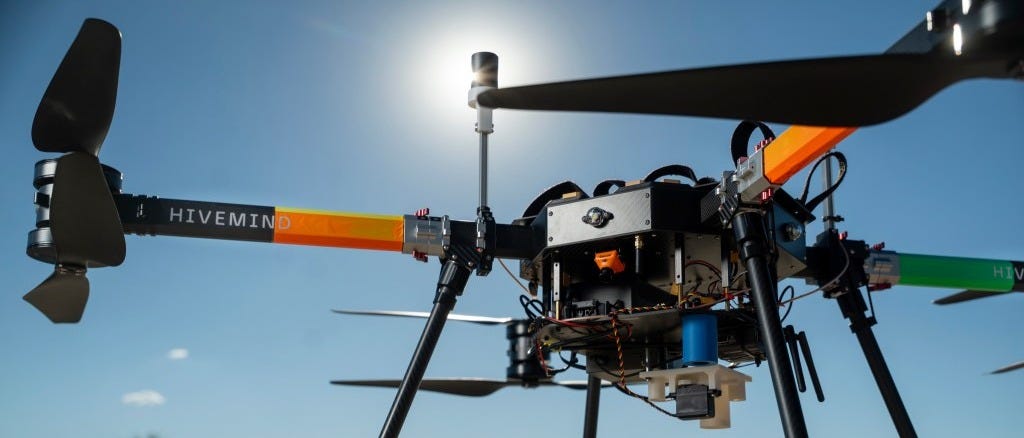
BLUF: Shield AI said this week that its Hivemind software helped Honeywell Aerospace achieve autonomous flight after six weeks of training, down from an estimated 54 weeks, ahead of two flight demonstrations.
The companies collaborated with the goal to help defense operators move from demonstration to deployment faster without having to rebuild confidence in each new system every time.
Shield AI explained the Hivemind software provides core capabilities such as route planning, mission management, and communication between aircraft so companies like Honeywell could integrate their own AI models, sensors, and mission capabilities and advance them from simulation to flight.
In a demonstration in Plymouth, MN, the aircraft took off on its own, followed a planned route, re-routed around a no-fly zone, and returned to base.
In another demo a scout aircraft used the AI model to detect, identify, and track a target. It then passed the information to another aircraft, which navigated autonomously to the target, delivered a payload, and then returned to base with the scout.
Pentagon, Lockheed Agree on 10-Year Framework for Buying F-35s

BLUF: The Pentagon and Lockheed Martin announced a 10-year framework for 156 F-35s a year across Lots 21-30, at least 850 of them for the US, contingent on Congress granting multiyear authority and funding.
The framework also covers initial spares, modification kits and global fleet sustainment. Lockheed commits at least $7B of its own money.
Multiyear authority is being considered in the FY27 NDAA, and with no FY27 budget passed the deal is unfunded. Pricing, schedules and terms would be finalized with the JPO through a formal award.
“We have fundamentally changed how we stabilize the American defense industrial base to produce at speed and scale.” - Michael Duffey, USW(A&S)
Related: Pentagon, Lockheed Agree to Decade-Long F-35 Framework Deal for Hundreds of Jets and Pentagon, Lockheed Agree to 10-Year Deal for 850 F-35 Jets
Other Defense Industry News
Reliable Robotics Adds $115M to Series D, Closing the Round at $275M
Global Ordnance and Sparkz Target US Drone Battery Production in 2027
FMD Breaks Ground on $60M Naval Propulsion Centre in Mississippi

Pentagon CIO gets new strategic technical advisor
BLUF: Jon Steinbach will serve as strategic technical advisor to DoW CIO Kirsten Davies.
Steinbach will provide critical counsel on emerging, next generation technologies and the complex issues at the nexus of national security, technology, and business.

Army Looks to Validate 15 C-UAS Systems in Morocco in 2027
BLUF: Southern European Task Force, Africa (SETAF-AF) is partnering with the Army’s Global Tactical Edge Acquisition Directorate (G-TEAD) to test emerging C-UAS technologies in Morocco and deliver them to soldiers within 180 days.
The command’s first Accelerated Capability Event (ACE), is scheduled for spring 2027 and focus on targeting Group 1–3 small UAS.
The Army said that Africa offers an open spectrum, uncongested airspace and diverse terrain that training ranges in the U.S. and Europe cannot easily match
SETAF-AF will first hold a soldier-led demonstration in February and March 2027 in Tan-Tan, Morocco, followed by an operational assessment in April and May during African Lion 2027.
G-TEAD will validate up to 15 solutions with PAE Fires.
The C-UAS ACE is structured around five capability categories: an integrated fly‑away kit and four subcategories focused on small UAS detection, kinetic defeat, nonkinetic defeat and passive protection.
Related: Counter-Drone Tech Delivery in Africa Led by Army’s SETAF-AF, G-TEAD
Army Anti-A2/AD, Maritime Strike Unit Fires Tomahawk Missile

BLUF: The 3rd Battalion of the 12th Field Artillery Regiment launched the cruise missile from a Typhon launcher at NAWS China Lake.
The launch marked the third time the Army’s Typhon launchers fired in the Continental U.S. Before the live-fire, the battalion’s Mid-Range Capability battery learned how to operate the system through a five-week-long training course held by the Navy and Lockheed Martin.
Equipped with SM-6 and Tomahawks, Typhon missile systems represent one of the Army’s lines of effort in fielding long-range maritime strike capabilities. These procurements and Army initiatives to sink ships come amid Beijing’s naval build-up in the Indo-Pacific.
U.S. ground-based missile exercises are also increasing across Europe. Last month, the U.S. Navy and Marine Corps deployed Naval Strike Missiles and a containerized launching system to Norway for Operation Atlantic City 2026. The exercise focused on expeditionary advanced basing operations in support of maritime domain awareness and establishing sea denial.
“We get that range for that combatant commander to give them options and capabilities where they really haven’t had it before from the land force.” LTC Derek Bartlett, 3rd Battalion Commander
Army Long-Range Fires Make a Splash on the Frontline With China
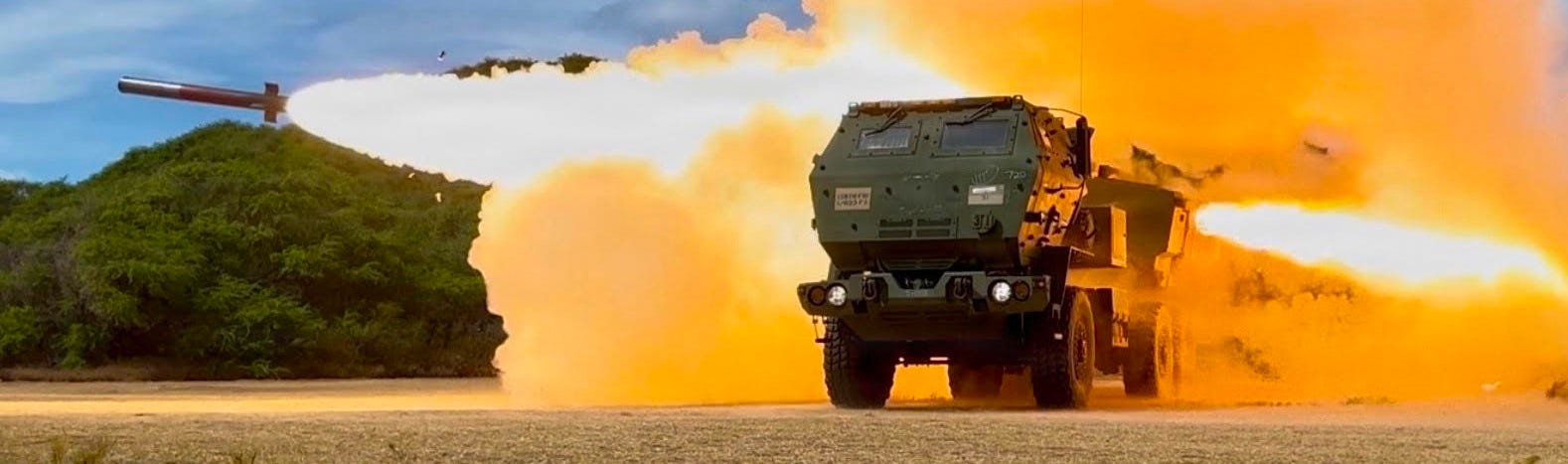
BLUF: The Army is pushing HIMARS and Typhon across the first island chain with Japan and the Philippines, largely in response to China’s missile arsenal.
U.S. Army soldiers have stepped up their training with new long-range weapons along the first island chain, working with allies in exercises that have grown larger and more complex over the past half-decade.
During Keen Sword, HIMARS went to a Japanese island about 150 miles east of Taiwan. Typhon hit a target about 400 miles away in a May 2026 test and moved to Okinawa for storage in October.
The Army also plans lower-cost options such as one-way attack drones and USVs to disperse forces.
“The Typhon has maintained forward presence for now over 30 consecutive months. This maximizes options for the Joint Force while also enhancing the protection and survivability of our soldiers. The employment of systems such as long-range one-way-attack drones, unmanned surface vessels, and long-range launched effects may enable our division to achieve a desired effect for the Joint Force while also preserving our larger, more exquisite systems until needed for a specific purpose.” - MG Bernard Harrington, 7th ID/Multi-Domain Command-Pacific, Commander
Preparing U.S. Land Forces to Fight in an Era of Strategic and Technological Disruption
Jerry McGinn, JP Gresh, and Alek Jovovic

BLUF: U.S. land forces are modernizing amid rapid strategic and technological disruption, as unmanned systems, stand-off precision strikes, and contested logistics challenge long-standing assumptions about how to prevail on the battlefield.
The Marine Corps has committed to a defined operational vision through Force Design, accepting hard divest-to-invest trade-offs to do so.
The Army’s “How the Army Fights” guidance marks a significant step toward linking doctrine and design, but the service must still clarify roles at each echelon and make difficult choices about global posture.
The Army also serves as a central enabler of the joint force, carrying a disproportionate share of joint executive agency responsibilities, bearing primary responsibility for logistics and sustainment, and playing a vital role in air defense.
Both services contribute to security cooperation with allies and partners, and both are contending with the fiscal legacy of post–Cold War and post–Global War on Terror drawdowns, the competing demands of personnel and procurement spending, and a difficult recruiting environment, all while integrating new technology into training.
Their most pressing acquisition needs are deeper munitions stockpiles, faster adoption of unmanned and autonomous systems, and a tighter feedback loop with industry.
Army’s First ME-11B Spy Jet Prototype Nears Completion for Future High-Altitude Reconnaissance

BLUF: The Army’s first ME-11B High Accuracy Detection and Exploitation System (HADES) surveillance jet prototype is expected to be completed by the end of 2026, as the planned fleet falls from 14 to six aircraft.
Sierra Nevada Corporation is converting Bombardier Global 6500 business jets into high-altitude reconnaissance aircraft equipped with Raytheon's ASARS-2B radar and signals intelligence systems to detect ground movements, map military activity, and intercept electromagnetic emissions over extended distances.
The Army is replacing more than 40 RC-12X Guardrail, MC-12S EMARSS, and EO-5C ARL-M reconnaissance aircraft with a smaller number of higher-altitude intelligence jets.
SNC is operating under a 12-year contract with a $991M ceiling.
ARCYBER Builds Agentic Workforce to Support Cyber Operations
BLUF: Army Cyber Command is expanding its use of AI in cyber operations by building out its agentic workforce to support cyber protection teams while pursuing new capabilities that can autonomously detect and respond to cyber threats.
The command launched Task Force Lexington earlier this year, which began developing AI agents capable of performing various cyber functions.
The task force first created four cyber work roles for AI agents. ARCYBER has since expanded the number of those roles. The task force has built an entire agentic cyber protection team.
The service is also set to award contracts to two companies for its pilot program that seeks to develop agents that can autonomously respond to cyber attacks.
Dubbed Project Griffin, the effort was informed by a tabletop exercise that brought top industry executives and service leaders to examine how the service would respond to an adversary launching thousands of autonomous cyber attacks simultaneously.
“Since August, the biggest thing we have done is complete the cyber protection team. We now have all the work roles inside of a cyber protection team mapped out at this point, and learning their trade. We are treating each one of these agents just like a human operator, so they are basic. And with that mindset, they are only allowed to do so much. It is a really tight framework.” LTG Christopher Eubank, ARCYBER Commander
Army Unit Experimenting With Small Drones for Tailored Cyber Effects

BLUF: The 11th Cyber Battalion is testing drone-mounted cyber and EW payloads, led by the Radiofrequency Delivery Effects Platform, to set standard kit for it and the planned 12th Cyber Battalion.
The Army is testing its Radiofrequency Delivery Effects Platform (RDEP) on small drones, using a mix of government-developed and COTS payloads to deliver non-kinetic effects at the tactical edge. Those are typically jamming capabilities as well as gaining access to Wi-Fi systems.
RDEP is a hardware and software capability that allows operators to load exploits onto cards and deliver digital bullets to blind or gain access to adversary systems.
The Army is exploring how the system and other payloads can support real-time spectrum monitoring and tailored cyber effects — extending the reach of tactical cyber operations while minimizing unintended impacts on friendly systems
No program of record exists yet. ARCYBER is drafting kits after an initial prototype.
“This next year we have not made decision on what we’re going to go into production with.” - COL David Bergmann, Army, Project Manager for Cyber Warfare
Army Acquisition Executive Holds Night Court Challenging Leaders to Tackle Sustainment Concerns
BLUF: Army leaders across the acquisition and sustainment enterprise met late September to discuss how to evolve sustainment capabilities into a deliberate portfolio-level investment based on performance measures, milestones, and ROI analysis in preparation for future wars.
Night Court is designed as deep-dive, enterprise reviews, offer senior leaders an honest, front-to-end evaluation of sustainment strategies across every phase of a program’s lifecycle.
This Sustainment Night Court session resulted in leaders sharing their strategies for tackling the challenges of intellectual property and data rights strategy, supply chain risk management, predictive readiness, leveraging defense exportability and FMS, and policy standardization.
RDT&E and Procurement are outweighed by Operations and Maintenance which routinely accounts for 70% of a weapon system’s total lifecycle cost.
“By design and culture, acquisition professionals operate under immense pressure to deliver cutting-edge capability into warfighter’s hands on time and within budget. Yet fielding a capability is merely crossing the starting line. Once a system transitions into the hands of warfighters, the true scale of lifecycle management emerges, and with it, the reality of how modern weapon systems must be resourced, governed, and sustained.” Brent Ingraham, Army SAE
How The Army’s Navy Aims To Go More Autonomous With Its Vessels In The Pacific

BLUF: The Army wants to buy up to 100 new USVs and add autonomous capabilities into existing crewed vessels.
The Army wants to infuse new autonomous capabilities into its current and future fleets of amphibious landing ships and other watercraft. They are also aiming to acquire up to 100 new purpose-built USVs.
The maritime assets they have now, often referred to as ‘the Army’s Navy,’ are obscure and generally underappreciated. However, the small force offers an important additional set of naval logistics capabilities, especially for any future fight in the Pacific, which could be further bolstered with optionally-crewed or entirely uncrewed platforms.
The Army has eight Logistics Support Vessels (LSVs), in total, and these are by far its largest and most capable ships. The two youngest LSVs, which were acquired in the mid-2000s, also form a distinct subclass, and their design is optimized for long-distance open-ocean operations.
Sea Machines was able to integrate its SM300 software package on the HOS Resolution in just nine days for this demonstration. The ship is a 257-foot-long offshore support vessel more typically used to support oil and gas rigs. However, it features a stern ramp and four jack-up legs that also make it well suited to loading and unloading cargo at remote beaches.
One of the inherent benefits of the Army watercraft fleets, and its LSVs in particular, is their ability to help alleviate the need for the U.S. Navy to meet more localized littoral logistics needs, if they are even available to help in the first place.
“In order to be able to increase theater distribution, we have the two composite watercraft companies, at end state there, west of the International Date Line. We continue partnering with industry to be able to move into autonomous watercraft systems to be able to conduct other means of maritime distribution.” MG Frederick Crist, 8th TSC Commander
Our Take: As noted in the headline stories above, it is great to see the Army also actively acquire and explore USVs for operations. Having a distributed approach to acquiring and employing these capabilities, with some common alignment at the strategic level can enable greater speed and agility in pursuing novel solutions.
Tents to Vans: Northrop to Build Variant of Battle Command System
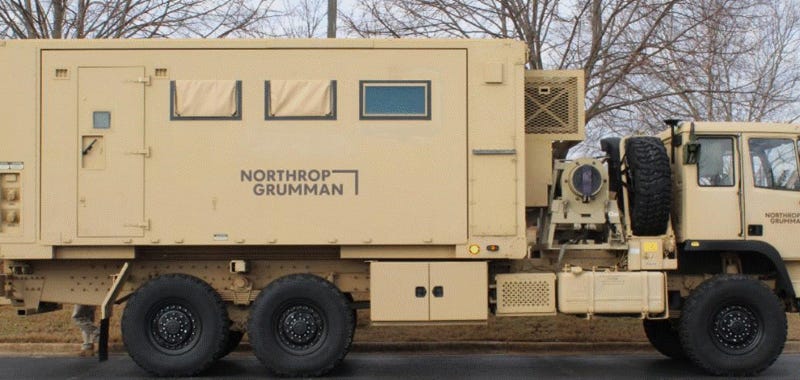
BLUF: The Army’s Integrated Battle Command System (IBCS) is getting a new variant from Northrop Grumman, featuring an expandable vehicle-mounted shelter designed to give operators more workspace and improve mobility in the field.
Under a $21M contract, the Northrop will design the new configuration to enhance the system’s survivability and mobility.They will deliver prototypes of an integrated collaborative environment housed inside an expandable van.
Its shelter can extend outward with additional side sections, creating more room for personnel, equipment, and mission systems.
The Army’s IBCS integrates data from current and future systems to support fire control and battle management.
By combining information from multiple sensors into a single, actionable battlefield picture, the system helps soldiers and commanders assess incoming threats and determine how to respond.
Army Launches Project Gatekeeper to Accelerate Commercial Software Adoption, Streamline Cybersecurity Accreditation
BLUF: Army CIO launched Project Gatekeeper, a DevSecOps platform and security evaluation sandbox designed to transform how the service tests, accredits and deploys commercial software.
Project Gatekeeper, which comes online this afternoon, draws its authorization framework from the Army’s DevSecOps Platform, which provides a dedicated commercial-facing relay into the Army’s NIPR Network ecosystem.
The platform serves as a prescreening software assurance capability that enables commercial developers to submit code and containerized applications into isolated testing environments, providing automated security feedback and risk assessments in near-real time.
Using state-of-the-art security tooling, Project Gatekeeper conducts comprehensive automated code scans, identifies vulnerabilities, verifies compliance guardrails and provides commercial engineers with immediate remediation guidance.
Rather than burdening software vendors with manual documentation, the platform’s automated pipelines generate standardized compliance artifacts and evidence dossiers needed by authorizing officials to make fast, risk-informed ATO determinations.
Timing to Roll Out Army’s NGC2 Depends on Funds
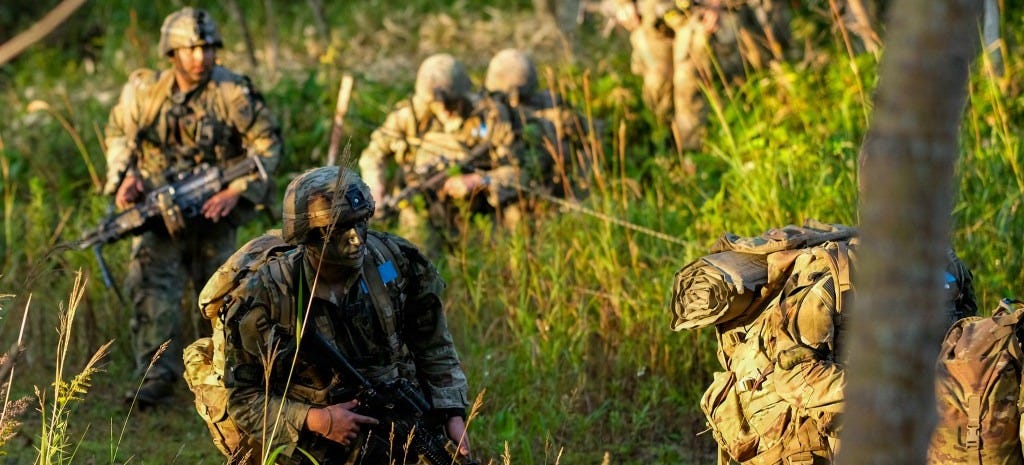
BLUF: LTG Matt McFarlane, Commander of I Corps said the desire to see NGCS deployed across the formation by the end of FY27 was dependent on what the Army was able to provide. Scaling and speed up is based on resources available.
The Army’s NGC2 platform will permit technologies, weapons, sensors, devices and applications from across the force to co-exist on the same network, streamlining decision-making during combat environments.
Among its many responsibilities, the I Corps works with Security Assistance Group-Ukraine, a U.S.-led joint military command headquartered in Germany that provides weapons and training support to the Armed Forces of Ukraine.
Anduril, along with Palantir, Raft and Striveworks, has been refining the technology to help the service move NGC2 from the experimental phase to fielding.
The Army’s proposed budget for FY27 includes a $904M request for the R&D and scaling of NGC2. With Congress currently in recess, the timeline for approval of those funds is murky.
Army Feels Growing Pains as it Integrates Anduril NGC2 Tech With Older Comms
BLUF: When the Army for the first time attempted to integrate NGC2 tech from defense firm Anduril into its existing comms systems, not everything went exactly to plan.
The test had come in September, when the Army’s 25th Infantry Division attempted to use Anduril’s Lattice platform during Lightning Surge 5 in Hawaii.
Up until then, Anduril’s NGC2 tech had been used by the 4th ID in Colorado, where it was paired with new, mostly commercial hardware and software.
Lockheed Martin, which is leading the integration on the 25th ID’s portion of the NGC2 architecture, served as the integrator for Anduril’s platform.
LM said scaling with Lattice was an issue passing data through the system just is not at the state it should be right now with bringing in the Lattice product.
An Anduril official noted that they discovered technical limitations with the communications architecture writ large.
One of the key lessons at Lightning Surge 5, Craven said, was filling the request to go smaller on things like edge computing capabilities. While they integrated Lattice onto the Mounted Family of Computer Systems at 4th ID, last month was the first time they did it on tablets.
“It wasn’t seamless, and we learned a lot. There’s always growing point pains in these. I just think that a lot of the things that we saw out there were normal, like all right, we’re putting a group that hasn’t necessarily worked together, so it’s just that normal growing pains with that.” BG Shane Taylor, PME C2IN
Delivering Warfighting Advantage Through Continuous Transformation
BLUF: Military advantage depends on our capacity to generate and sustain combat power. The bottom line is simple: if we cannot surge production, move parts across contested space, and repair systems forward, we will lose. Sustainment is not a supporting capability; it is a decisive warfighting function.
Continuous transformation cannot be a temporary milestone we check off; it must become our operational baseline, from a program office writing a contract to a mechanic on a depot floor.
Achieving this agility requires addressing our slowest transition point: the speed of our decisions. Our administrative and acquisition cycles take too long because we allow risk-averse processes to dictate our pace.
We must push authority down to the level of execution. When we trust PAEs, program managers, and depot commanders to make decisions in real time, the entire enterprise moves at the speed of the fight.
We are transitioning from centralized, vulnerable logistics hubs toward three direct operational imperatives.
We must predict rather than react. We must use data to identify parts shortages and maintenance trends before they deadline a system.
We must disperse our footprint, trading massive hubs for smaller, mobile, dispersed nodes that are harder to target.
Logistics must enable operational tempo, ensuring commanders have freedom of maneuver rather than waiting on logistics to catch up.
My expectations are straightforward:
Design for Sustainment: Program offices must design sustainment into weapon systems from day one. We cannot afford to bolt it on as an afterthought after life-cycle costs balloon.
Decide with Imperfect Info: Leaders must stop waiting for perfect information before they decide. We must break the habit of waiting for permission and reward initiative.
Our Take: Fully agree with LTG Collins. Continuous transformation requires empowering PAEs and PMs with the authority, accountability, and freedom to make decisions at the speed of relevance. AI-powered data platforms can provide the real-time visibility and predictive insights needed to make informed tradeoffs across capability, cost, production, and sustainment. The goal is to fundamentally change how we operate, enabling leaders to adapt, deliver, and sustain combat power with the speed and agility modern warfare demands.
The Meridian Transformation Surge and Next Gen Army Sustainment
BLUF: To succeed in multi-domain operations, the Army sustainment enterprise must transition from a reactive network of legacy systems to a predictive, unified, and SI-driven common operating picture. Catalyzed by recent Army-industry data interoperability initiatives, the Meridian transformation effort will build an open, integrated software ecosystem.
The program targets December 2026 for the initial fielding of capabilities aimed at enabling the seamless flow of data from the strategic support area directly to the tactical edge.
Preparing for large-scale combat operations against peer and near-peer adversaries means we can no longer rely on uncontested supply lines or guaranteed network connectivity.
The modern battlefield is increasingly transparent, exposing logistics networks instantly to sensors, drones, and cyber threats.
The Meridian ecosystem directly answers this threat by hardening our data architecture, using resilient, cloud-to-edge pathways and decentralized data nodes to ensure sustainment operations remain secure, survivable, and continuous even under active disruption.
Modernizing the Army sustainment enterprise is an active operational mandate; our data must be resilient, adaptable, and as mobile and lethal as our combat formations.
Meridian provides an API-first, machine-forward, event-driven ecosystem grounded in modular open systems architecture. Rather than centralizing control into a single, brittle monolithic system, Meridian establishes a resilient ecosystem of independent, mission-focused applications.
The Meridian effort is not a multi-year acquisition program; it is a rapid, phased-capability delivery initiative designed to yield immediate results.
Related: See the full edition of Army Sustainment Magazine
ACC Aberdeen Proving Ground Industry Update

Nov 5th at APG to hear directly from local contracting divisions and requirements owners on upcoming opportunities.
Other Army News:
Army turns light tactical vehicle into 19-mile-range missile launcher
Lockheed Martin moves extended-range GMLRS towards production
L3Harris opens Arkansas rocket motor facility to expand GMLRS output
Army fields new system for sweeping munitions planning, management
Army pilots AI-backed maintenance to digitize manuals, streamline repairs
Soldiers put Picatinny’s Common Lethality Integration Kit to the test at PC‑C6

Unmanned Aerial Refueler Remotely Controlled By At-Sea Aircraft Carrier Control Station

BLUF: In a historic U.S. naval aviation event, an aircraft carrier connected to, and controlled, an unmanned aerial refueler MQ-25A Stingray more than 2,100 miles away.
During a Preliminary Sea Trial aboard USS Ronald Reagan (CVN 76), the ship's Unmanned Air Warfare Center (UAWC) used its MD-5C Ground Control Station to connect Beyond Line-of-Sight with an MQ-25A test aircraft using a Proliferated Low Earth Orbit (pLEO) satellite network.
The Stingray was located at Boeing's facility in Mascoutah, Illinois, while the ship was underway in the Pacific Ocean.
The MD-5C GCS integrates the Navy's C4I network with Lockheed Martin's MDCX hardware and software and other government-produced equipment to provide command and control of the MQ-25A.
The system will also provide command and control for the Navy's future unmanned carrier aircraft and the Air Wing of the Future.
The Stingray will provide the Carrier Air Wing with essential organic refueling, allowing more F/A-18E/F aircraft to focus on strike missions and expand the operational reach of the air wing.
“The MQ-25A Stingray’s carrier-based refueling capabilities enable F/A-18 Super Hornets to fly farther and longer. The integration of this unmanned aerial refueler demonstrates the transformational change our manned and unmanned asset integration provides the Fleet.” Hung Cao, Acting SECNAV
Related: Navy Carrier Remote-Controls MQ-25A Stingray Over 2,100 Miles Away and MQ-25A Stingray Remotely Controlled from USS Ronald Reagan
Sea Services Weigh How to Embrace Autonomous, Attritable Tech
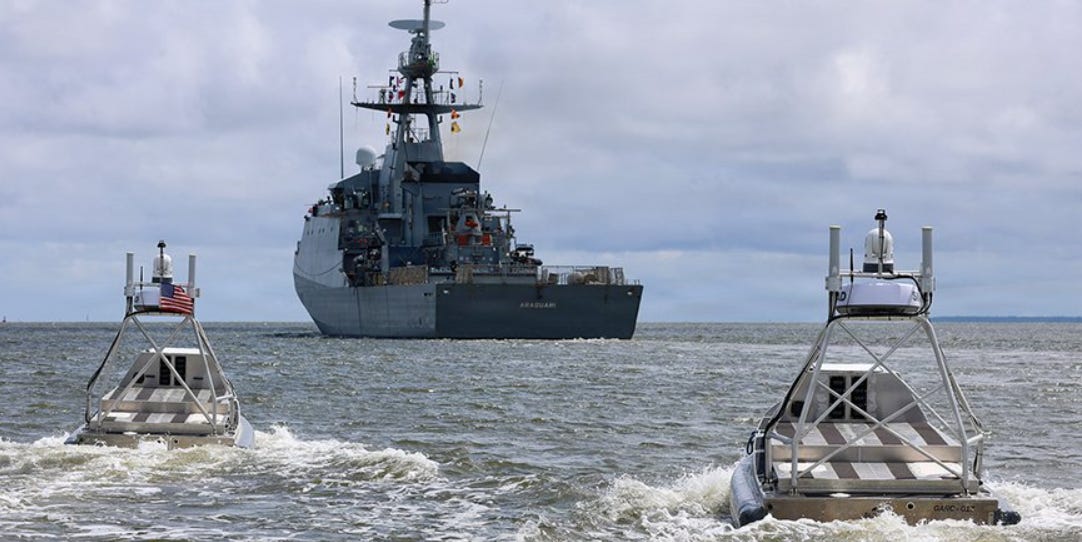
BLUF: ADM James Kilby, Vice CNO, is often asked about the lessons the Navy and Marine Corps are learning from the war in Ukraine, a battleground known for its rapid integration of autonomous technology.
In testifying before the National Commission on the Future of the Navy, he said the DoW faces some modern warfare challenges that are not present in Ukraine.
For one, the US needs to deploy, coordinate, and sustain strength across considerable distances.
The Navy and the Marine Corps are increasingly looking to industry for help with operational hurdles as they look to integrate autonomous and attritable systems into their operations.
The Navy in late September established the Robotic and Autonomous Systems Warfighting Development Center dedicated to integrating autonomy.
Facilitating a common C2 structure across technologies is important.
Standardizing user interfaces between systems for ease of operation and minimal retraining would alleviate disruptions as maritime forces field new platforms.
Fielding expendable systems is a balance; the Navy will continue to need aircraft carriers and large surface combatants on one end of the spectrum, but on the other end, there are systems the service must be willing to lose.
Commanders pivoting toward tailored force packages will help, he said, but that’s a long time coming because they don’t see that offer on the menu right now.
Our Take: As Defense Tech and Acquisition readers know, we strongly advocate for tailored force packages that combine exquisite platforms with affordable, attritable mass. The Navy and Marine Corps need a more balanced high-low mix of capabilities, integrated through common C2 architectures and open interfaces, to expand operational options, complicate adversary planning, and fundamentally shift their risk calculus. Equally important, this approach can revitalize the defense industrial base by opening the door to more vendors, greater competition, faster innovation, and scalable production. This creates a more adaptable force and a stronger industrial ecosystem for the future of warfare.
Navy Awards Applied Intuition $25M to Deploy AI Sensor Fusion at Sea

BLUF: Applied Intuition won a $25M Navy contract to field its Intelligent Perception System on five Arleigh Burke-class destroyers, with possible fleetwide expansion.
The system fuses camera and infrared feeds into one picture, flags vessels on a collision course, records sensor data for transfer ashore and takes over-the-air updates.
It builds on the Data Edge Collection Kit (DECK) pilot tested earlier in 2026.
The system’s land-based component can analyze the collected data and use it to train improved AI models for both manned and unmanned vessels.
The system even allows ships to receive updates over the air while still at sea, instead of waiting for maintenance and modernization in port. That could enable multiple refresh cycles in a single deployment.
“We built those data engines for our commercial business and applied the same technical approach to naval operations.” - Jason Brown, Applied Intuition, GM
The Navy Is Making Progress on Unmanned Vessels. Now It’s Time to Put Them to Work.
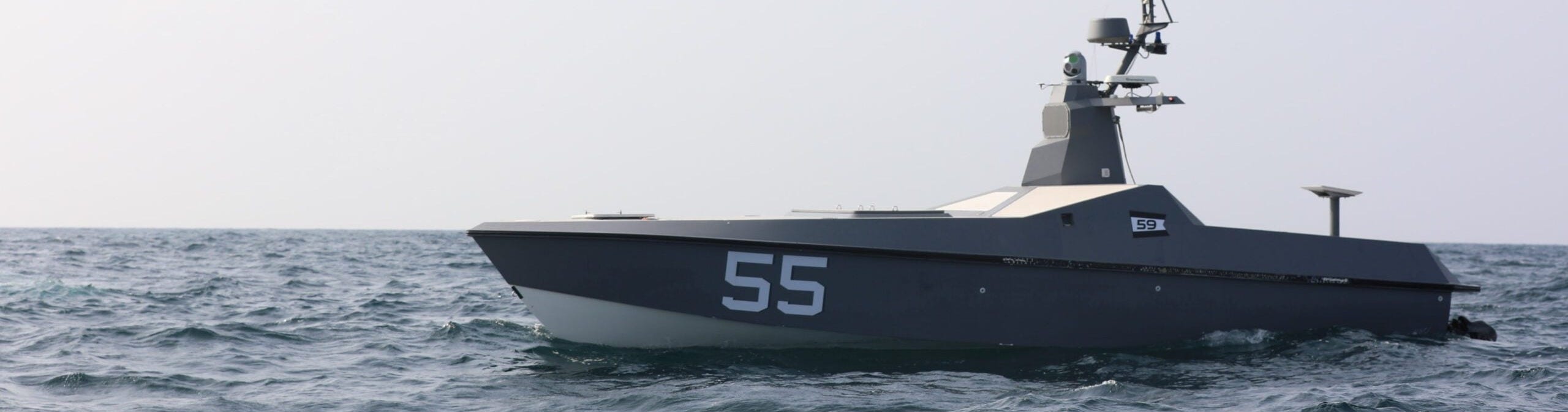
BLUF: After years of testing and debating how unmanned surface vessels fit into the fleet, the Navy is starting to show what these systems can do. And there’s a lot to like.
Recent operations in the Persian Gulf have demonstrated their value. The USS Theodore Roosevelt Carrier Strike Group has deployed with a medium USV.
Industry is delivering increasingly capable platforms.
Senior leaders in the DoW and DoN are talking less about the promise of unmanned warfare and more about making it part of everyday operations.
The Navy needs to decide how it intends to fight with unmanned vessels, what missions they’ll perform and how it will organize, train and sustain the forces operating them. It’s time to move from proving these systems work to making them a routine part of fleet operations.
Experimentation got us here. It remains important and should never stop. But experimentation alone isn’t a strategy, and continuing to treat it as one wastes time and money.
The goal isn’t simply more unmanned vessels in the water. It’s giving commanders more options, extending the fleet’s reach, reducing risk to sailors and freeing manned warships for missions that require them.
Chief of Naval Operations Adm. Daryl Caudle has emphasized building a hybrid fleet that combines manned ships and unmanned systems. His fighting instructions identify scouting, screening and striking as important missions for medium unmanned surface vessels.
That’s a good start. But the Navy needs to turn those broad missions into concepts of operations that commanders can execute and the service can organize around.
Start with missions where the technology is reasonably mature: surveillance, scouting, screening, EW and selected logistics tasks. Continue developing more demanding missions, including strike and sea denial, as the technology and tactics improve.
But the bigger challenge may be inside the Navy. Who owns these vessels? Who operates them? What training is required? How are crews certified? Who handles maintenance, spare parts and repairs? How does the Navy measure readiness?
L3Harris Advances Navy Next Generation Jammer Low Band Program with $876M Award
BLUF: L3Harris received an undefinitized contract modification award from the Navy for the next engineering and manufacturing phase of the Next Generation Jammer Low Band program (NGJ-LB).
The effort, worth $876M, supports an accelerated timeline for NGJ-LB, aligning with the DoW’s priority of delivering expedited capability to the warfighter.
NGJ-LB will advance the Navy’s ability to disrupt and degrade enemy radar and comms by integrating sophisticated jamming capabilities with faster processing.
L3Harris’ modular, open-system architecture will also simplify maintenance and help enable seamless upgrades. NGJ-LB will operate with joint and allied forces, which will allow growth capacity for future technology integration.
Navy selects Radiant Industries for Microreactor Prototype
BLUF: The Navy selected Radiant Industries to design, build, and deliver a prototype Microreactor Power Plant (MPP). The selection of Radiant’s Kaleidos microreactor design, pursued in conjunction with the Army’s Janus Program, marks a milestone in securing reliable, grid-independent, and dispatchable power for critical military infrastructure at Naval Weapons Station (NWS) Crane, IN.
This cutting-edge technology is being procured through the Army’s Janus Program in close partnership with DIU.
The Army expects to build more than 20 total nuclear microreactors on military installations.
By leveraging the Army's Janus contracting vehicle and DIU's agile innovation framework, the Navy is streamlining the path to deployment to provide NWS Crane with an independent power source and securing an enduring operational advantage for our warfighters.
“Our installations are foundational warfighting platforms and ensuring their resilience is essential to supporting the Fleet. By investing in advanced capabilities like this microreactor at Crane, we are providing our Shore infrastructure with the resources needed to sustain the mission and empower our warfighters.” VADM Brad Collins, Commander, Navy Installations Command.
Pentagon Launches 120-Day Sprint to Field Counter-UAS Armed USVs
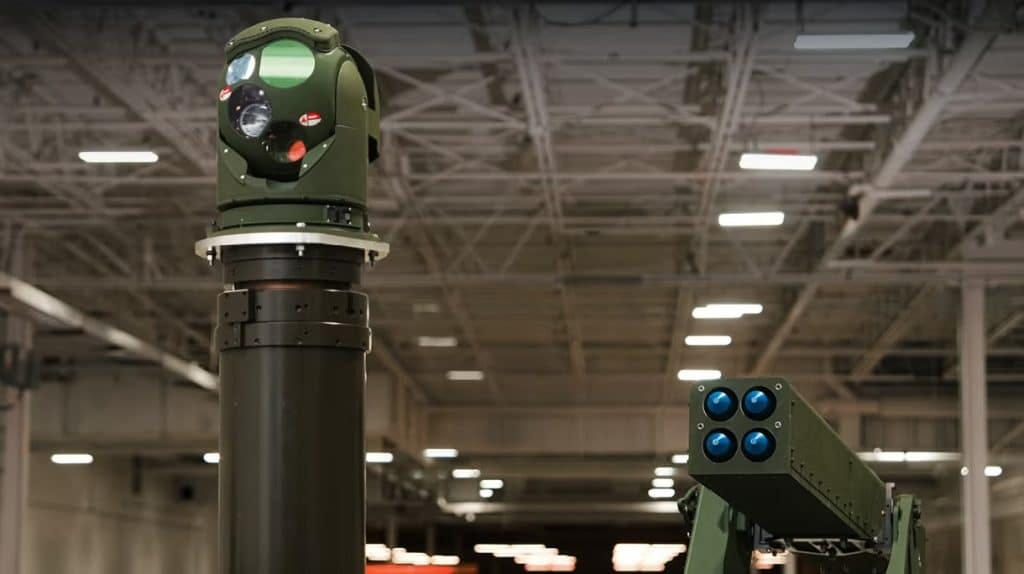
BLUF: DIU and the DRPM UxS opened a 120-day sprint to buy and field armed USVs that can kill low-cost aerial and surface threats.
Vessels must be production-ready with at least 200 nm range, a 10-knot cruise, autonomous navigation and a human in control of weapons; they must integrate Hellfire, JAGM, APKWS or Stinger and engage low fliers beyond 3 nm.
The sprint sits inside a three-phase, 12-month prize challenge worth up to $100M (up to $40M for counter-air), with another $200M budgeted for follow-on prototyping and production.
Companies will be required to demonstrate their integrated systems within 30 days of selection. Operational testing is planned at JEB Little Creek in early 2027.
MQ-8C Fire Scout Gets Second Life

BLUF: The Navy and Army partnered to rapidly repurpose divested MQ-8C Fire Scout unmanned helicopters, transforming excess inventory into dynamic test assets.
At the direction of OPNAV N98, the Navy began divesting the MQ-8C Fire Scout platform in February 2024, with a final sundown scheduled by the end of FY26. However, a rapid collaborative initiative has given these advanced systems a second life to accelerate critical testing for the Army.
PMA-266 was roughly 60% complete with the overall divestment process of transferring aircraft, mobile control systems and support equipment when the request from the Army came in.
By July 2025, all four aircraft, both MMCSs and dual site support equipment were successfully delivered to Redstone Arsenal to facilitate RTC’s operational plans.
This collaborative effort saved the U.S. Army just over $70M in procurement costs, with additional cost savings in RDT&E, flight hours, data collection, contracts, asset sourcing and manpower.
“Our priority is delivering lethal and ready capabilities to the warfighters. Repurposing these MQ-8C assets from storage to active testing is a major acquisition win for both services, demonstrating how we can supercharge existing capabilities and increase acquisition velocity to support joint operations.” COL Leigh Irwin, PMA-266 PM
Our Take: Kudos to the Navy and Army teams for finding new value in existing MQ-8C assets, saving taxpayers millions while accelerating experimentation and testing. But this success raises a larger question: Why were capable unmanned platforms headed for divestment and storage when the Department should be aggressively experimenting with autonomous systems at scale? While we recognize there may be legitimate performance, cost, and operational considerations behind the original decision, the growing autonomy enterprise should be identifying creative ways to repurpose existing assets, accelerate experimentation, and explore new operational concepts before retiring potentially valuable capabilities. This is exactly the kind of cross-Service collaboration, resourcefulness, and acquisition agility we need more of.
Navy, Gecko Robotics Surge AI Maintenance Contract to $300M

BLUF: The Navy is ramping up its investment in AI technology to streamline ship repairs and resolve maintenance logjams. Gecko Robotics announced the Navy is increasing the value of its initial contract to up to $300M, just six months after the initial $54M award.
Gecko’s AI and robotic technology can save the Navy up to $8M in repair costs per ship and return vessels to sea quicker by identifying structural issues up to 50 times faster than traditional methods, reducing inspections from months to days.
The company uses drones, wall-climbing robots and fixed sensors to gather data on components, decks, welds and hulls.
A key part of the new contract investment is Gecko Robotics’ Komodo machine system, which analyzes the health of deck coatings by scanning — eliminating the need to physically dig into them.
This allows the Navy to plan repairs and map out damaged areas before the ship enters dry dock, something that previously only occurred after the maintenance cycle began.
Our Take: This is exactly the kind of innovative, high-impact solution we need industry delivering and the DoW aggressively scaling. Gecko is demonstrating how commercial tech can deliver outsized ROI through lower maintenance costs, faster repairs, improved readiness, and greater operational availability. The real opportunity is to move beyond isolated successes and scale these capabilities across the Fleet, turning maintenance from a costly readiness bottleneck into a strategic advantage.
Winning the Data Advantage
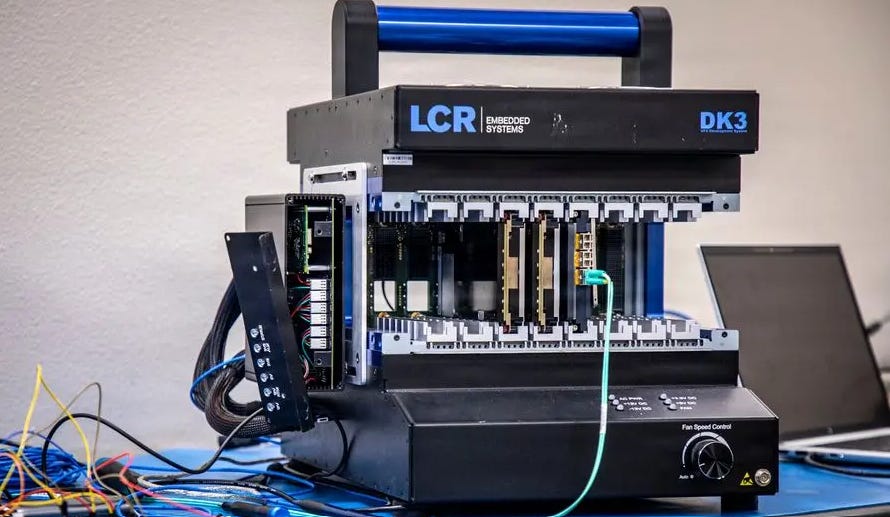
BLUF: The Navy has invested billions over the past decade modernizing IT. Yet despite that progress, commanders still struggle to obtain timely, authoritative information needed to maintain ships, accelerate shipbuilding, improve logistics, modernize acquisition, and make better operational decisions. The problem is that we continue modernizing legacy systems instead of fundamentally modernizing the way the Navy manages data.
The next challenge is no longer simply modernizing technology. It is modernizing the architecture that allows information to move seamlessly across the enterprise. Solving that challenge will determine whether the Navy fully realizes the operational value of the investments already made.
The Navy has made progress modernizing technology, notably through Operation Cattle Drive (which identifies and retires redundant and obsolete IT systems and reinvests savings in what works) and World Class Alignment Metrics, which evaluate IT investment and performance by connecting data to mission outcomes.
Yet far too much of our investment still goes towards preserving yesterday’s architecture instead of empowering tomorrow’s force. That may have been acceptable when information moved at the speed of paperwork.
Rather than waiting another decade for an all-encompassing enterprise replacement effort, the Navy can establish a common data model in a focused mission area, demonstrate measurable operational improvements, and rapidly expand that architecture across the enterprise.
Success should no longer be measured by another integration, interface, or sustainment contract. It should be measured by how quickly legacy complexity is reduced, decision making improves, and operational outcomes advance. Industry's greatest contribution will not be preserving old architecture, but helping the Department move beyond it.
The next era of maritime superiority will belong not only to the Navy with the best ships and weapons, but to the Navy with the greatest data advantage.
Our Take: We strongly agree. The Navy cannot achieve true digital transformation by simply modernizing legacy IT systems while preserving the fragmented processes, data silos, and organizational boundaries that constrain decision-making. The real breakthrough comes from treating data as a strategic asset, establishing open architectures and common data standards that enable AI-powered insights and empower commanders, PAEs and PM to make faster, better-informed decisions. Rather than pursuing another massive, multiyear IT transformation, the Navy should demonstrate measurable operational value in focused mission areas, rapidly scale what works, and retire systems and processes that no longer deliver value. The ultimate measure of success is greater warfighting capability, readiness, and decision advantage at the speed of relevance.
Other Navy News:
AIM-174B, AIM-260A seen together on Super Hornet for the first time
NPS Announces Nine Digital Trident II Projects Addressing Pacific Operational Challenges
Navy plans to equip nuclear-powered submarines with cruise missiles
Lyntris Advances Navy Autonomous Formation Flight with MTC2 Extension

Marine Corps Moves to Expand Maven Smart System Account Access Across its Enterprise
BLUF: The Marine Corps has instructed organizations across all of its echelons to provide authorized personnel with their own Maven Smart System accounts on the applicable networks that they are permitted to access.
MSS is now evolving into the central cornerstone of the U.S. military’s complex plan to consolidate sprawling and fragmented C2 assets into a unified operating picture that can speed up commanders’ decision-making.
The platform captures and fuses vast streams of intelligence and other data including computer vision and object detection from drone videos, satellite imagery, troop records, logistics, and supply chain status to support real-world combat operations.
The Marine Corps has simultaneously been taking major steps to integrate and adopt the AI platform and associated C2 capabilities. Its specialized Task Force Maven and Project Dynamis teams lead efforts to operationalize MSS.
Marine Corps Stands Up First NMESIS Anti-ship Missile Battalion
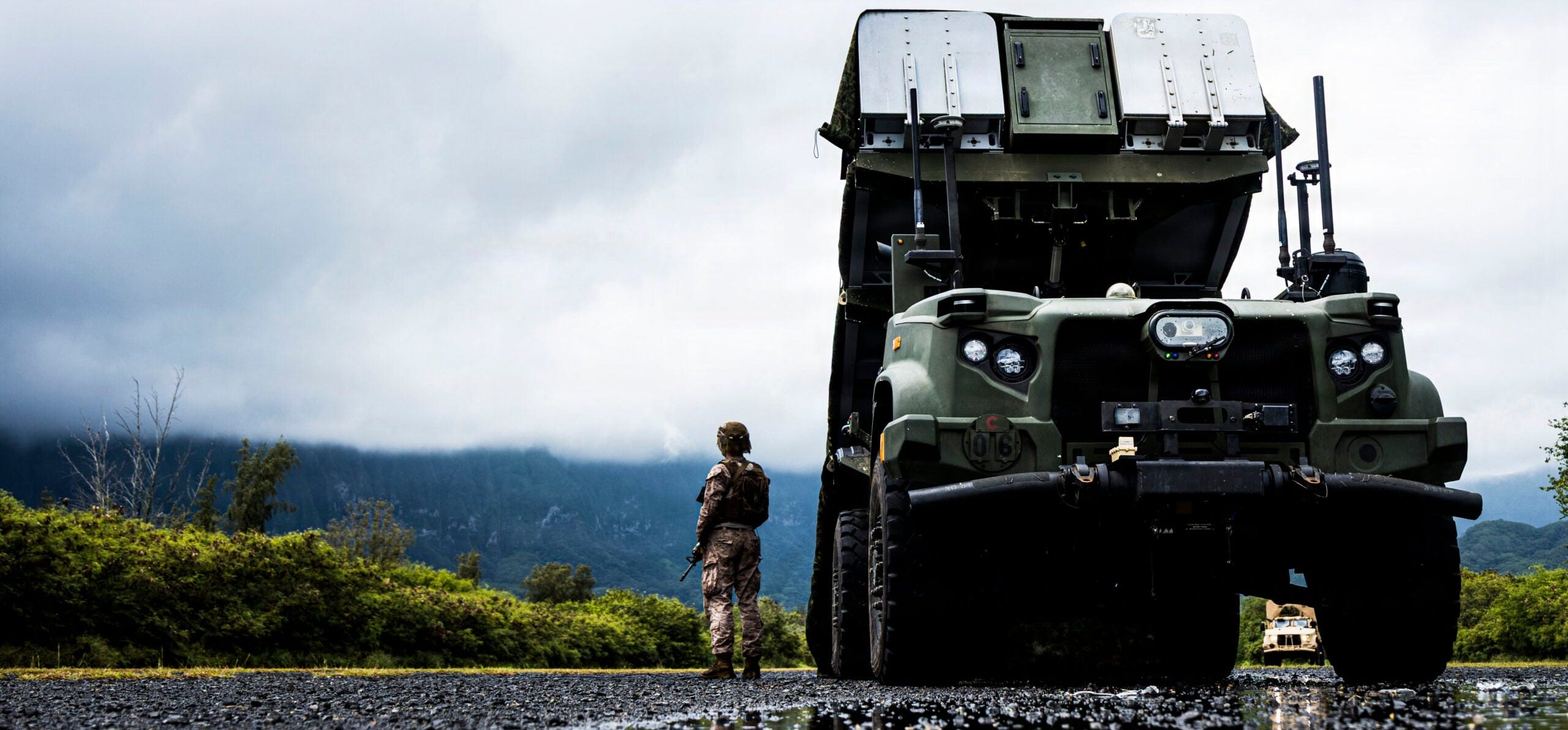
BLUF: The Marine Corps stood up its first Medium-range Missile Battalion last week as they to integrate longer range and maritime strike capabilities across the force.
The 1st Battalion, 10th Regiment of the 2nd Marine Division redesignated as the branch’s first dedicated battalion to operate the Navy-Marine Expeditionary Ship Interdiction System last Wednesday.
The unit was earmarked as a primary candidate to handle the II Marine Expeditionary Force’s NMESIS units.
Equipped with two low-observable Naval Strike Missiles capable of striking maritime targets out to 130 nautical miles, NMESIS is one of Washington’s most prolific ground-based maritime strike systems.
The first deployments of the system in 2024 brought Marine anti-ship missileers to the First Island Chain. Since then, Pacific Marines have repeatedly rehearsed fire missions and NMESIS deployments in the Western Pacific.
A fully operational Medium-range Missile Battery within an MLR consists of 18 NMESIS. They are further divided into six sections of three launchers each for tactical deployment. It is unclear if the new Medium-range Missile Battalion will follow a similar organizational scheme.
L-MADIS Fielding Enhances 1st LAAD Battalion’s Counter-UAS Capabilities
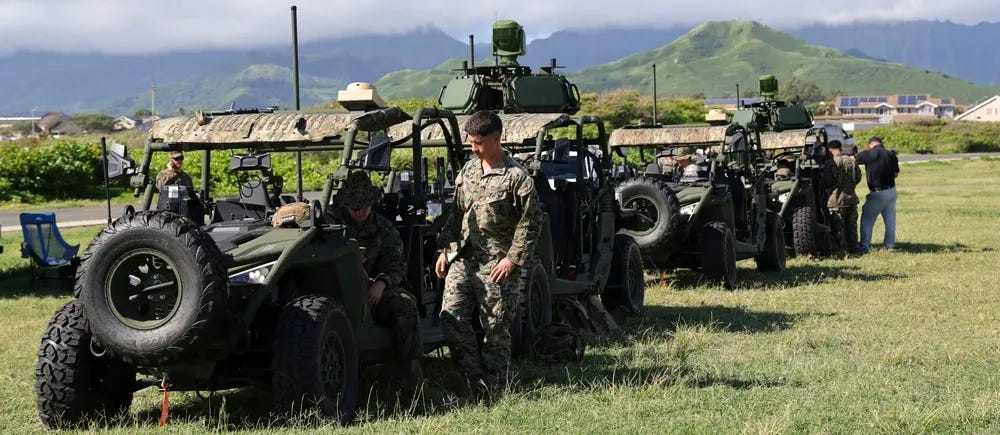
BLUF: The Light Marine Air Defense (L-MADIS) was fielded to 1st Low Altitude Air Defense (LAAD) for the first time at Marine Corps Base Hawaii (MCBH). The fielding was paired with a New Equipment Training organized by PM Ground Based Air Defense as preparation for delivery to the group.


RIP Michael Wynne, Former SECAF
Michael Wynne who was the 21st Secretary of the Air Force from 2005-2008 passed away at the age of 82 this week. He is survived by his wife Barbara and four married daughters.
Our Take: It is disappointing for the editors at Air and Space Forces to publish this headline of Secretary Wynne’s passing. While the article highlights his career and support from other Air Force leaders, the headline and opening is overly negative.
Air Force’s Top Planner Lays Out Vision for Fighter Fleet Mix by 2035
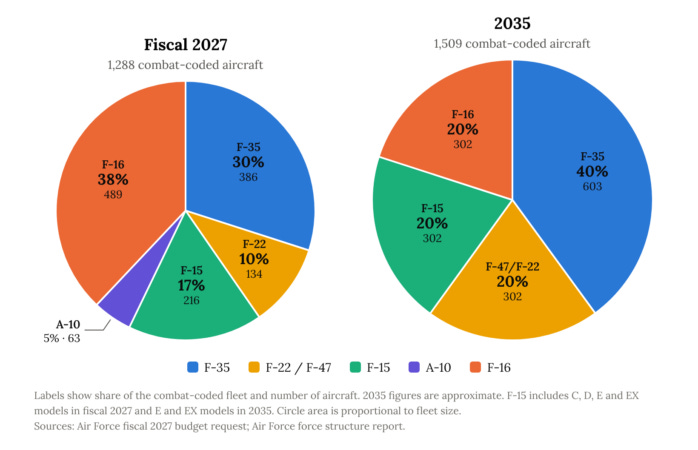
BLUF: Roughly two of every five fighters in the Air Force fleet could be F-35As by 2035, according to a new fighter force structure report submitted to Congress.
The Air Force’s analysis was based on geographic combatant commanders’ reported requirements to achieve their goals at “medium risk.”
The report estimates that the Air Force will need 1,509 combat-coded aircraft by 2035, with an approximate mix of:
40% F-35s, or about 603 aircraft
20% F-47 and F-22s, or about 302 aircraft
20% F-15Es and EXs, or about 302 aircraft
20% F-16s, or about 302 aircraft
The fiscal 2027 fleet, based off the most recent budget request, has 1,288 combat-coded aircraft has a different mix currently.
Getting to the new 2035 goal depends on two key factors falling into place:
First, Congress will need to provide the funds to buy the jets.
Second, the defense industrial base—in particular, prime contractors Lockheed Martin and Boeing—must produce enough aircraft in time.
Right now, 2027’s funding levels remain a big question mark. The proposed budget counted on $2.34B in reconciliation to pay for 14 of those 38 new F-35s.
The Air Force is considering buying a new version of the F-16, which is being referred to as the F-16G. But the Air Force has not yet made any decision on that.
Another potential wrinkle is the Pentagon’s push to expand its multiyear procurement authorities. The Air Force is eyeing such agreements for the F-35 and F-15EX, though its request is pending before Congress.
Collaborative Combat Aircraft is not yet changing the service’s calculus on what fighter force it will need in the future but it could in the near-term.
Related Article: Air Force Needs 1,509 Combat-Ready Jets by 2035, Service Tells Congress
Our Take: This all makes sense based on current AF doctrine. Given the vision was 2032, it would have been nice (and advisable) to include CCA in the force mix given its intended contributions. This feels like a lack of committment.
Air Force Confirms Bombers Could Have a Major Air-to-Air Combat Role
BLUF: The Air Force is exploring options for adding air-to-air combat capabilities to its bombers as part of efforts adjacent to its latest fighter force structure plans.
The service has raised the possibility of the B-21 Raider, specifically, taking on an air-to-air role, and potentially doing so in cooperation with Collaborative Combat Aircraft (CCA) drones.
The B-21’s inherent attributes – size, extreme range, high operating ceiling, broadband low-observability (stealthiness), and advanced sensors – could actually make it especially well suited to taking part in air-to-air combat missions.
B-21s could also act as airborne nerve centers in support of counter-air missions, especially for controlling drones like CCA and have the ability to do so even in the most heavily contested of airspaces.
Air Force F-22 Pilot Controls Unmanned FQ-44 in Flight
BLUF: An F-22 Raptor completed airborne tactical command and in-flight control of a YFQ-44A, advancing the Air Force’s efforts to produce the service’s “loyal wingmen.”
The fighter jet’s pilot served as an airborne “quarterback” and gave high-level directives to an Anduril-made Fury CCA.
The unmanned, semi-autonomous aircraft’s onboard autonomy software interpreted and executed the directives in real time.
The service plans to use data from this event to inform software integration, developmental testing and further CCA concepts.
Air Force Starting to Game Out Sustainment Framework for CCA Drones
BLUF: Air Force officials are in the early stages of developing a sustainment plan for Collaborative Combat Aircraft so that the enterprise is ready when the next-generation drones are fielded.
Once the unmanned systems are fielded by 2032, the Air Force will need its maintenance enterprise to help keep them flying and ready for combat.
The Air Force’s sustainment enterprise is facing challenges and shortages as it tries to boost the readiness of the service’s existing aircraft.
The service is also facing a $14B hole when it comes to spare parts.
“One of the things that we’re really focused on right now is hiring our depot artisans and our maintainers there. Right now, our sustainment center is about 2,600 billets short, but we’re hyper focused not only at the depot but throughout AFMC on our hiring activities. Holistically, AFMC’s got about 8,200 vacant billets right now. That’s maintainers, that’s engineers, that’s contracting professionals, you name it. And so, what we’re trying to do is do more targeted hiring activities and streamlined hiring activities.” Lt. Gen. Linda Hurry, AFMC Commander
General Atomics FQ-42 CCA Drone Production Ramp Up To Be Boosted By Boeing Subsidiary
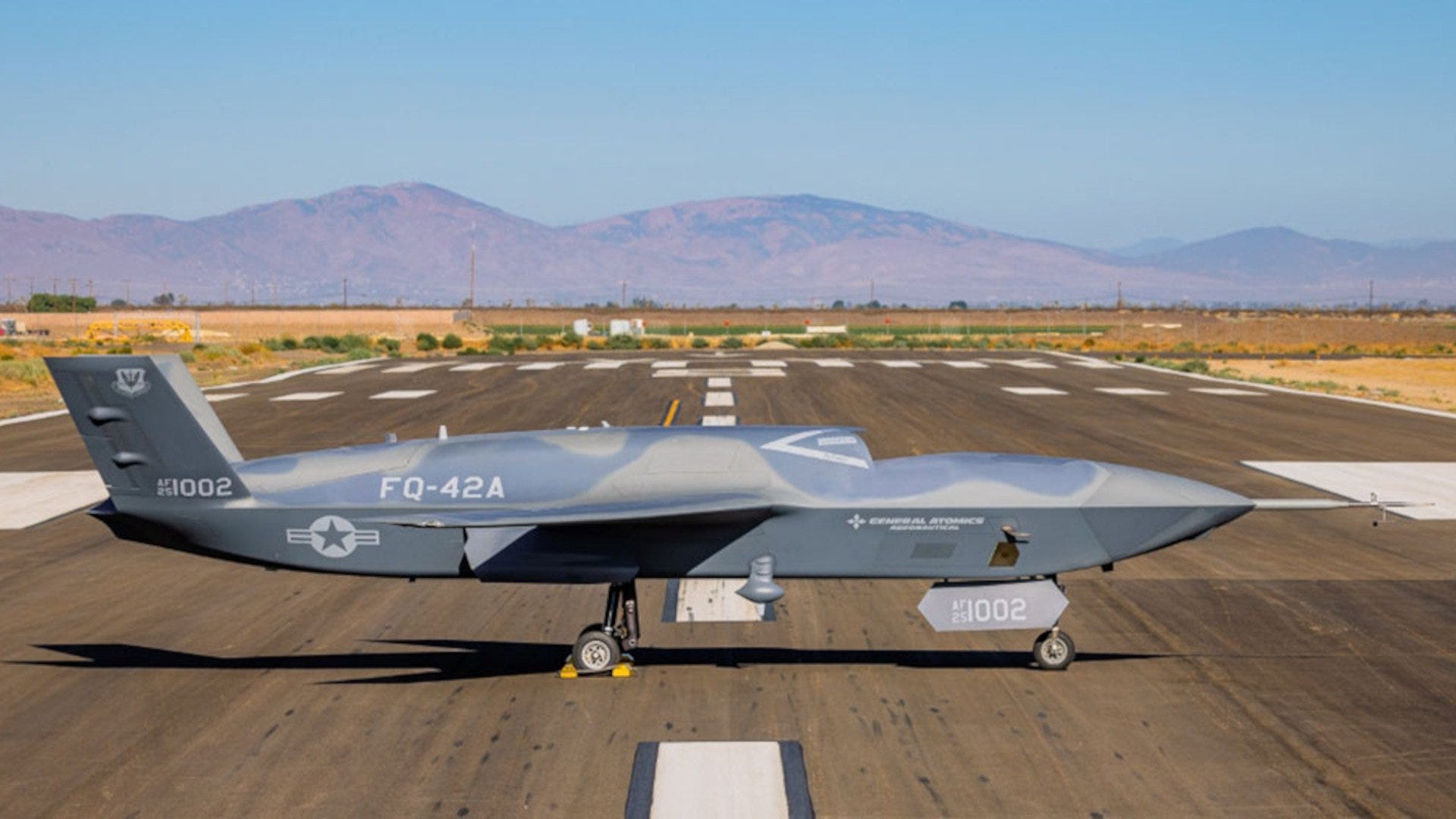
BLUF: General Atomics has tapped Spirit Defense, a subsidiary of Boeing, to help produce FQ-42A Vengeance Collaborative Combat Aircraft (CCA) drones.
The production of advanced composites and hybrid structures is Spirit’s main business.
The company also has a well-established history of working as a subcontractor on military aerospace projects, including in support of programs like the B-21 Raider.
Before its founding as an independent company in 2005, Spirit was actually a division of Boeing.
Air Force Explores an Explosion-Powered Engine for its Next Generation of High-Speed Weapons
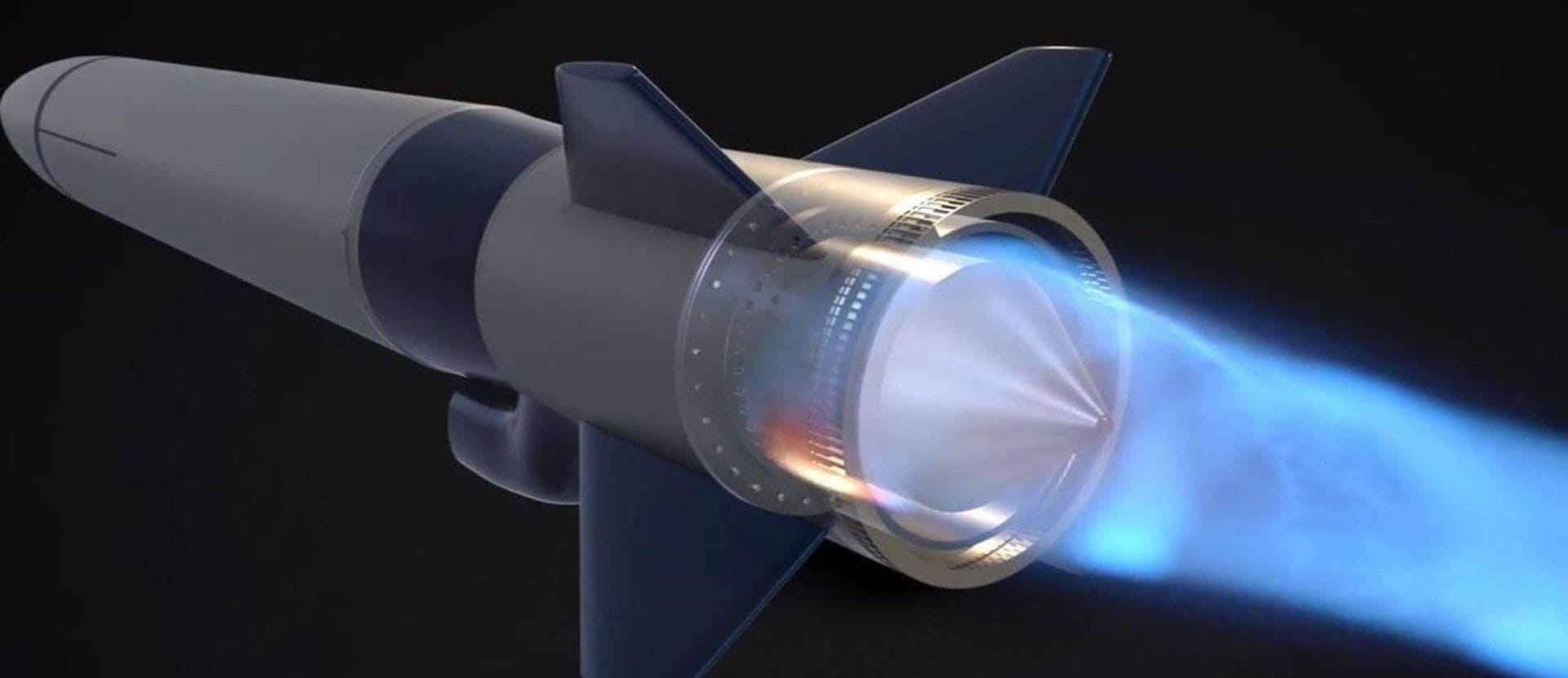
BLUF: The Air Force is seeking proposals to develop and flight-test a combined-cycle rotating detonation rocket engine designed for future high-speed weapons. The program aims to advance the technology from an early proof-of-concept stage to a prototype demonstrated in a relevant environment over 36 to 48 months.
The engine uses rotating detonations, in which combustion occurs through a continuous series of shockwave-driven explosions, as part of its propulsion process.
The effort supports the development of High-Speed Affordable Mass Munitions (HAMM), with initial proposals due November 16, 2026.
AFRL is seeking industry proposals to develop and flight-test a combined-cycle rotating detonation rocket engine designed for future high-speed weapons.
The technology uses continuously propagating detonation waves to burn fuel and could offer an alternative to conventional rocket propulsion.
The AFRL program focuses on a combined-cycle configuration, designated the Rotating Detonation Rocket Engine-Combined Cycle (RDRE-CC).
The design combines rocket propulsion with air-breathing operation, allowing the engine to use atmospheric oxygen during part of its flight rather than carrying all the required oxidizer onboard.
AFRL intends to advance the technology from Technology Readiness Level 3, representing an early proof of concept, to Level 6, where a prototype has been demonstrated in a relevant environment.
Arctic Experiment Explores Ways to Close Air Surveillance Gaps

BLUF: Military personnel, scientists and international partners conducted live-fly testing in Alaska last month during the final event of a three-year Arctic air domain awareness experiment series, collecting data to assess technology that could help close surveillance gaps across the state.
The experiment examined whether an existing high-frequency transmitter, paired with a newly developed, low-cost receiver array, could detect aircraft beyond the coverage of current long-range radar sites.
The effort focused on improving awareness across a region where vast distances, harsh weather and limited infrastructure present challenges for air surveillance.
The team completed testing and met or exceeded its test execution objectives. Initial results show the system successfully achieved beyond-visual-line-of-sight aircraft detections and correlated them with the targeted flights.
Related Article: NORTHCOM Wraps Radar Test to Boost Arctic Early Warning
How Operation Spider’s Web Has Changed the Rules of Airpower
BLUF: Last June, Ukraine demonstrated that inexpensive drones launched from inside an adversary’s territory can threaten the most valuable aircraft in the Russian strategic arsenal. The U.S. absorbed that lesson as it abruptly removed 12 B-1 bombers from RAF Fairford in the UK amid concerns about a Iranian-backed attack on the base.
U.S. and European officials had received intelligence concerning a complex operation involving drones that could target both aircraft and personnel.
Whatever ultimately emerges from the continuing investigation—and Iran has denied involvement—the American response is strategically significant.
Capabilities that once required sophisticated aircraft, cruise missiles or SOF can increasingly be achieved—against some targets—with commercial drones, satellite communications, software, AI and relatively inexpensive explosives.
The enormous investment represented by platforms like the B-1 increasingly needs to be matched by investment in protecting them from systems costing a tiny fraction of their value.
An adversary does not need to destroy an entire bomber force. Damaging several aircraft, disrupting operations, forcing dispersal and compelling the U.S. to devote significant resources to base defense may itself constitute strategic success.
Air bases must increasingly be treated as combat positions requiring layered defenses, but the objective cannot be to build an impenetrable dome around every installation. That would be prohibitively expensive and probably impossible.
Instead, the U.S. and its allies need to make their forces harder to find, harder to target and less rewarding to attack.
That means dispersing aircraft across larger numbers of operating locations.
It means developing the logistics necessary to operate from austere facilities.
It means expanding hardened shelters.
It means deploying convincing decoys.
It means ensuring that command-and-control, fuel, maintenance and munitions infrastructure do not create single points of failure.
Military revolutions are sometimes obvious only in retrospect. Operation Spider’s Web may eventually be remembered as one of those moments.
We Finally Know The B-21 Raider’s True Wingspan
BLUF: Thanks to space imagery, it can be confirmed that the B-21 spans 152 feet and is 61 feet long which puts it at just 12% smaller in wingspan and length.
Air Force Research Lab Demonstrates Rocket Cargo Delivery

BLUF: AFRL tested the Rocket Cargo project’s point-to-point delivery capabilities during a commercial rideshare launch from Cape Canaveral on Oct. 20.
Rocket Cargo is a research and development project to determine the viability of using large commercial rockets to rapidly deliver materiel anywhere in the world.
The recent test used a SpaceX capsule with instrumentation to measure temperature, shock and vibration; it carried agile cargo pod designs built for various delivery loads.
A key difference between the Rocket Cargo project and similar efforts is its larger total cargo-delivery capacity per launch.
AI Adoption: Are Air Force and Space Force Ready and Willing?
BLUF: Air Force and Space Force leaders are calling for Airmen and Guardians to enthusiastically embrace AI and apply emerging tools to their work.
Yet despite leadership’s exhortations to embrace AI for automating burdensome admin tasks and accelerate decision-making, some experts see risk.
Without a structured approach to vetting what AI tools Airmen are using for what tasks, concerns are that AI adoption will just expedite bad processes.
Research has shown that institutions should have governance controls in place before they push widespread use of AI tools.
Shadow IT or shadow AI use poses more than just risk. It carries costs that disappear in operational budgets but add up across the enterprise.
Air Force Wants AI to Assist Aerial Refueling
BLUF: The Air Force is looking to AI to improve the performance of its aerial refueling crews with a goal to automatically analyze refueling operations from cameras mounted on the tankers and provide “hot wash” feedback to the tanker crews.
The system would automatically track the tanker and refueling boom, as well as the receiving aircraft.
It would measure a variety of data, including position, velocity, alignment and closure rate, and assess whether they deviate from nominal parameters.
The Air Force hopes an AI-based assessment system will mitigate the biases inherent in human assessment of aerial refueling, which is among the most demanding tasks for aircrew.
“leverage advanced computer vision, machine learning, and aviation (flight dynamics) analytics techniques to automatically extract operationally relevant performance metrics from aerial refueling events, quantify deviations from desired flight profiles, and generate actionable post-flight feedback to improve aircrew proficiency, reduce human-factor-driven mishaps, and enhance mission readiness.” SBIR Announcement

Space Access PAE Publishes Vision and Requirements Document
BLUF: Space Force PAE for Space Access BGen. Eric Zarybnisky published a vision and requirements document that outlines the future architectural, operational, and business vision for national spaceport infrastructure.
PRIORITY 1: Engineer the Automated, Agile & Responsive Range
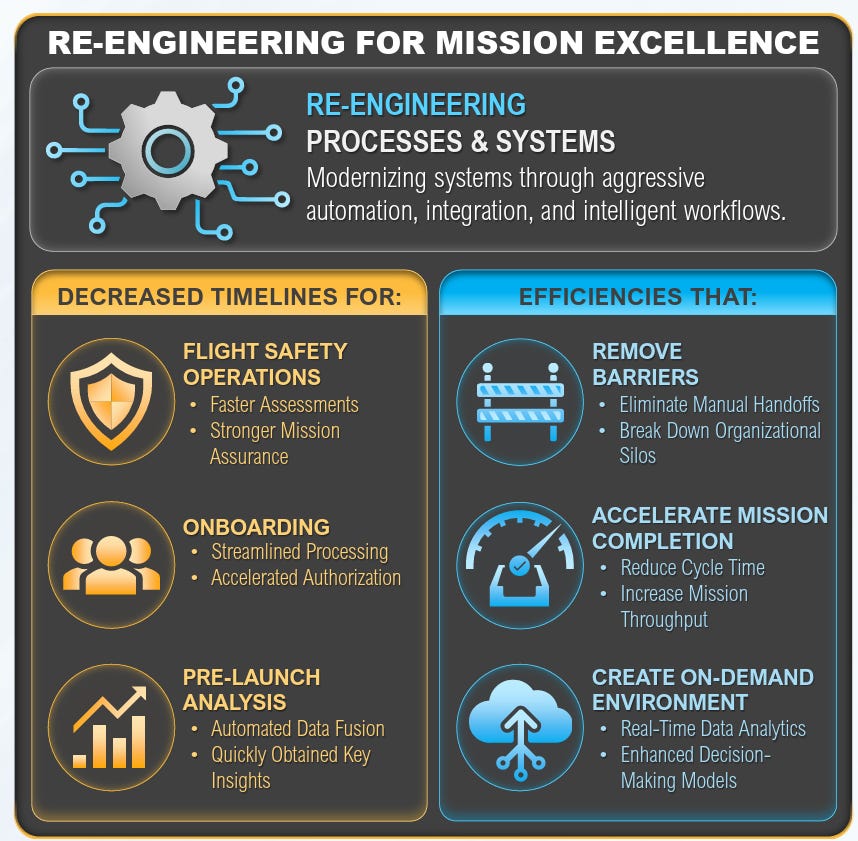
PRIORITY 2: Build a Unified, Resilient & Interoperable Architecture
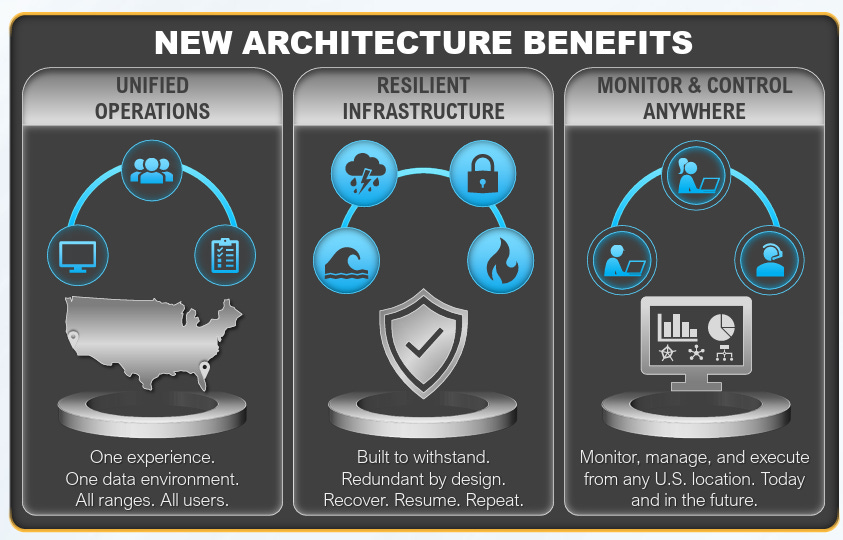
PRIORITY 3: Transform the Business Model & Base Support Enterprise
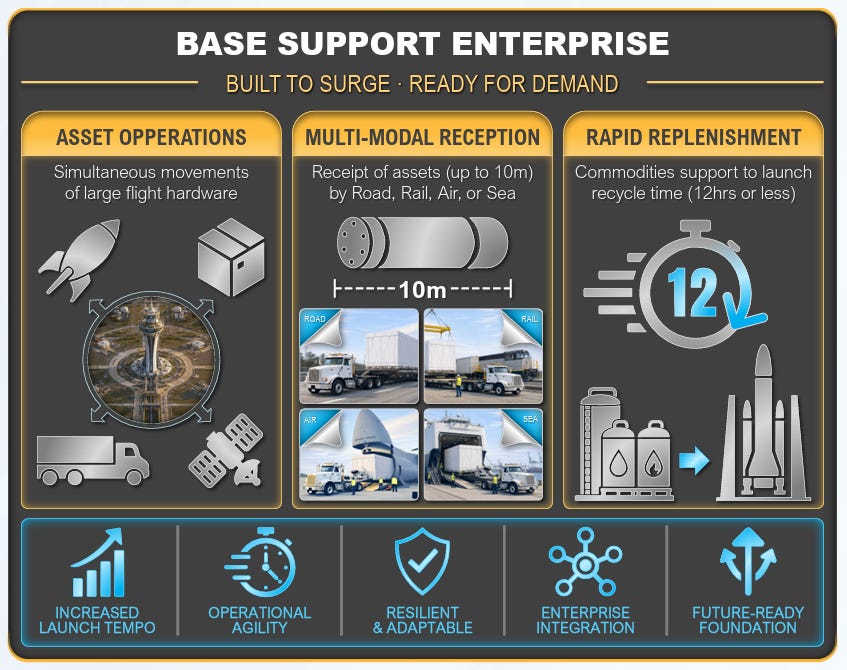
Document: Space Access Portfolio Vision and Requirements
Space Force Shifts Into High Gear on Cislunar Warfare
BLUF: After years of sporadic experimentation, the Pentagon has embraced cislunar space as a high priority warfighting domain, pushing the Space Force to rapidly acquire commercially available technology and spacecraft.
The Space Force plans to issue two RFIs in the near future seeking commercially available technology for cislunar missions and AI software to help spacecraft operate autonomously between Earth and the Moon.
The shift comes as senior defense officials increasingly frame cislunar space as a future battleground.
One recent Chinese project that has raised eyebrows is the launch of 30 Cubesats into a highly elliptical orbit near one of the Earth-Moon Lagrange points and a circular lunar orbit.
OSW is launching a series of interagency policy working groups on cislunar issues.
The Space Force is also working closely with NASA to coordinate infrastructure plans rather than build separate systems.
Gen Purdy’s Cislunar Coordination Office (CCO) was established in May and has been tasked with giving industry a clearer signal of the military’s needs.
He cautioned that the Space Force does not want to spend buckets of research and development dollars for new capabilities; rather, the service wants working kit that can be fielded by the fourth quarter 2029.
“We want rapid deliverable capability. … I’m not going to pay you R&D funds for this stuff. We’re looking for existing commercial or near-commercial means, non-development solutions, hardware with actual relative relevant evidence behind it, software that doesn’t need a huge amount of work … and then ground systems — not as an afterthought, but as part of an integrated network.” Maj. Gen. Stephen Purdy, PAE for Advanced Programs
Space Force Stands Up Target Tracking Squadron to Operate New Sensing Satellites
BLUF: The Space Force recently revealed plans to launch a new satellite system that will track air, ground and sea moving targets.
The service will deploy the Resilient Radar System-Ground, or RRS-G, spacecraft in about a year to 18 months.
The constellation will be part of the Space Force’s Space-Based Airborne Moving Target Indicator program, which will be operated by the newly established 77th Surveillance Squadron.
Modern Russian and Chinese air defense systems have necessitated a move away from legacy airborne target tracking systems that fly on large aircraft and make inviting targets
Space Force Picks Six Companies for Commercial Reserve Fleet
BLUF: The Space Force has selected six commercial space domain awareness companies to support military operations with both steady-state and surge capacity, as part of the service’s new Commercial Augmentation Space Reserve.
Officials have been working since 2022 to establish a fleet of commercial satellites to provide capabilities like satellite imagery, space domain awareness, and communications during peacetime that can be surged on demand.
The concept is not unlike the Air Force’s Civil Reserve Air Fleet, which leases aircraft capacity from commercial airliners for use during a conflict.
Those firms include: Anduril, Intrack, Slingshot, LeoLabs, EOS, an Australian firm, and Northstar, a Canadian firm.
Our Take: This is an exciting advancement in an important program that will be critical for the space domain in the event of a conflict.
SSC Announces Commercial Partnership Opportunity
BLUF: An opportunity for partnership with the Space Force, the Kronos Commercial Solutions, is set to open January 2027. Pitches are scheduled for mid to late February 2027, and contract awards are estimated to be in April 2027.
“Space Systems Command is looking to improve the effectiveness, scalability, flexibility, interoperability and resiliency of the Kronos program. The focus is mission drive, integrated in focus, a bias toward speed, enterprise, architecture, discipline and operational outcomes. The fastest way to gain traction is to show how your idea accelerates warfighting outcomes. We’ve leaned really heavily into commercial solution openings and other nontraditional pathways. This is a rousing success. We have been very intentional as an enterprise to give you a whole wide range of openings to come in and do business with us.” Shannon Pallone, PAE for BMC31
SDA Issues RFI for Tracking Layer Tranche 4 On-Orbit Demonstrations and Operations
BLUF: SDA seeks industry feedback on enhancements to its baseline Tracking Layer’s resilient MWTD mission payloads and architecture, as well as new mission capabilities that can help the PWSA provide enhanced mission performance to detect and track more challenging targets across their full flight trajectories.
Following this RFI and feedback phase, SDA plans to announce a Tranche 4 solicitation that includes both production contracts and partnership opportunities for rapid prototyping and flight demonstration(s) of new mission payloads.
SDA Transport Satellite Constellation Grows Larger as Integration Lags
BLUF: With more than 80 satellites in orbit, the Space Development Agency’s nascent orbital mesh network is still proving elusive to establish.
The agency launched two planes of York Space Systems satellites in September 2025 and July 2026 and one plane of Lockheed Martin satellites in October 2025.
It is taking longer than expected, however, to connect the satellites and put them into operation.
The challenge is not a physics problem but one of engineering integration.
The agency’s multivendor architecture model allows contractors to implement slightly different system designs for satellite command and control.
That is now causing delays as the companies and SDA work to transfer command and control of the spacecraft from vendors to government operations centers.
The SDA expects the full Tranche 1 network to provide initial warfighting capability beginning in 2027 and the PAE and team will spend the next six months establishing the optically connected mesh network.
The Army will be a primary beneficiary of the SDA’s mesh network once it is online, particularly as the service moves ahead with a new satellite ground system called the Tactical Intelligence Targeting Access Node, or TITAN.
Space Forces Central Poised for Fivefold Growth in Coming Years
BLUF: The general in charge of the Space Force’s component to U.S. Central Command expects that in about three years his small team of Guardians will be five times the size it is today. Growth he said is needed to meet the military’s demand for space capabilities in Middle East operations.
Space Forces Central was activated in December 2022 with a small staff of about 30 personnel split between Shaw AFB, S.C., and Al Udeid Air Base, Qatar.
Each component is charged with presenting space expertise to commanders in the field, and generating space effects like electronic warfare, satellite communications, navigation and timing, and missile warning.
“Our peers have thousands, so we would not be anywhere near that as a smaller service. But I would expect that we’d be about fivefold the size we are today, which is not a large number, but that’s what we need to make sure that we have the requisite staff to do planning cycles, all the intelligence that we need.” BGen. Todd Benson, SPACECENT commander

Army support for Golden Dome missile shield takes shape
BLUF: As the Army’s support to the joint force space mission takes shape with its newly populated Space Operations Branch, the service is also poised to support what’s expected to be a critical year for Golden Dome testing and development.
The Army leaders understand GDA as a way to do disaggregation and bring together command-and-control systems into a group that can work together across the U.S.
Joint Task Force Gold, a 100-person unit established in January under U.S. Northern Command and led by Army officers, is also leaning into preparation for Golden Dome with planning drills and stakeholder gatherings.
Report Calls for Pentagon to Build a Digital Golden Dome
BLUF: The Pentagon needs a similar architecture to Golden Dome to secure its software, a new report titled “The Call for a Digital Golden Dome,” published by Lionfish Tech Advisors.
Many Pentagon weapon systems utilize coding languages such as C and C++ that are considered “memory-unsafe.”
These languages let developers manage memory directly, with no automatic checks on how that memory is used. Small mistakes can open holes an attacker can use to take control.
For government systems, any rewrite or patch of the software is expensive and time-consuming, as the new code must go through a lengthy certification process.
There are more than 140 Defense Department programs across 19 Pentagon components utilizing memory-unsafe software, the report stated.
They include capability areas such as: aviation; ships and naval combat systems; missiles, munitions and air defense; space; ground combat and unmanned systems; and command and control, networks, sensors and cyber.
These programs could benefit from a concept the report called the “digital Golden Dome” — in other words, a software memory protection capability that stops an attack from working in the first place.
Most memory exploits depend on knowing where code and data sit in memory.
Software memory protection capabilities rearrange that layout, so when an attacker triggers a flaw, the exploit fails instead of taking control, and the system keeps running normally.
MDA Awards $75M to Long Wall for Low-Cost, Midcourse Interceptor Testing
BLUF: MDA has awarded Long Wall $75M to complete testing of its self-funded Cyclops low-cost interceptor designed to strike enemy missiles midway through their flight.
Long Wall officially was established
The company unveiled the liquid-fueled Cyclops in December 2025, touting it as the first exo-atmospheric interceptor designed to be mass produced.
Long Wall’s website explains that the interceptor can fit in a shipping container, and thus be launched either from the ground or from a sea-based platform.
In addition, the company stresses it is largely using commercial off-the-shelf components and technology, including 3D printing, in Cyclops production.
Related Article: Long Wall Scores $75M MDA Contract
Our Take: This is very promising! We’ve been bullish on Long Wall since their formation and this shows some

Ukrainian Defense Firms Get Creative to Try and Break Through Export Restrictions
BLUF: Despite the presence of Ukrainian firms in U.S. defense circles, a longstanding challenge remains: exporting weapon systems from Ukraine is inherently complicated.
In April, in a long-awaited move, Ukrainian President Volodymyr Zelenskyy announced that the war-torn country would change its current export regime, which since 2022 has prohibited the transfer of military goods to other countries.
However, six months later, Ukrainian firms tell reporters that a simple path forward has yet to materialize.
Instead, companies are left to pursue a variety of bureaucratic options, with no clear understanding of what will work or what won’t at any given time.
Pure military firms can’t simply claim to be dual-use and get around current restrictions, which leaves them looking for other solutions, including trying to get selected for defense efforts abroad.
Another model that Ukrainian manufacturers have at their disposal are international partnership agreements signed with other allies.
Other avenues for international cooperation that companies can consider include localizing production, where foreign government funding supports collaboration between a Ukrainian producer and an industrial partner outside Ukraine.
Europe Weighs Giving Utilities, Infrastructure Companies More Powers to Bring Down Drones
BLUF: At a former flight-test base south of Paris, drones swoop over fields and woodland as teams on the ground test systems designed to stop them — a response to a growing wave of drone incursions and “hybrid attacks.”.
The potential clients for technology such as electronic jammers and interceptor drones tested are no longer just governments, police and armies.
Private firms and state entities across Europe that operate critical infrastructure want to strengthen their defenses, with some utilities asking for authorization to shoot drones down themselves.
They are worried that hybrid warfare or a drone attack could knock out power to millions of people — as has happened frequently in Ukraine after Russian strikes.
Some European governments are responding by starting to give firms powers traditionally confined to the military with France leading the way.
Ability to Strike Back: Denmark Commits to Long-Range Missile Orders
BLUF: Denmark will acquire two types of long-range precision missiles in an effort to “strengthen national and collective deterrence.”
The purchases of F-35 Joint Strike Missiles, produced by Norway’s Kongsberg, and ground-launched Anthem cruise missiles, manufactured by US firm Covenant are a significant step towards making Denmark better able to defend itself.
Copenhagen did not disclose the cost or quantities involved in either procurement.
Denmark’s latest weapon acquisitions come on the heels of the country’s intelligence service warning that Russia is expected to carry out hybrid attacks at a greater frequency against NATO member states.
Related Article: Denmark to Buy Kongsberg, Covenant Missiles for New Long-Range Strike Option
U.S. and Japan Begin Naval Exercises Near Taiwan
BLUF: Japanese and U.S. troops on Monday kicked off one of their largest joint exercises focusing on the defense of Japan’s southwestern islands and showcasing advanced weapons systems in the face of growing tension in the region.
About 45,000 Japanese troops and 12,000 American service members are participating in the biennial Keen Sword 27.
Seven other nations from the Indo-Pacific region and Europe are also taking part in some elements of the exercises for the first time.
During the exercises, the Japanese and U.S. militaries will largely focus on defending Japan’s southwestern islands and waters around its northern coasts as the country faces growing tension from China, North Korea and Russia.
The drills include amphibious landing, air and missile defense, mine sweeping, as well as intelligence gathering, logistics and resupply and casualty evacuation on several remote islands.
Euronaval 2026: Global Naval Shipbuilding Surges 50%
BLUF: Against a backdrop of strategic realignment and the return of high-intensity naval warfare, global military shipbuilding is experiencing an unprecedented boom.
According to the newly released World Defense Shipbuilding 2026 study, the global market for military and paramilitary shipbuilding surged by 50% in the 2024-2025 period, reaching a staggering $122B.
In terms of volume, global production jumped from nearly 1 million tonnes in the previous period to approximately 1.5 million tonnes.
The most striking takeaway from the report is the rapidly widening production gap between the world’s two largest navies.
Over the past two years, China has produced more than double the tonnage delivered by U.S. shipbuilders, churning out 636,208 tons compared to 270,509 tons for the United States.
This massive industrial output allowed the PLA Navy (PLAN) to take delivery of nine nuclear-powered attack submarines (SSNs) and ten destroyers in 2024-2025, compared to just three SSNs and four destroyers for the U.S. Navy.
Additionally, the Chinese fleet commissioned its newest aircraft carrier—the 80,000-ton Fujian, equipped with electromagnetic catapults—and an amphibious assault ship during this period.
The undersea domain remains a critical priority for major powers, driving a massive surge in submarine construction globally.
Global production of nuclear-powered attack submarines (SSNs) nearly tripled, jumping from six units in 2022-2023 to 17 units in 2024-2025.
Conventional submarine deliveries also saw a significant increase, rising from 11 to 18 units globally.
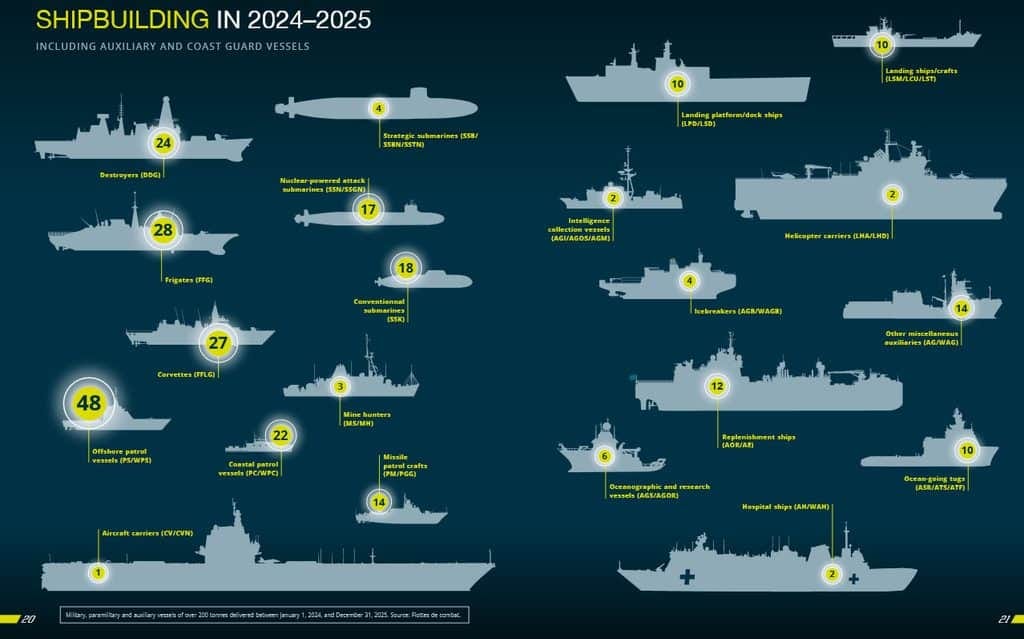
Anduril Could Make Interceptors in Europe
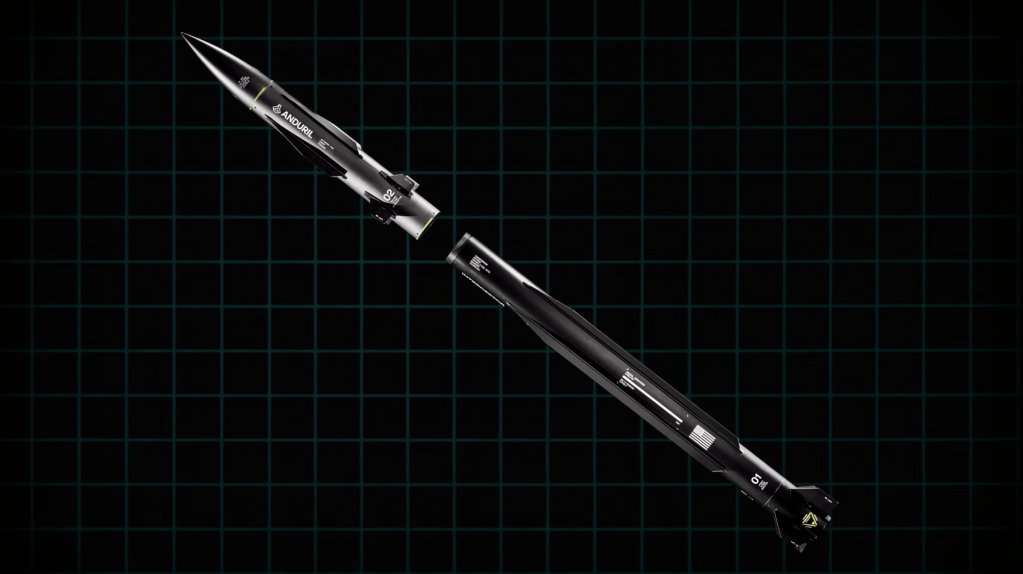
BLUF: Anduril could eventually manufacture its newly unveiled Steelfin interceptor missiles in Europe as governments aim to expand air defense production after global conflicts highlighted shortages of interceptor missiles.
Anduril sees Steelfin as a complementary system that could provide a more affordable interceptor alongside existing defense systems like the Patriot.
The company is already in talks to establish production in Poland of its Barracuda-500 cruise missile.
UK’s Royal Navy Has Serious Anti-Submarine Warfare Gap, Committee Finds
BLUF: The UK’s Royal Navy has a “serious anti-submarine warfare gap” that weakens the country’s ability to respond to Russia’s submarine and underwater-sabotage threat, a parliamentary committee on defense in the High North found.
The Royal Navy currently has only five Type 23 frigates for anti-submarine warfare in service, compared with a stated requirement of eight.
Anti-submarine warfare frigates are “critical” to helping locate Russian submarines, both in the High North as well as in British home waters.
The U.K. has ordered eight Type 26 frigates from BAE Systems for the anti-submarine warfare role, with the lead vessel scheduled to enter service in 2028.
“Although new frigates will eventually join the fleet in sufficient numbers, the current fleet readiness picture raises doubts about whether the U.K. could sustain the maritime tasks required in the High North by 2030.” Report
Related Articles: UK Urged to Retain Type 23 Frigates Until Type 26 Arrive Amid Serious ASW Gap and U.K. Committee Report on Defense in the High North
Drones Appear To Pick Up Wounded Off The Battlefield In Ukraine

BLUF: Ukrainian Armed Forces say they have carried out the world’s first frontline evacuation of a wounded soldier by aerial drone.
The video shows the soldier clipping himself to the underside of the drone via a harness before being flown to safety. The extemporized nature of the platform is underscored by the fact that, while in the air, the soldier dangles below its rigid landing legs.
The aircraft was a heavy hexacopter manufactured by Ukrainian company Gurzuf Defense, which provided it free of charge. A UAV operator from the 30th Mechanized Brigade piloted the drone. Throughout the recovery, the soldier remained in contact with the drone operator.

See our NDAA and budget posts for the latest insights and analysis.

Delivering New Capability to the Fleet Faster | Jim Juster
Creative Defense Foundation
Inventing and Building Critical Defense Tech in America | Dr. Jennifer McArdle
Creative Defense Foundation
Accelerating Long-Range Precision and Mass for the Joint Force | LTG Frank Lozano, MG Bernard Harrington, BG Patrick Costello, Bryon Hargis, Jim Bryan
Autonomy, Acquisition and the Future of Drones | Alex Miller
Breaking Defense
Driving to Better Outcomes | Bonnie Evangelista
George Mason Baroni Center
The Army and Congress | Jimmy Byrn
Hudson Institute
Why Autonomy is Not a Monolith for the Army | Dr. Alex Miller
Aerospace & Defense Technology
Don’t Be Afraid to Say Yes to Service | Dr. Rob Slaughter
Crossing the Valley

Unmanned Technologies for Earth and Space (UTES)
Oct 26-27 • Sweden
Silicon Valley Space Week
Oct 27-29 • Mountain View, CA
TechNet Indo-pacific
AFCEA • Oct 27-29 • Honolulu, HI
Ironclad Maritime Summit
Oct 27 • Norfolk, VA
Portfolios Not Programs: Transitioning to New Paradigm with Matt and Pete
War U • Oct 28 @ 12 • Webinar
Critical Technologies Industry Day
OASW(CT) • Oct 30 • Alexandria, VA
Defense Conference
PSC • Oct 30 • Crystal City, VA or Virtual
Global MILSATCOM
SAE Media • Nov 2-5 • London, UK
Space+Defense Investor Summit
Teconic x Payload • Nov 3-5 • Beverly Hills, CA
Euronaval 2026
Nov. 3-6 • Paris, France
International Fighter Conference 2026
Nov. 3-5 • Berlin, Germany
AUVSI Defense
Nov 9-10 • Washington DC
Space and Satellites USA
Reuters • Nov 9-10 • Washington DC
Plan the quarter from the events page. It has the full year, so you can lock travel and decide which conferences are worth the pipeline before the calendar fills.