




Naval Postgraduate School (NPS) held its annual Acquisition Research Symposium two weeks ago and published the research papers and presentations. The theme this year was Resourcing Innovation.
The event featured DoD leaders such as:
Cara Abercrombie, ASD (Acquisition)
Maynard Holiday, ASD(Critical Tech)
Nickolas Guertin, Navy Acquisition Executive
David Berteau, PSC President
LTG (ret) Michael Williamson, President Lockheed Martin International
BG Frank Lozano, PEO Missiles and Space
MGen Alice Trevino, Air Force Contracting Lead
BG David Walsh, MARCORSYSCOM Commander
Christopher Manning, DASA Research and Technology
Cherissa Tamayori, DIU Director of Acquisition
Dov Zakehim, Former DoD CFO
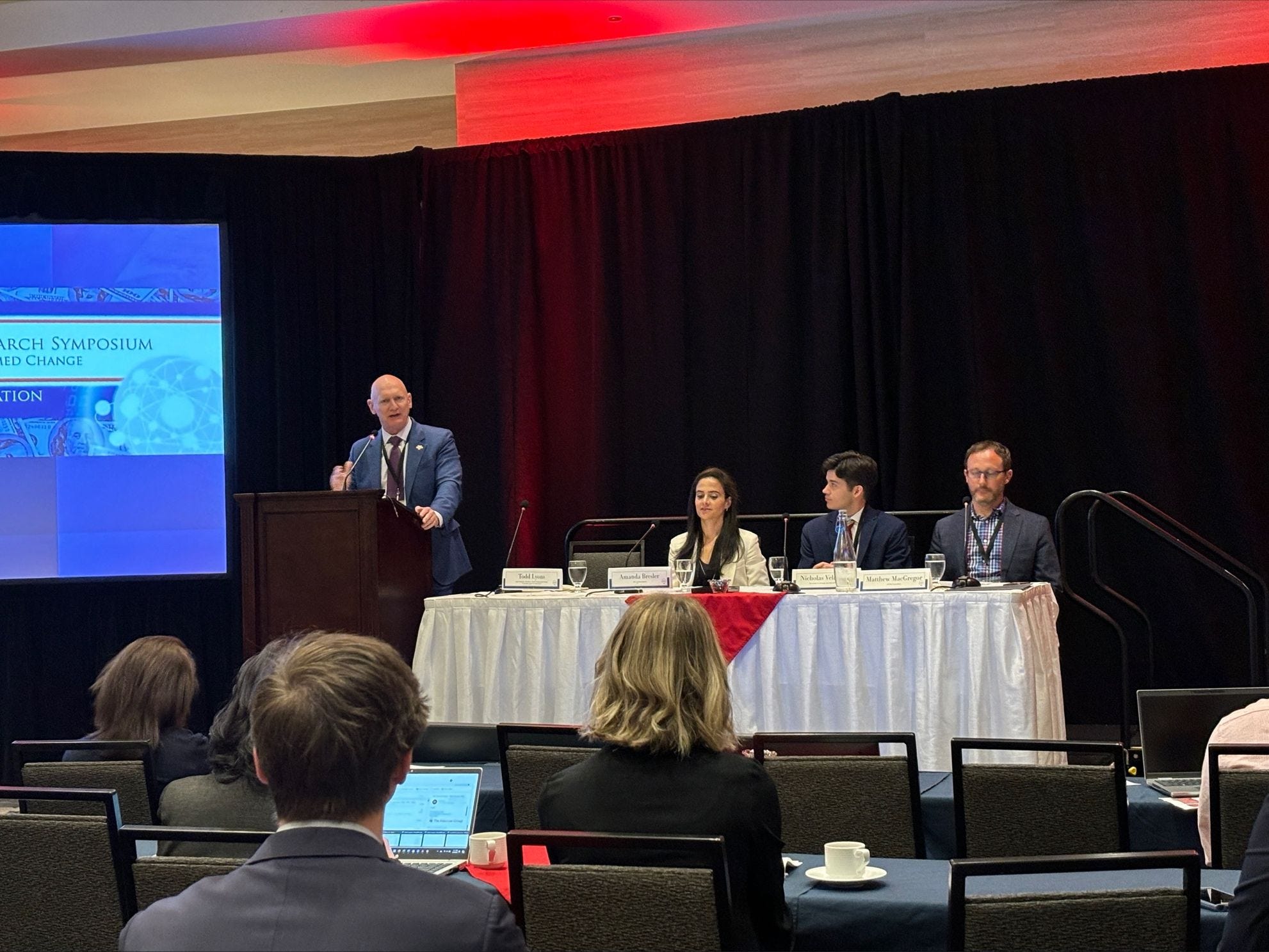
Matt attended and presented on VCs as Transition Partners: Leveraging Networks and Expertise to Improve Fielding Outcomes, work he co-authored with Stephanie Halcrow as well as The Acquisition Game: Learning Through Play that he co-authored with Tory Cuff.
Thanks to Todd Lyons for excellent moderating and leading a great discussion as part of the “Strategies for Financing Defense Innovation” panel.
The following are some highlights of the research presented that we thought was highly relevant to the discussion on improving the defense acquisition system to be nimbler and timelier.
Critical Technologies
Transitioning Critical Technology Areas
310+ transitions tracked in last 3 years
60% delivered to COCOM & Components direct from innovation unit or as COTS
40% in acquisition programs for future delivery to COCOMs and Components
20% to multiple COCOMs
15% COCOM unique
65% to IC and whole-of-US government support to COCOMs and Components
Trusted AI and Autonomy

Directed Energy

Hypersonics

Space Technology

Microelectronics

Defense Resourcing for the Future
Lara Sayer, Executive Director PPBE Reform Commission

The Complex Current Process

In any given fiscal year, DoD and Congress are managing five budgets concurrently navigating planning, programming, budgeting, and execution phases.
Recommendations

Transforming the Budget Structure


Our Take: The PPBE Reform Commission did stellar work. Highly recommend reading their final report and key stakeholders in the Pentagon and Congress take rapid action to implement their recommendations. Our national security can no longer afford to be sabotaged by those who refuse to modernize PPBE.
Venture Capital
Matt MacGregor and Stephanie Halcrow
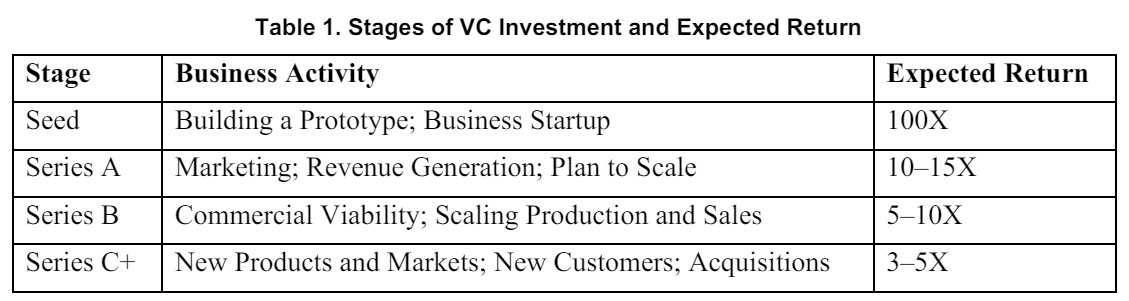

VCs can serve as transition partners with their founders, the DoD, industry, and Congress.
With Founders: Focusing on long term return on investments and providing a variety of services to include strategic relationships, client introductions, branding, and DoD sector expertise.
With the DoD: Engaging in proactive, collaborative discussions to change the policies, incentives, and culture of the DoD.
With Industry: Offering market research and introductions to startups with products ripe for integration in larger weapon systems.
With Congress: Joining the public policy conversation and engaging on specific actionable solutions.
“Lacking a coherent strategy, the U.S. is leaving billions in private and public dollars on the table that could help shore up the nation’s defense capabilities. The United States is ceding ground to China, which threatens the international order. The Pentagon must use its resources to leverage U.S. capital markets—one of our enduring advantages in strategic competition—and help promising dual-use tech companies scale, innovate, and deliver for the benefit of global democracy.” Steven Escaravage and Adam Hammer
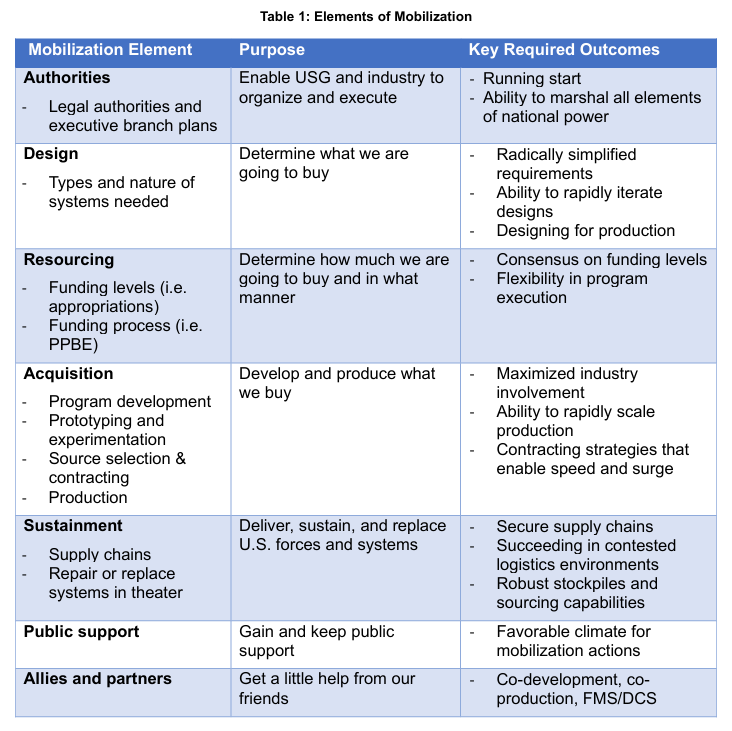
Mobilizing the Defense Industrial Base in the Event of Major Conflict
Providing support to Ukraine exposed significant challenges in four facets of the defense industrial base.
Production capacity. Defense industrial base production is driven solely by contracts between the DoD (or foreign countries) and industry. Thus, when demand fluctuates or ends, industry responds accordingly. Analysis of 80 missile and ammunition accounts over 20 years found that funding levels could swing as much as 50% year over year.
Acquisition practices. DoD acquisition processes are heavily detailed to ensure precision of specifications and fairness to industry partners. This adds complexity and time. Budgeting processes, meanwhile, prioritize advanced planning that is inconducive to responding to crisis.
Supply chains. Challenges with defense supply chains have been clear for some time, and COVID shone a bright light on this. As industry attempted to respond for increased demand for munitions in Ukraine, the limitations in existing supply chains became painfully evident.
Working with allies and partners. Companies based in countries that are close allies and partners of the United States provide significant support to U.S. systems provided to Ukraine and these firms also had industrial capacity to develop systems to support Ukraine. While many NATO and other partner countries pledged support to Ukraine, they also struggled with increasing capacity.
The paper proposes a model for how these mobilization elements can work together to develop the capabilities and capacities needed to achieve the defense industrial base resilience necessary for success.

Recommendations for Strengthening
Keep the Defense Production Act strictly focused on national security needs.
Design for production.
Dramatically simplify requirements processes.
Continue to prioritize open systems approaches.
Where possible, pursue second sourcing.
Maximize use of unmanned and autonomous systems to scale production.
Increase the use of follow-on production Other Transactions (OT) Agreements.
Establish surge CLINs.
Creating a tax on programs could help enable the second sourcing of parts to reduce supply chain bottlenecks.
Grow overseas sustainment capacity.
Prioritize international industrial collaboration.
Promote and fund exportability.
Implement appropriate PPBE Commission recommendations.
Transform the budget structure. This major recommendation to move to a new Defense Resourcing System is driven by the Commission’s vision for “a more flexible and agile execution process.”
Review and consolidate budget line items (BLI). This consolidation will increase the DoD’s ability to “adjust rapidly to changing circumstances in the year of execution and inject innovation or adopt new technology to address changing threats”
Encourage improved in-person communications. Increased in-person updates and execution reviews will be essential to scale and expedite efforts when necessary.
Leading companies build system-level integrated prototypes—either physical, digital, or a combination—to test the MVP’s design established during design modeling and simulation. This prototyping incorporates all hardware and software components to test the product’s integrated functionality. As a result, testing of the fully-integrated system can uncover problems that were not apparent when subsystems were tested, both physically and digitally, earlier. Prototyping may also be used to test more than one design variation of a product to determine which best meets user needs.

Leading companies incorporate user feedback and results from the integrated prototype testing—including decisions about the minimum set of capabilities—into the product’s hardware and software design, modifying it as needed.
Leading companies plan for manufacturing using digital models. Digital twins reduce risk in planning for production. Digital twins allow production teams to determine ranges of equipment stress and production capacity before production begins, including digitally testing robots to their maximum limits before using them.
Leading companies establish common standards that build on top of each other, which allows them to rapidly replicate production and reuse components already proven to work.

PPBE, Technology Transition, and “The Valley of Death”
Olivia Letts, Edward Hyatt, Jerry McGinn
Case Study 1: Navy Large and Medium Unmanned Surface Vessels (LUSV/MUSV)
Several aspects of the PPBE process make it more cumbersome to move a program forward.
A one-size-fits-all PPBE process does not work well for new technology programs with no significant cost or development history.
J-books are not realistic for projects with many interrelated parts because they appear as an “à la carte” menu.
Case Study #2: Air Force Collaborative Combat Aircraft (CCA)
High levels of coordination with other government entities and commercial partners were integral to effective operations.
The PPBE process can interfere with service strategy.
A flexible budget structure helps with navigating the PPBE process.
Program prioritization by leadership is a critical factor for successfully navigating potential budgeting or political-related issues.
Case Study 3: Army Robotic Combat Vehicle (RCV)
The PPBE process is not necessarily optimal for progress, but it is also not always a hurdle to operations or strategy.
To facilitate programmatic success within the PPBE process, more frequent interactions with Congress are preferable.
Greater flexibility in the PPBE process would be more suited to addressing agile acquisitions, specifically when dealing with iterative requirements and different colors of money.
Consolidating program elements helps in achieving greater program flexibility.
Case Study 4: Space Development Agency (SDA)
SDA’s use of the MTA pathway and the agile, iterative incorporation of commercial technologies are central to rapid product delivery.
Due to SDA’s mandate to rapidly deliver capabilities, budget requests must be made before requirements are finalized — programming occurs before planning.
PE consolidation gives SDA more flexibility to successfully navigate program developments, but external stakeholders who seek to impact programs sometimes prefer a divided PE structure.
Building and launching SDA tranches can be challenging to manage in existing budgetary categories.
Case Study 5: Tactical Intelligence Targeting Access Node (TITAN)
The use of a MOSA approach, the MTA pathway, and OTA contracts have led to rapid prototyping and program success in TITAN but still pose unique challenges.
TITAN has benefited programmatically and technologically as a continuation of previous Army research efforts and funding lines.
Case Study 6: Joint Rapid Acquisition Cell (JRAC)
JRAC efforts highlight the challenges of developing and deploying urgently needed capabilities to support operational needs via the services’ respective PPBE processes.
Phasing out OCO funding has made it increasingly difficult to secure funding to fill urgent capability gaps, especially JUONs and JEONs.
Software Acquisition
Innovation in Software Acquisition: The Good, Bad, and Ugly
CAPT (Ret) Jeff Dunlap, NPS Professor
To deliver faster, change everything all at once - new architecture, tooling, and processes.
PEO IWS-X ICS PM Insights
Deliberately build your culture - Know your Stakeholders and Constantly Communicate - Have a robust Communications Plan and Talking Points - Know your Market and Compete where you can (forward progress is better than none) - Big Bang almost always fails - Under promise and over-deliver - Change takes investment… but you will have to earn it… - Humility – Your first idea or version is almost always bad - The faster you learn, the better -You need to educate the entire industry on what you are doing - Slowly Force Change - Both an Industrial and Digital Mindset is required to be a successful change agent in the future.
DoD Software Acquisition has been a system accelerating without a complete understanding of the bureaucratic resistance and business practices necessary to achieve velocity.
Major considerations are needed for modular and flexible contracts, incorporating testing and evaluation throughout the software process and shifting left certifications and approvals to deploy at the speed of relevance.
The importance of a trained and skilled workforce with user interaction and senior leadership support cannot be understated.
Open Source Software Transparency for DoD Acquisition
Dr. Carol Woody, Dr. Nancy Mead, and Scott Hissam, Software Engineering Institute
What a consumer lacks is an understanding of how OSS differs from other third-party software products.
OSS contributors and maintainers may be arbiters for the OSS product, but they are not selling it.
To gain that insight, transparency is needed for consumers to have access to the data and information about the OSS project that is meaningful from a software integrity and assurance perspective and suitable for supply chain risk analysis.
The Open Source Security Foundation’s SLSA and CHAOSS are initial steps in this space. The SEI, MITRE, and CMU Open Source Programs Office are currently working on effective measures for supply chain risk management as it pertains to OSS. This collaborative effort is proposing forming a special interest group within the OSSF.
Activities to Address Defect and Vulnerability Identification and Mitigation

Managing Resources in a DoD Space-based Agile/DevSecOps Program
Excellent paper on planning and tracking of progress on an agile software program in DoD presented by Michael Orosz.


Accelerating Implementation of Critical Joint Warfighting Concepts and Capabilities
Lead Author: Laura Freeman
Provides an excellent overview of the virtues of mission engineering and how it can be used to accelerate operational testing.
The current practice of mission engineering relies on M&S—high-level campaign analyses—with the capability to run what-if scenarios to identify gaps in achieving mission success for different vignettes.
\Mission engineering analyses could guide the department’s decisions regarding distributed maritime operations and dynamic expeditionary operations in a high-end-fight, employing thousands of attritable, fully autonomous systems to overwhelm the adversary in mass and achieve the desired lethal effect.


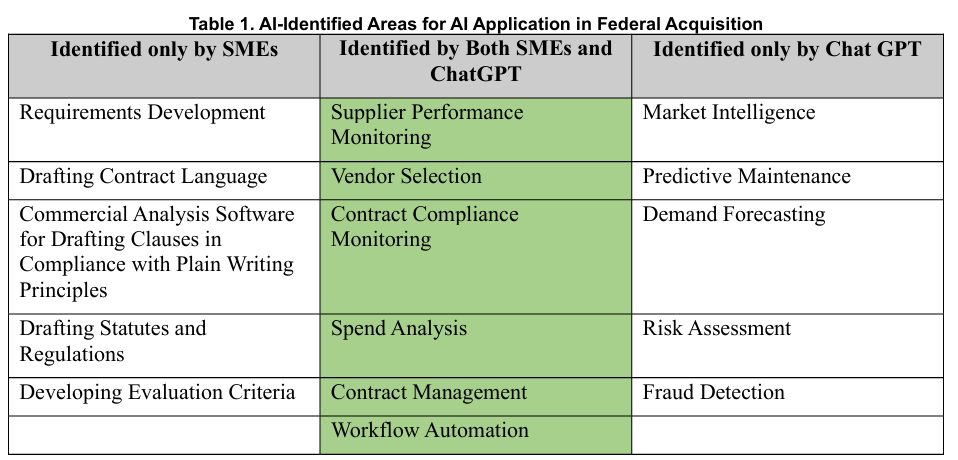
Enhancing Acquisition Outcomes through Leveraging of AI
Lead Author: Chris Barlow
In-depth look at how AI can be used to assist in acquisition and contracting functions with detailed use cases. Bravo to the larger MITRE team worked this.

Defense Acquisition Trends 2023: Meeting the Challenge of Production?
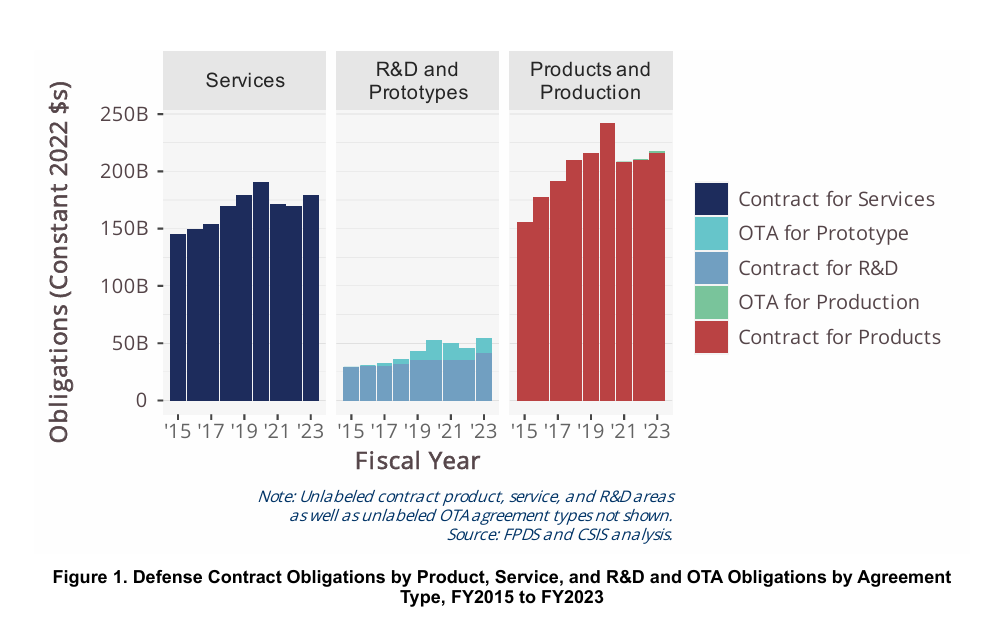
In the past fiscal year, OTA obligations rose for both prototypes and production from 30.4% to $13.6B from FY22.
OTA for prototypes remained significantly lower than the peak in FY2020.
OTAs increased for production, nearly doubling from a small baseline at $1.1 to $2.1B in FY23.
Obligations for services fell slightly from FY21 to FY22 but rose sharply in FY2023 by 5.9% to $187.4 billion in FY23.
R&D and prototype obligations saw the most significant hike, leaping by 20.0% from $47.4 billion in FY2022 to $56.8 billion in FY23.
Product and production obligations, experienced the smallest growth, rising 3.4% from $220.3B in FY2022 to $227.8B in FY23.
The 5.3% increase in contract obligations was concentrated in a short list of weapon systems categories, primarily ordnance and missiles.
Land vehicles, aircraft, other knowledge-based services, and submarines all experienced double-digit growth (28.8%, 23.4%, 17.0%, and 11.5% increases respectively).

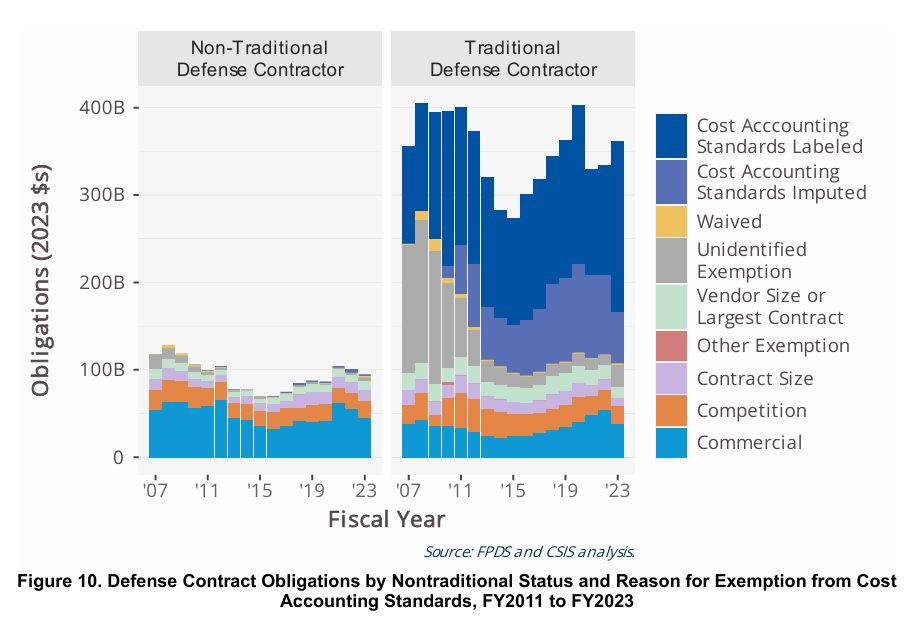
Nontraditional contractors won an estimated $94.7B market share in FY2023, below the COVID-19 boosted magnitude of the prior 2 years but up 9.33% above the FY2020 obligations of $86.65B.
Regardless of the nontraditional status of the awardee, commercial contracts and qualifying competed contracts had $84B and $40.65B respectively in FY2023 obligations.
Commercial contracts obligations were lower than the past two COVID-19 response years but still 1.5% above the FY20 level.
Other Findings
DoD took time to ramp up, but the rise in shipbuilding and ordnance and missiles, as well as an uptick in multi-year contracting, shows that the demand signal to industry has arrived.
This growth is not sufficient to ensure sustained capacity, but the combination of multiyear procurement and direct investments in capacity incentivize sustained capacity.
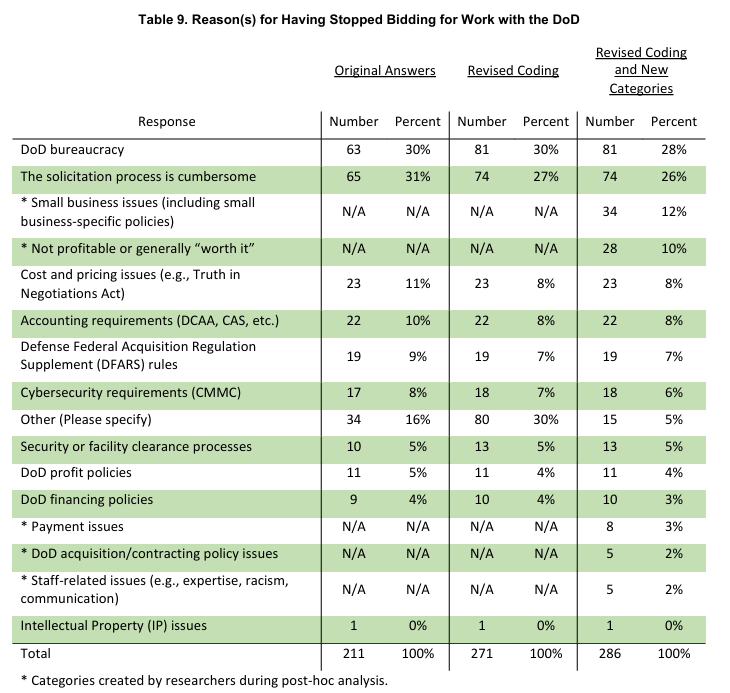
The total number of defense contractors has dramatically declined, but this would be misleading as the primary indicator of DIB health.
Since FY07 there has been a marked decline in the number of defense contractors, with those vendors in categories whose maximum contract value was smallest suffering the largest declines.
This helps explain why the number of vendors can decline even as the share of obligations to small vendors rose since FY13.
As a result, any metrics that focus on the total number of new vendors, or the total number of vendors overall, will likely be dominated by shifts in vendors whose largest contract is between $10,000 and $2M.

Adaptive Acquisition

Accelerating the Adoption of Emerging Capabilities
Lead Author: Wilson Miles
The ETI team looked at two examples of past rapid development and deployment efforts, including the Massive Ordnance Air Blast (MOAB) program and the Mine-Resistant Ambush Protected (MRAP) Vehicle program. Each case study demonstrates a time when the DoD wanted to rapidly develop and transition a new technology at three different scales: the service, theater, and global levels.
Six Principles for Rapid Acquisition
High-Level Support for Moving Funding and Bureaucracy
Few Major Policy or Regulatory Hurdles
Funding Can be Provided for Transition Effort:
Technology is Mature Enough to Warrant Rapid Adoption:
Technology is Manufacturable at Required Scale:
Suitable for Operational Use
Conceptualizing the Next-Generation DoD Innovation Ecosystem
Major Factors and Trends Impacting the Future of DoD Innovation
Exponential Technology Accelerations/Emergent Disruptions
Pace and Scale of Commercial Technology Research and Development
The Imperative for Continuous Change and Transformation at Scale and at Pace
Need for End-to-End Acquisition Development Acceleration
Continuous Innovation for Superior Capabilities at Scale
Affordability
Advanced Digital Tools and Enabling Capabilities
Smart City and Smart Regional Concepts:
Workforce Talent and Skills
Barriers and Constraints to Accelerating Innovation into Enabling Capabilities
Increasing System and Organizational Complexity
Lack of Awareness, Learning, Understanding and Actionable Knowledge
Lack of Requisite Skills and Enabling Capabilities
Lack of Creativity and Ingenuity
Bureaucracy – Lack of Streamlined & Accelerated Processes
Organizational Fragmentation
Organizational Rigidity
Lack of Innovation Adoption and Adaptation
Lack of Available Resources – People and Money
Climate of Trust
The “Shrinking” Defense Industrial Base: A Survey of Former DoD Prime Contractors
Edward Hyatt and Llyod Everhart
Creating a Defense Innovation Discovery and Collaboratorium Platform
Lead Author: Eliza Thompson
Showcase technologies in a centralized location: As several Becera survey respondents noted, a centralized platform where technologies can be discovered and showcased is essential for facilitating collaboration.
Identify stakeholders outside of traditional defense circles: To broaden the pool of potential innovators and solutions, it is crucial to proactively identify and engage with stakeholders beyond the traditional defense industry. As Becera survey respondents suggested, this involves advertising opportunities to early career academic researchers, independent researchers, civil society organizations, non-profits, and the wider community.
Match technologies to defense requirements: To ensure that innovative technologies are effectively aligned with defense needs, Becera survey respondents emphasized the need to establish processes for centralizing information on the immediate, mid-term, and long-term needs of various defense programs and then matching solutions to those requirements.
Link technology providers to program officers and end-users: Facilitating direct connections between technology providers, program managers, and end-users is crucial for fostering collaboration, gathering feedback, and ensuring that innovations are tailored to operational needs.
Build a networked community of interest to share information, ideas, and contacts: Fostering a vibrant, collaborative community of interest is essential for connecting silos, facilitating knowledge sharing, and catalyzing collaboration and innovation.
Facilitate a flexible funding pool: To support the development and maturation of promising technologies, it is essential to establish a flexible funding pool that can close transition gaps and prevent innovations from stalling in the valley of death. Becera survey respondents suggested that funding can be made in small amounts to mitigate risk aversion and should be accessible through a simplified application process, with initial funding separated from classified activities to minimize bureaucratic hurdles.
Provide professional development opportunities: Semantic, cultural, and technical differences yield misunderstandings and result in valuable collaborations being lost in translation. A comprehensive platform should offer professional development opportunities that enable policymakers to become more technical and technical stakeholders to become more policy- and business-aware.
Measure outputs and outcomes: The benefit of a centralized platform like the DID Collaboratorium is the ability to track progress in real time. Transparent efforts to ensure that defense innovation and engagement efforts are delivering tangible results will encourage continued use of the platform while building trust in the process. Becera survey respondents suggested that a centralized platform should measure metrics including tracking the success of dual-use companies in finding long-term success in the defense ecosystem, demonstrating the impact of new capabilities on mission needs, and understanding what factors contribute to the successful integration of novel technologies into operational use cases.
Defense Tech and Acquisition is a reader-supported publication.
To receive new posts and support our work, consider becoming a free or paid subscriber.