



A reverse innovation is any innovation that is adopted first in the developing world. Surprisingly often, these innovations defy gravity and flow uphill.
This was originally published in 2021 and updated to reflect lessons from the Russia-Ukraine war, which has emerged as a real-world lab for reverse innovation in defense.
The Idea
The DoW and U.S. Allies apply Reverse Innovation strategies to design and rapidly field novel defense capabilities. The key elements of a Reverse Innovation strategy are:
Design simplicity
Unlearning
Addressing the infrastructure gap
Changing the management model
Fueling local growth teams
This approach provides Allies who have small defense budgets affordable solutions to address their priority military needs while creating prototyping and experimentation environments for U.S. defense solutions. The National Technology Innovation Base (NTIB) — comprising the U.S., Australia, Canada, New Zealand, and the UK — can then apply the lessons and solutions from the Allied environments to scale systems for U.S. defense solutions and Foreign Military Sales (FMS). These solutions often form the low end of a high-low mix aligning with Clayton Christensen’s Disruptive Innovation theory where simple, low-cost products enter at the bottom, but eventually displace the market leaders.
As part of U.S. defense security cooperation strategies, the DoW conducts FMS with over 189 countries and organizations. A recent executive order seeks to reform FMS to improve speed and accountability, building upon multiple sections of the FY23-26 NDAAs. The war in Ukraine has amplified this with much of the billions of dollars provided leveraging commercial technologies prototyped in theater.
Reverse Innovation by Vijay Govindarajan and Chris Trimble remains a foundational blueprint for scaling growth in emerging markets and importing low-cost innovations to mature ones. The authors, renowned for management innovation, offer principles now validated by Ukraine’s ecosystem with over 1,000 defense startups producing drones and munitions at scale. The following are excerpts from the book with updated military applications, drawing upon recent conflicts and reforms.
Design Simplicity

“Consider an American company with a good-better-best product lineup with 80-90-100% performance at 80-90-100% pricing. When seeking to sell in an emerging economy, like India, the company may attempt to offer a watered-down version with 70% of the features and 70% pricing, yet that would only capture a small slice of the market. A breakthrough would be to offer a 50% solution at 15% price. It would be impossible for the company to achieve that if they began with the existing offering. The only way to get to an entirely new price-performance curve is by starting from scratch.”
GE Healthcare’s electrocardiograms (ECGs) exemplified this in rural India. GE’s traditional ECG equipment cost US$3–10K, was heavy, and required a skilled operator. GE tried to offer its $3K version, which cost $5-10 per test, yet even that was unaffordable for a mainly poor population of 700 million in rural India. GE tasked its “local growth team” to design novel ECG equipment that placed emphasis on low cost, portability, battery power, ease of use, maintenance, and repair. The resulting MAC 400 solution sold for $800, weighed 2.6 pounds, cost $1-2 per test, and was easy to use. MAC 400 sales flourished across India and the product is sold in every country except the U.S. and Canada. It led to new product lines and innovative thinking.
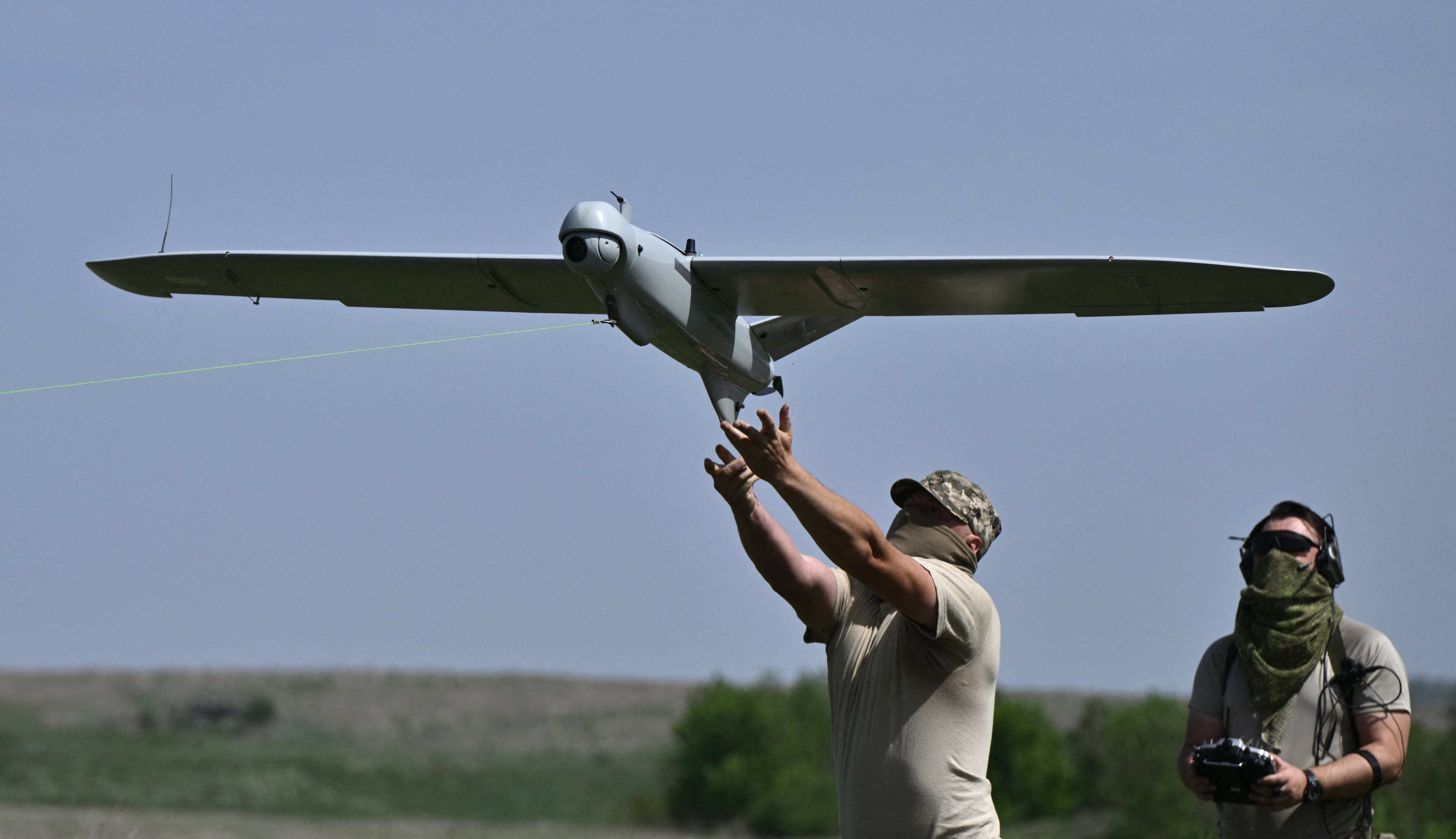
Ukraine's approach since 2022 mirror this construct. Finding U.S. drones to be too expensive and not configured (at least initially) for an EW-heavy environment, Ukrainian innovators developed and produced their own low-cost, GPS-independent drones using commercial cameras and machine learning to match images against compressed Google Maps databases. They successfully built an ecosystem that can produce FPVs for as low as $400 with simplified production processes that support rates of 8-10 million per year from across 500+ manufacturers. These "50% solutions", comprised of commercial off-the-shelf and 3-D printed components are continually battle-tested with software & hardware update iterations as threats change.
The DoW has seen past benefits from a design simplicity approach with the MC-12W Liberty’s rapid integration of COTS sensors being achieved in eight months for only $17M. The Liberty neatly complemented high-end systems like Global Hawk and wound up logging 300,000 combat hours in Afghanistan.
“Overarching the entire design process was an imperative to keep things as simple as possible — never more complicated than was absolutely necessary. Complexity would be the enemy of economy. Simplicity demanded better alignment between the new system’s feature sets and real-world usage patterns.”
As the DoW seeks to achieve drone dominance per the June 6th Executive Order and SECDEF’s Jul 10th memo, reverse innovation is central to this. The E.O. states: “It is the policy of the U.S. to ensure continued American leadership in the development, commercialization, and export of UAS.” In doing so, the DoW should avoid stripping down high-end systems like the Global Hawk. Instead, design should begin with simple commercial drones and scale up software for a swarm environment to achieve desired mission packages. Anduril won a contract years ago for counter-unmanned aerial system capabilities as-a-Service that enable rapid upgrades in vendor-driven software and AI. This proof of concept proved valuable for not only the technologies, but also novel services acquisition approaches.
When the DoW develops a new weapon system, it traditionally starts with defining requirements, analyzing alternatives, and developing competing prototypes. In many cases the DoD selected the winning vendor because it included additional features and performance. A vendor who embraced design simplicity at a fraction of the cost and wasn’t selected could be viable for establishing an initial FMS or Direct Commercial Sales customer base. If the runners-up stayed in the market with a focus on servicing international customers, that would create competitive pressure on the selected prime to perform more effectively to demonstrate the value of the additional features given the added cost. Competitors would continue to develop and deliver capabilities, giving the DoW a viable plan B, and reduce the vendor lock monopolies in many systems. As the DoW finally pivots to a portfolio management strategy with a mix of exquisite and simple solutions (since a high/low mix of capabilities is always more optimized), this could also fuel novel international portfolio strategies that help to provide economies of scale and ensure military interoperability.
Budget constraints in DoW and other agencies drive commercial adoption, but whole of government portfolios remain rare. As another E.O ensures commercial, cost-effective solutions in federal contracts, this also provides an opportunity for DoW, DHS, and the intelligence community to align drone procurement strategies.
Unlearning

“Reverse innovation begins not with inventing, but with forgetting. You must let go of what you’ve learned, what you’ve seen, and what has brought you your greatest successes. You must let go of the dominant logic that has served you well in rich countries. If you want to use today’s science and technology to address unmet needs in the developing world, then you must start with humility and curiosity.”
DoD’s weapon system requirements often inherited legacy biases, mimicking old CONOPS with incremental gains. To enable greenfield solutions, identify objectives first, challenge assumptions via first principles, and invite S&T proposals. Ukraine’s pivot form state-owned R&D to outsourcing to 1,000+ private startups — buying MVPs at TRL 6-7 — shows unlearning in action.
The DoD’s Industrial Age processes of upfront requirements and rigid baselines must yield to Digital Age agility in the DoW. The Adaptive Acquisition Framework introduced new pathways like Middle Tier and Software acquisition for rapid, iterative capability deliveries. They were exempted by statute from the archaic JCIDS requirements processes, which the Secretary has recently sunset to set the stage for modern requirements management. The Department and Congress must continue to drive PPBE budget reforms to enable dynamic reverse innovation.
What if tech companies invested R&D based on DOD and Allied engagements? Global markets could drive designs with DoD selected upgraded offerings. Ukraine’s growth from $1B to $35B defense industry since 2022 shows market factors outperform government directed R&D.
As Chris Brose highlights in The Kill Chain: “Rather than small numbers of larger systems, the future force should be built around larger numbers of smaller systems. The future force must be defined more by its software than its hardware. It must be, in every way, a digital force.” The marketplace of companies who can design and produce smaller systems is vastly larger than the defense primes who have an oligopoly on the major weapon systems. Consider for each type of major weapon systems, there are only one to four prime contractors who compete. Yet for unmanned systems and small sats, there are dozens of traditional and non-traditional defense contractors competing.
Similarly, Eric Snelgrove highlighted open innovation at AFWERX: “Rather than relying solely on research ideas generated from within the upper echelon of the Air Force, AFWERX provides 'Open Topic' opportunities to allow small firms and entrepreneurs to propose any idea or technology that may have an Air Force application. They hypothesized that they might well discover new technologies by letting commercial industry and innovative startups do what they do best – innovate new technology solutions and original applications. While recognizing the need for requirements that meet a specific defense need, these Open Topics provided a new approach to engage a broader cross-section of the innovation ecosystem. Over the last two years, the Air Force awarded more than 2,200 contracts under the Open Topic program.”
Infrastructure Gap

“The rich world has extensive infrastructure in place; the poor world does not. Rich countries have highly developed physical infrastructure such as roads, telecommunications networks, power plants, and airports; social infrastructure such as schools, universities, and hospitals; and institutional infrastructure such as banks, courts, and stock markets. In poor nations, these foundations for economic development are under construction. However, a lack of infrastructure can actually be an advantage in the innovation game. Difficult constraints, such as unreliable electric power, inspire creative workarounds that sometimes lead in unexpected directions. Developing countries, unencumbered by legacy systems, have the flexibility to leapfrog to breakthrough technologies.”
DoD legacy interoperability challenges — decades-old hardware, IT, and shrinking expertise—slow adoption. Ukraine, unburdened by such legacies, leapfrogged to AI, drones, and satellite tech, integrating civilian intelligence via social media for targeting. DoD policies like Modular Open Systems Approach (MOSA) and digital engineering enable nontraditional integration, but transformation lags. The Air Force’s attempt at a Digital Century Series offered hope of accelerated designs and many new platforms, yet was abandoned for traditional long-term acquisitions. The DoW must continue to prioritize mass producibility, simplicity, and interoperability to modernize U.S. and Allied forces.
Changing the Management Model

“In the early stages of a reverse innovation effort, it is less important to deliver on plan than it is to state hypotheses about the future, test them, convert uncertainties into knowledge, and apply the lessons learned to develop a workable business model. In the battle to capture new markets, the winner is not necessarily the company that starts with the best strategy. It is often the one that learns and adapts the smartest and fastest. The battle for the emerging markets is not about market share. It’s about creating the market.”
Steve Blank’s Lean Start-up movement within the DoD is critical. Hacking for Defense has trained countless innovators to get out of the building, talk with many people, use a Mission Model Canvas to frame the strategy, and continuously improve strategies and solutions. In shaping the DoW’s culture to embrace and manage risk smartly, more people must watch and absorb the messages in this 2-minute video by Simon Sinek on falling vs. failing.
The new DoW requirements system must include hypothesis-drive starts and accelerating via prototypes, experiments, and challenges. Ukraine’s rapid cycles — testing drones in theater then scaling winners— have redefined warfare with lessons flowing to NATO’s DIANA. The DoW and Allies can no longer afford to spend over a decade to develop the next major weapon system. It needs operational environments to shape capability developments with greater speed and flexibility.
“Regulatory systems can also be needless barriers to innovation when they become labyrinthine, technologically obsolete, or captured by vested interests that seek to sustain the status quo. Under such conditions, innovation in the developing world may enjoy the advantages of lower friction and faster progress. In making this observation, we do not mean to suggest that low levels of regulation in an emerging market are either a good thing or a bad thing; it simply is what it is, and it may sometimes provide an advantageous medium for certain innovations.”
DoD’s bureaucratic environment risks ceding innovation to less-regulated spaces. Ukraine’s streamlined procurement enabled 200+ startups. Innovators will seek to rapidly mature solutions in environments that invest and scale with users, not regulate and micromanage with bureaucrats.
Local Growth Teams

“Commission local growth teams (LGTs) with full business capabilities for each reverse innovation opportunity. LGTs should act like brand new companies: They must conduct clean slate needs assessments. They must develop clean slate solutions. They must practice clean slate organizational design. Enable LGTs to leverage your company’s global resource base through carefully managed partnerships. Manage reverse innovation initiatives as disciplined experiments, with a focus on resolving critical unknowns quickly and inexpensively.”
Local growth teams from Futures orgs, DARPA, DIU, AFWERX, DSCA, H4D, and the NSIB should co-develop with Allies via programs like Hacking 4 Allies to fuel defense innovations. NATO’s DIANA accelerates trans-Atlantic tech. Ukraine’s drone ecosystem provides a model for U.S. LGTs to test and scale winners in partnership with Combatant Commanders.
Summary
Even with an annual budget of more than $900B, the DoW cannot afford and is unable to design, develop, and produce all the defense capabilities required to deter or win future conflicts with near peers. It must internationalize its innovation pipeline. Ukraine’s war driven innovations offer low-cost solutions to scale for U.S. and Allied domains. Reverse Innovation strategies can transform the defense bureaucracy and exploit novel solutions. In doing so, it can co-develop solutions with Allies, tapping global innovation centers and driving interoperability for the joint and coalition fight.

Join over 10,000 subscribers to get our weekly recaps and thought pieces. Paid subscribers also get budget and legislative analysis and are valued supporters of our work.