




In software engineering, technical debt—outdated code, shortcuts, or neglected systems—slows innovation, inflates costs, and invites risks. The Department of War (DoW) faces a similar challenge: acquisition debt. This burden, rooted in legacy processes and obsolete systems, undermines the DoD’s ability to deliver cutting-edge capabilities at the speed of modern threats. Just as coders refactor to streamline software, the DoD must retire its acquisition debt to stay ahead.
Acquisition Debt can manifest in two key ways:
Organizational Debt: Bureaucratic fiefdoms, outdated incentives, and cumbersome processes create inefficiencies that mirror the drag of technical debt in software.
Capability Debt: Clinging to aging systems—hard to update and misaligned with today’s fast-evolving threats—limits agility and interoperability.
Like technical debt, acquisition debt compounds over time. Every rigid contract, slow approval process, or obsolete platform consumes resources, delays delivery, and weakens the joint force.
The Burden of Acquisition Debt
Acquisition debt isn’t just a bureaucratic nuisance—it’s a strategic liability. Consider these impacts:
Talent Drain: Frustrating tools and processes drive tech-savvy professionals to apathy or out of government service.
Delayed Delivery: Endless reviews and certifications mean new systems arrive late or underperform.
Cost Overruns: Inefficient processes siphon funds from critical innovation.
Stagnant Pipeline: Failure to divest outdated systems crowds out investment in modern, adaptable platforms.
Obsolescence: Proprietary, tightly coupled designs make upgrades slow and costly, leaving systems vulnerable to rapidly evolving threats.
The stakes are stark. A recent CSIS report projects China’s Navy will outnumber the U.S. by 50% by 2030, with over half of its 2,000+ aircraft now 4.5th or 5th generation. Meanwhile, the DoW spends $110-120B annually maintaining decades-old systems, diverting funds from next-generation capabilities.
A Roadmap to Retire Acquisition Debt
The DoD can’t afford to let acquisition debt fester. Here’s a three-step plan to tackle it:
1. Assess the Problem
Software developers measure technical debt to target corrective actions effectively. Similarly, the DoD must prioritize comprehensive assessments to address its organizational, process, and capability challenges.
On the organizational and process side, existing assessments—including our own—highlight clear issues, such as fragmented portfolios, weak baselines, bureaucratic processes, and misaligned incentives. These provide a solid foundation for progress.
However, on the capability side, more work is needed. While Combatant Commands (CCMDs) have articulated operational needs and documented capability gaps, a DoD-wide assessment is still fragmented and often platform-biased. Recent changes, such as the stand-down of JCIDS, help strengthen mission engineering focus, allowing for more objective and holistic views of the enterprise. Formulating Key Operational Problems that collectively represent joint challenges is a positive step. Yet, dedicated effort is needed to evaluate current platforms against the opportunity costs of transitioning to modernized, adaptable systems.
A comprehensive assessment, with clear metrics like upgrade timelines and cost savings, will guide targeted burndown plans.
2. Prioritize Ruthlessly
A key element of any technical debt burndown plan is ruthless prioritization. There is a finite amount of resourcing and a key decision is whether to continue upgrading a flawed program (that would in software terms be near impossible to rearchitect) OR moving to a new architecture or existing system that better supports future needs.
As a McKinsey study identified, failure to pivot at the right time means that teams are forced to spend more and more resources on low-impact fixes. The study made an interesting finding as it relates to organizational performance:
Companies in the bottom 20th percentile invest 50% less than the average on modernization to remediate tech debt.
Those companies are also 40% more likely to have incomplete or canceled tech-modernization programs than those in the top 20th percentile.
Apart from the impact on overall effectiveness, the Software Improvement Group (SIG) also identified a trend that showed how many resources are wasted by servicing technical debt rather than addressing it directly.
It is estimated that at least 20-40% of ICT companies’ tech estates are occupied by their technical debt. In other words, about 30% of a company’s entire IT budget is spent purely on paying off tech debt. Instead, the IT budget is quietly consumed by servicing technical debt, gradually eroding the funds intended for innovation and value creation.
Maintaining 30-year old weapon systems with diminishing manufacturing sources and clunky software drives a significant debt. That funding will not go into new capabilities. This might be acceptable if we had confidence the investment portion of the budget was fueling pipeline of new capabilities.
Sadly, the vast majority of the RDT&E and Procurement funds are allocated to scaling existing, less sustainable systems or investing in new (delayed) systems that are also likely to come with a lot of technical debt. In many cases, these new programs even if executed flawlessly will fall short on providing the needed capacity for the future fight.
As part of the budget planning process, DoW leadership should view budget priorities through the lens of acquisition debt - and avoid the sunk-cost fallacy.
Spending $50M to patch a legacy fighter jet or business system versus funding a modern platform is a decision point that demands scrutiny.
Similarly on the process side, $5M in manpower to review a $2M upgrade is a clear signal to streamline.
Building on the software modernization for lethality efforts, more ruthless prioritization is required to accelerate processes and reprioritize investments as FY26 budgets still seem rather fixed.
3. Implement Boldly
On the capability front, this means following a path similar to that being executed in Navy PEO Digital, where divestment of tech that “no longer propels us forward” is no longer funded. While divestment of hardware platforms are always more emotional than in the software realm, the opportunity costs are similar so once the analysis shows greater value in divestment to modernize - that should result in a budget update and shift in acquisition strategy.
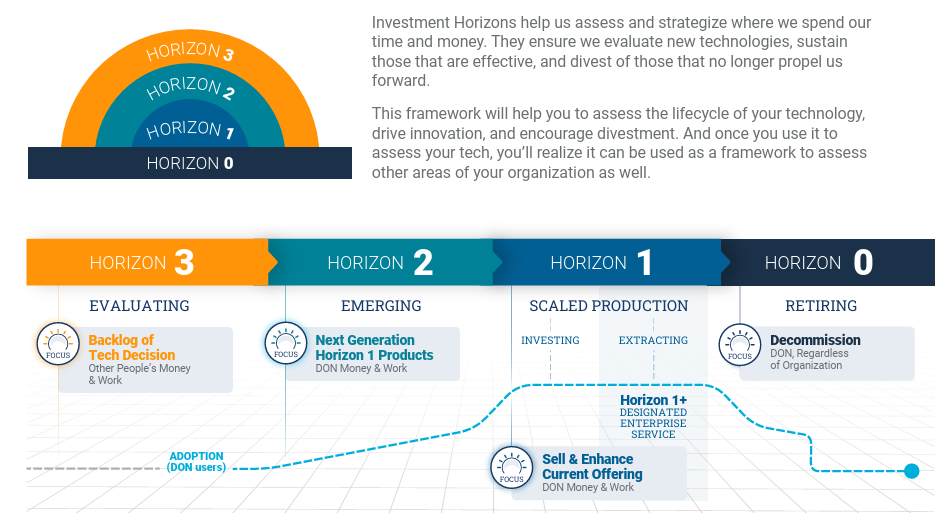
The opportunity resulting from a divestment should also initiate a pivot to a more agile and modular approach for future acquisitions that embraces continuous competition, incentivizes the injection of private capital and engages the broader innovation ecosystem in bringing novel ideas that can help avoid the pitfalls of the past.
On the process front, the DoW can move to a digital-first approach by leveraging modern tools and processes to streamline acquisition and empower innovation.
Establish Digital-First Platforms
Cloud-based, user-centric platforms can replace fragmented systems and manual workflows.
Imagine a unified acquisition ecosystem where professionals access real-time data, collaborate seamlessly, and automate routine tasks.
Tools like AI-driven contract analysis, predictive budgeting, and modular procurement frameworks can reduce cycle times from years to months.
The DoW makes sizable investments in platforms like Advana to drive smarter decision-making with mixed results.
Scaling such platforms across the enterprise would empower acquisition teams to focus on outcomes, not paperwork.
Leverage Digital Engineering
Digital engineering—using integrated digital models to design, test, and iterate systems—can transform how the DoD builds capabilities.
Digital twins, virtual replicas of physical assets, enable real-time simulation, predictive maintenance, and iterative design.
For instance, a digital twin of a fighter jet could simulate performance under varied conditions, identifying flaws before production.
Programs like the Air Force’s Digital Materiel Management initiative show early success, cutting design timelines and costs.
By embedding digital engineering in acquisition, the DoD can deliver systems faster, cheaper, and more reliably.
Mandate Agile and Open Architectures
Just as software developers adopt agile methodologies to iterate quickly, the DoW can adopt agile acquisition and open systems architectures.
Modular, interoperable designs allow for rapid upgrades and integration of emerging technologies like AI or hypersonics.
This approach mirrors how tech companies refactor code to stay competitive, ensuring systems remain relevant in contested environments.
Transform the Workforce
A digital-first future requires a workforce fluent in modern tools.
The DoW must invest in upskilling acquisition professionals in data analytics, AI, and digital engineering.
Partnerships with tech firms and universities can bridge this gap. A culture that rewards experimentation and embraces failure as a learning tool will further accelerate transformation.
The Stakes
Unaddressed acquisition debt threatens the DoD’s ability to deter and defeat adversaries. China’s rapid military advances—250 satellites launched in 2024 alone—underscore the urgency. By assessing gaps, prioritizing ruthlessly, and implementing modern solutions, the DoD can retire its acquisition debt and deliver capabilities at the speed of relevance.
What’s one bold step the DoD could take today to accelerate this transformation?
Join over 11,000 subscribers to get our weekly recaps and thought pieces. Paid subscribers also get budget and legislative analysis and are valued supporters of our work.
to the comment below me - i came here to drive home the comment within the writeup in the ORGANIZATIONAL DEBT section being one of the largest "silent majority" drivers in here.
We seem to keep ignoring the role of culture as a primary driver of the issues. Absent a culture change, which implies a large swath of people changing their outlook.