



The Pentagon is creating a four-star Autonomous Warfare Command to move faster on a capability that the military has struggled to field at scale. There’s a good case for putting senior leadership, money, and acquisition authority behind that effort. There’s a much weaker case for building a permanent command that owns autonomous warfare as though it were a separate kind of war.
Autonomy has to become part of how every Service fights. AUTOWARCOM’s job should be to drive that transition but avoid becoming another institution the Services feel they have to work around. Instead, build the command to do what the existing system has failed to do, then give most of the work back.
The Background
In September, Secretary Hegseth announced AUTOWARCOM and stood up Project Agincourt to supercharge the transition to a new warfare paradigm.
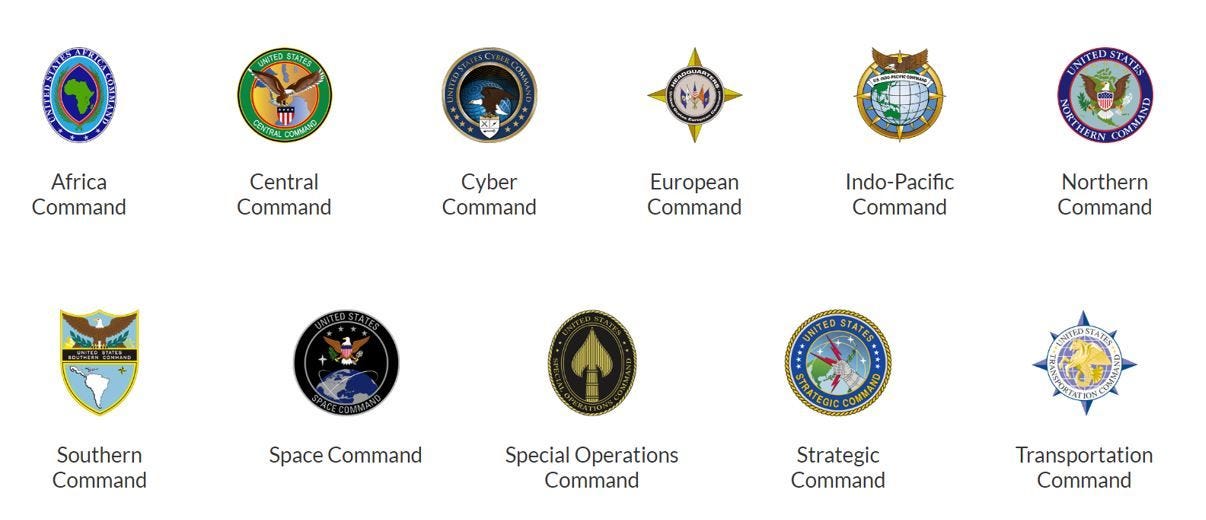
Currently, the Department has 11 combatant commands. Seven are geographic, four are functional. AUTOWARCOM would become the fifth functional command and the first new combatant command since SPACECOM was reestablished in 2019.
A New Command, but Not a New Domain
The military has been here before. In 1947, after decades of maturing a new capability called “airpower” inside the Army, the Air Force became an independent Service. In 2019, the Space Force followed after the space domain demanded a greater focus and consolidation. In each case, an emerging domain became worthy of standing on its own. Autonomy’s time is now. The question is whether it warrants the same approach.
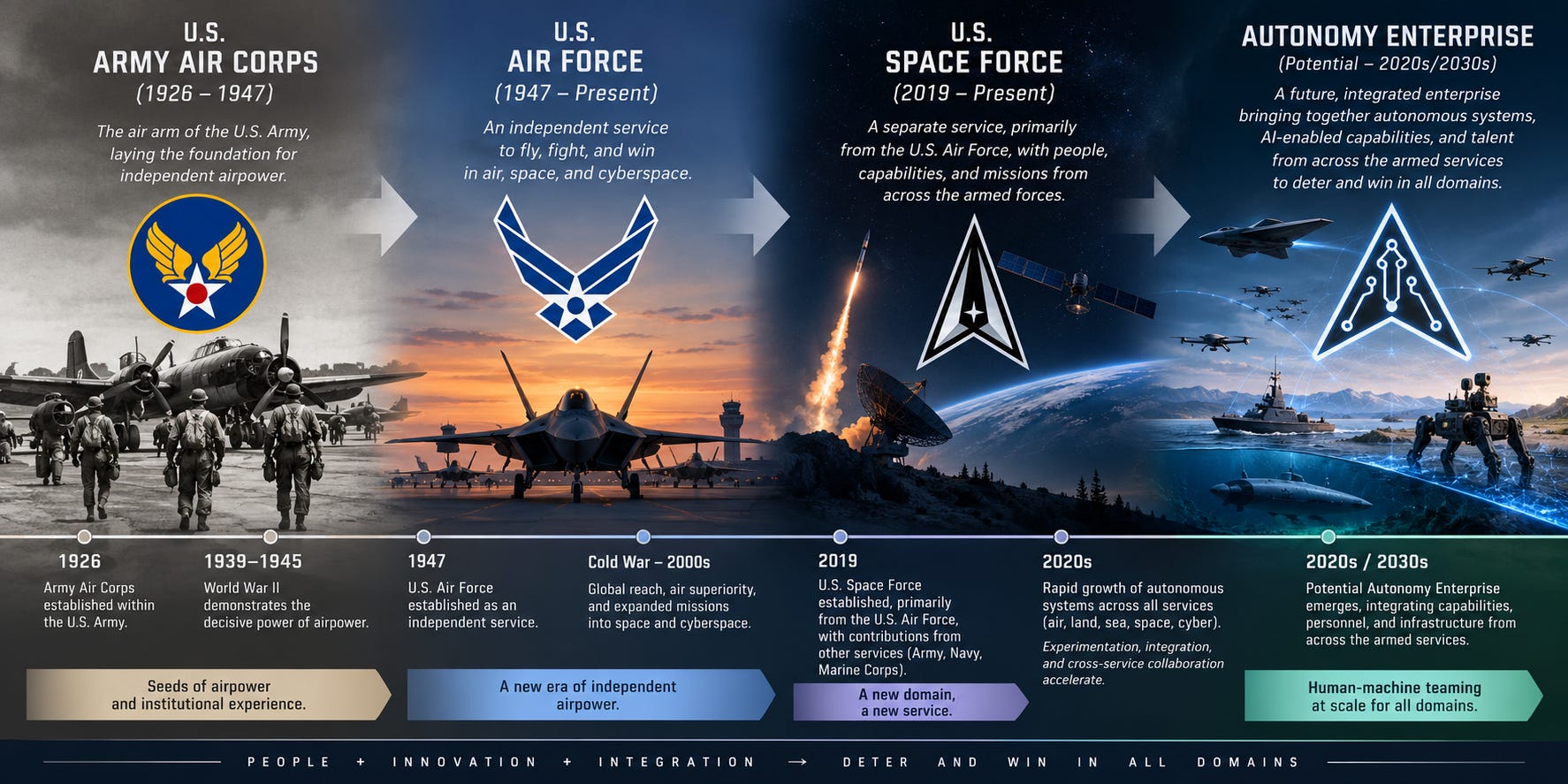
Air and space are clear domains with physical separations and unique environments. Autonomy on the other hand is not. A drone can support an infantry squad, protect a ship, fly alongside a fighter, or resupply a unit ashore. Its value comes from the mission and formation it supports, not from being autonomous.
AUTOWARCOM will likely never become a dedicated service for that reason. The better analogue is SOCOM and CYBERCOM, which have unique capabilities but ones that span domains and military services. They also have service-like acquisition and budget authorities alongside an operational mission.
Sixteen Months, Nine New Organizations
In June 2025 we argued each Service should establish a dedicated unmanned PEO. Unmanned programs were losing attention inside portfolios dominated by larger, established (manned) platforms. Navy maritime autonomy was merely an experiment. Collaborative Combat Aircraft shared leadership with the F-47 and legacy fighters. The Army’s unmanned work sat inside PEO Aviation. Mixed portfolios dilute focus.
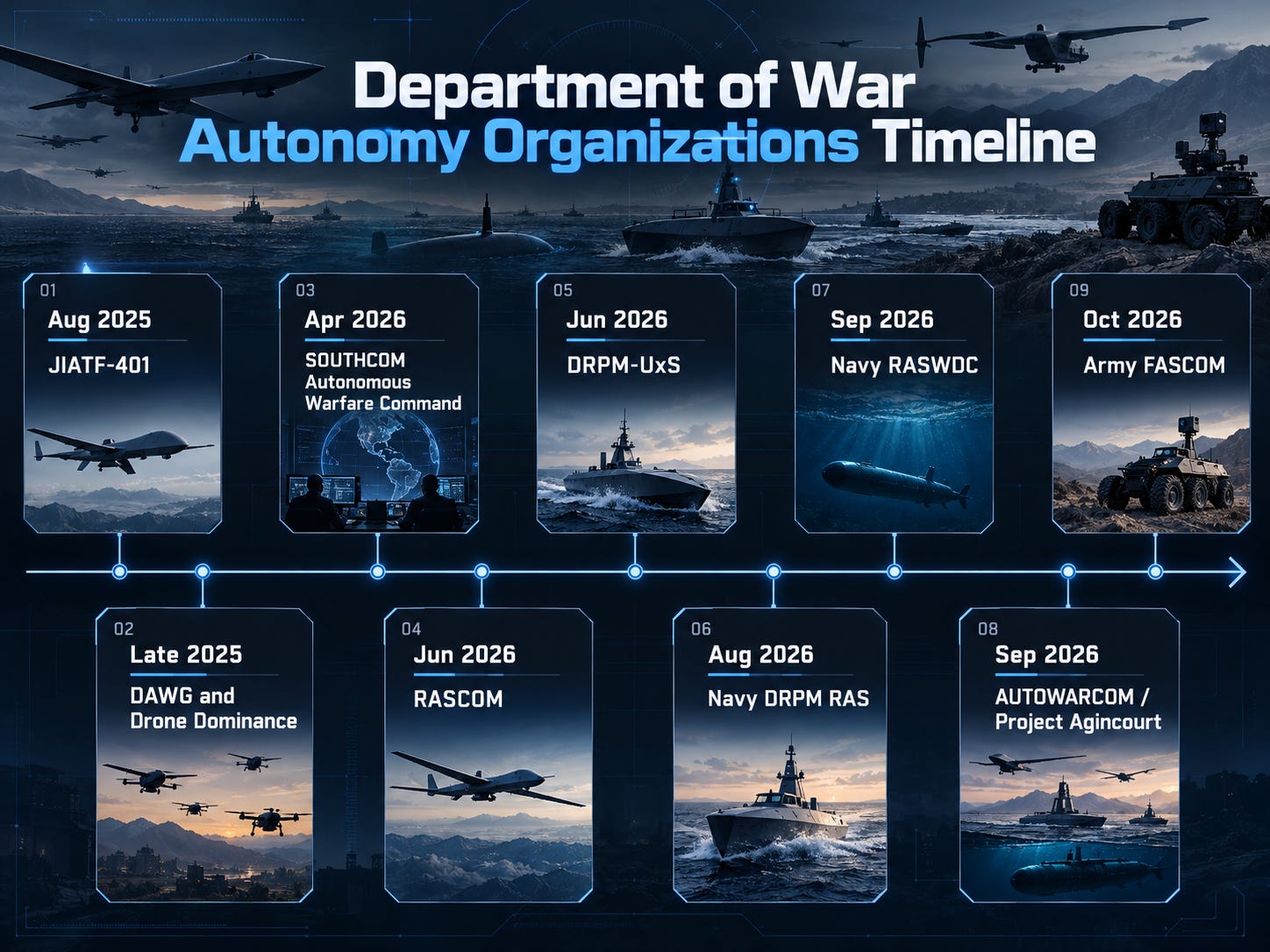
Sixteen months later, the Department has created or proposed a much larger set of organizations to drive autonomy. Commanders have watched Ukraine and Russia change the economics and tactics of drone warfare, and they want similar options.
However, the funding picture is less certain. While the FY27 PB request proposed $54.6B for the Defense Autonomous Warfare Group (DAWG) (up from $226M in FY26), only $1B is captured in the base request. The balance depends on reconciliation legislation that has not passed and faces a compressed lame-duck calendar. The reality is that in FY27, the DoW may have acquisition and operational alignment but without the extent of resources to generate the needed capabilities. The exception is the Air Force, which fully programmed $3B RDT&E and Procurement funding a year for CCA.
An important related question is with all these new organizations, who should control the money and long-term fielding decisions once the funding arrives? We see two critical tensions at play that may influence how the Hill allocates that future funding whenever it comes.
Two Tensions
1. Centralize at the Department or Distribute to the Services
Our 2025 solution was at the Service-level. A reader who spent years in the Navy’s small UAS office pushed back noting OPNAV resource sponsors decide program priorities, and unmanned programs still compete with manned platforms for dollars. A dedicated PEO/PAE was necessary but not sufficient.
In 2026, DoW moved authority up to a DRPM-UxS to act as Senior Procurement Executive and Head of Contracting Activity but most importantly to gain access to leadership that could allocate resources at the levels needed to get serious. Overall, this approach enabled four things:
Demand Aggregation. Drone Dominance turned scattered unit buys into a collective market signal focused on building the industrial base. It also helped create price targets for industry ($5K per drone with a goal to be under $2.3K).
Common Standards. A DoW office can drive open architectures that enable multiple drones and ground stations across the services to interoperate.
Shared Learning. Lessons from the front can be incorporated into joint doctrine and inform tactics and investments across the Services.
Budget Protection. Autonomy and unmanned platforms get dedicated funding instead of losing separate service POM drills to a legacy manned program.
Centralization also has a known failure mode. As Pete Newell put it, if joint needs come from headquarters staff, the military risks buying the wrong drones faster. A Pentagon office far from the unit will default to what it knows.
Drive from above with the goal of building self-sustaining momentum at the lowest levels.
A key element in this Centralize or Distribute decision is for DoW not to disrupt what is already working. Leave CCA, MQ-25, and larger unmanned surface vessels to continue to be executed as planned. Monitor to ensure appropriate funding levels are allocated and enforce joint interface standards where appropriate. DoW should focus on capabilities that require national-scale production or are unique to a combatant command. Those may stay centralized for now.
2. A New Command or Existing Commands
The second tension, employment, is harder. Steven Willis makes the strongest case against AUTOWARCOM: SOCOM was born from a documented C2 failure in Operation Eagle Claw in 1980, and no comparable autonomy failure exists.
SOCOM works because special operations forces are distinct from the conventional force. Autonomous systems will increasingly not be distinct and may dominate over time. The Army’s October directive, for example, pushes autonomy into at least six formation types. A command that tries to own all of autonomy will collide with the geographic commanders who employ forces and the Services that design them. Michael Carvelli calls this a C2 collision, and it has already started.
SOUTHCOM stood up its own autonomous warfare command in April, five months before AUTOWARCOM was announced.
CENTCOM was also ahead of the game with Task Force Scorpion Strike, launched in December 2025. In August, CENTCOM announced Task Force Falcon Strike to expand that work into a multi-domain (air, surface, and sub-sea), multinational attack drone unit.
EUCOM (under U.S. Army Europe and Africa) fielded a dedicated drone battalion in 2025 and began building the Eastern Flank Deterrence Line with NATO.
The justification for why AUTOWARCOM and DRPM-UxS are needed is at the seams of those disparate CCMD efforts. This really comes into play with things like shared C2, airspace deconfliction, spectrum management, fires coordination, distributed maintenance, and manned-unmanned integration. There is also value in having a joint entity supporting force design analyses as cross-service effects are critical to many kill chains but can be dismissed in service-only scenarios.
The hardest engineering and operational problem in autonomy is integrating unmanned systems with manned forces.
Many of these challenges cross both operational and acquisition lanes. In that light, Army FASCOM may have the right model to solve these challenges as its commander is both the Army component to AUTOWARCOM and the Army’s autonomy PAE. The other Services may need a similarly direct connection between joint integration and Service execution.
Project Agincourt’s own memo says the command will “define joint needs and integrate Service-provided forces in support of geographic combatant commanders.” That division of labor should be captured in the AUTOWARCOM charter.
The Hardest Part Will Be Handing Authority Back
It is easy to understand why AUTOWARCOM is being created. An empowered four-star command is an understood way to solve some of the challenges. However, it’s not a sensible permanent home for everything autonomous.
The next conflict won’t separate unmanned warfare from the rest of warfare. Autonomous aircraft will fly with F-47s, launch from carriers, accompany armored brigades, and supply Marines ashore. The people responsible for those missions must know how to use and sustain them without seeking permission from a parallel command.
The SASC’s FY27 NDAA permitted establishing a Robotic and Autonomous Systems Combatant Command (RASCOM). Critics warned that a new command might become a promoter of its own programs. The reality is that once established, headquarters rarely volunteer to shrink. The authority to decide when AUTOWARCOM gives responsibilities back should sit outside AUTOWARCOM. The Services need to prepare for that handoff now, not after a decade of joint buying.
Key Proposed Actions
The Department and Congress can make this easier by doing the following:
1. Spell out who owns each decision. Before building a headquarters empire, publish a decision-rights matrix for attritable systems, counter-UAS, and autonomy software. Name the offices responsible for requirements, budgets, acquisition, force employment, training and sustainment. Make it clear.
2. Give AUTOWARCOM a narrowly defined funding line. Model it on MFP-11. Fund efforts focused on joint force employment and closing the seams across the services and CCMDs. Leave most procurement and service-unique employment to the military services while also monitoring and coordinating.
3. Use Service components to connect joint priorities to actual units. Pair them with autonomy PAEs, along the lines of Army FASCOM. Navy DRPM RAS and its RAS Warfighting Development Center RASWDC could serve as this for USVs. The Air Force may need a new construct.
4. Don’t build a second C2 network. Manned and unmanned forces need common data and command-and-control foundations, with open interfaces and architectures that allow systems to be changed without rebuilding the whole force.
5. Measure how quickly the force learns. Track the days between spotting a problem in the field and delivering a fix, and the time it takes for one unit’s lesson to reach others facing the same threat. Track metrics against the test proposed in the Agincourt open letter where cost per kill or risk to the force should fall over time. Report those measures to Congress.
6. Write the handoff into the charter. Tie the return of acquisition authority to Service PAEs to visible evidence: budgets, people, force design, sustainment, training, and infrastructure. Have the Deputy Secretary certify progress to the defense committees each year. Don’t leave the decision solely to the command being asked to give up authority.
7. Reconcile the organizations already on the books. Congress should address the Section 917 RASCOM provision during the FY27 NDAA conference rather than allow overlapping mandates to persist. The Department as part of Project Agincourt should consolidate remaining autonomy offices under DRPM-UxS and the Service components instead of adding another layer.
What Airpower Actually Teaches
Airpower’s history is often cited as the case for building new organizations around technologies the existing force doesn’t understand. Sometimes that’s right. But even after the Air Force split off, Naval and Marine aviation stayed with the forces that fought with them, and the Army rebuilt organic aviation within a few years.
That is the better lesson for autonomous systems. The Department needs a strong push from the center because the usual processes have not produced enough capability, quickly enough. AUTOWARCOM may be the right instrument for that push. It should not, however, be the long-term owner of the capability. Just as Joint Forces Command was stood down when it no longer served the intended role, we should see the same for AUTOWARCOM.
A successful command would leave behind Services that routinely buy, integrate, employ, and maintain autonomous systems and a joint mechanism that turns lessons from one unit into improvements across the force. If AUTOWARCOM makes itself less necessary over time, it will have done its job.
Success is building a Joint Force that can no longer imagine fighting without autonomy.
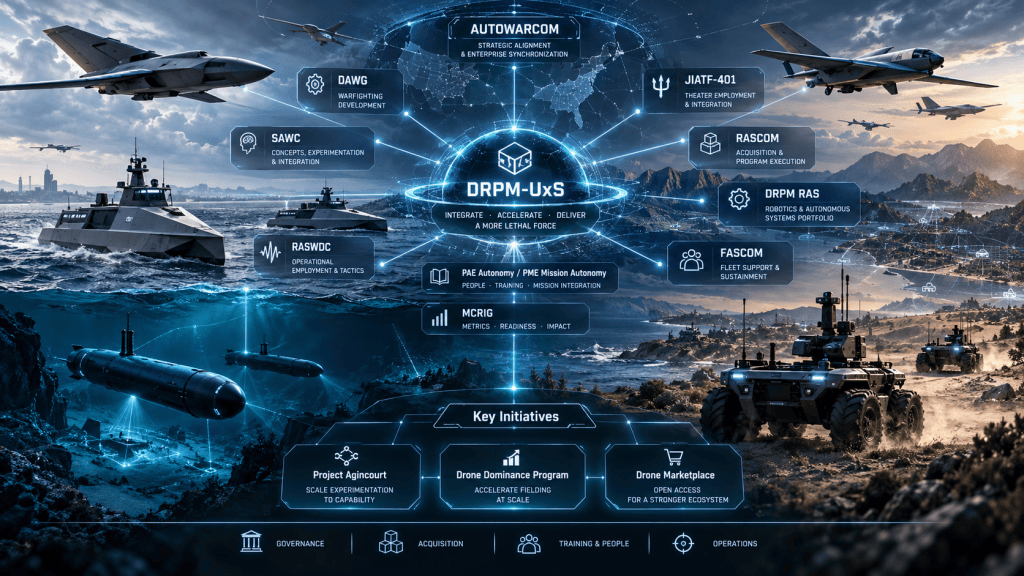
Navigate the Department’s evolving Autonomy Enterprise organizations and initiatives on Digital Pentagon.